
In an ever-evolving financial landscape, the quest for stability and growth remains a constant. As we look towards 2026, the principles of sound financial management become even more critical. Among the myriad budgeting strategies available, the 50/30/20 budget rule stands out as a remarkably simple yet profoundly effective framework for achieving optimal financial health. This guide will delve deep into the intricacies of this rule, providing you with a comprehensive understanding and actionable steps to implement it successfully in your life.
The 50/30/20 budget rule is more than just a budgeting technique; it’s a philosophy for managing your money that prioritizes needs, balances wants, and secures your future through savings and debt repayment. Originating from Senator Elizabeth Warren and her daughter Amelia Warren Tyagi’s book, All Your Worth: The Ultimate Lifetime Money Plan, this rule offers a clear, intuitive path to financial control without the overwhelming complexity often associated with detailed budgeting.
Understanding the Core of the 50/30/20 Budget Rule
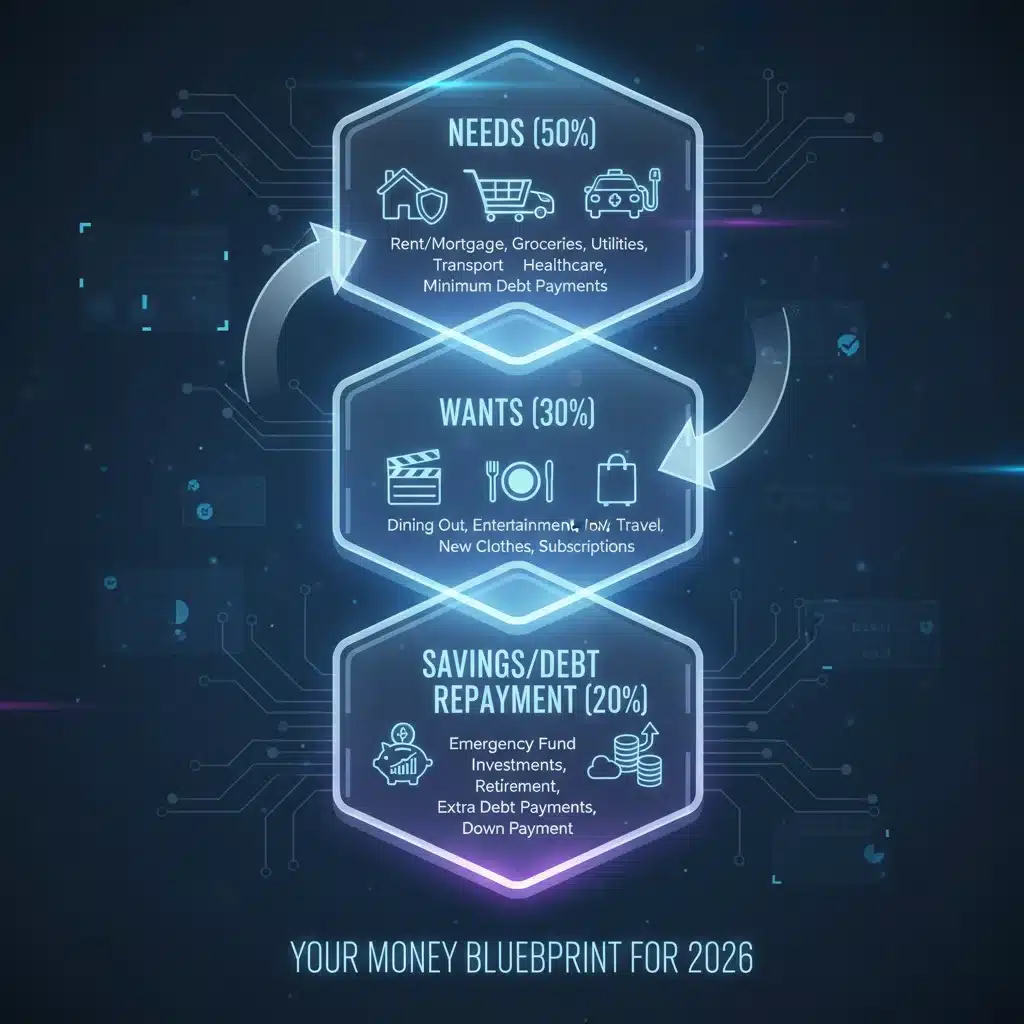
At its heart, the 50/30/20 budget rule dictates how you should allocate your after-tax income:
- 50% for Needs: These are the essential expenses you cannot live without.
- 30% for Wants: These are discretionary expenses that improve your quality of life but are not strictly necessary.
- 20% for Savings & Debt Repayment: This portion is dedicated to building your financial future and reducing liabilities.
Let’s break down each category in detail to ensure you have a clear understanding of where your money should go.
50% for Needs: The Foundation of Your Financial Stability
Your needs are non-negotiable expenses that are crucial for your survival and basic living. These are the bills that must be paid each month, regardless of your other financial goals. When applying the 50/30/20 budget rule, ensuring your needs don’t exceed 50% of your after-tax income is paramount. If they do, it’s a strong indicator that you might be living beyond your means, and adjustments are necessary.
What Constitutes a Need?
- Housing: Rent or mortgage payments. This is often the largest single expense for most individuals and families.
- Utilities: Electricity, gas, water, and essential internet services. While high-speed internet might feel like a want, basic internet for work, education, and communication is often considered a necessity in modern society.
- Groceries: Food essential for sustenance. This excludes dining out or gourmet items that fall under ‘wants.’
- Transportation: Car payments, public transit fares, fuel, and essential maintenance. If you need a car for work, the payment and upkeep are needs.
- Healthcare: Health insurance premiums, essential medications, and co-pays for necessary doctor visits.
- Minimum Loan Payments: The minimum payments on student loans, credit cards, or other debts. While paying more than the minimum is a ‘saving/debt repayment’ activity, the minimum itself is a fixed obligation.
- Insurance: Car insurance, home insurance, and any other essential coverage.
Strategies if Your Needs Exceed 50%
If your needs consistently consume more than half of your income, it’s time for some strategic adjustments:
- Reduce Housing Costs: Can you find a more affordable apartment, consider a roommate, or refinance your mortgage?
- Cut Utility Expenses: Be more mindful of energy consumption, unplug unused electronics, and explore cheaper internet plans.
- Smart Grocery Shopping: Plan meals, use coupons, buy in bulk, and avoid impulse purchases.
- Re-evaluate Transportation: Consider public transport, carpooling, or downsizing to a more fuel-efficient vehicle.
- Negotiate or Shop Around: Look for better deals on insurance, internet, and even healthcare plans if possible.
The goal is to bring your essential expenses down to a manageable level, freeing up funds for wants and, most importantly, for savings.
30% for Wants: Enhancing Your Quality of Life
This is where your income goes towards things that make life enjoyable but aren’t strictly necessary. The 30% allocation for wants in the 50/30/20 budget rule allows for flexibility and personal enjoyment without derailing your financial progress. It’s crucial to distinguish between a want and a need, as this is often where budgeting efforts falter.
What Constitutes a Want?
- Dining Out & Takeaways: Eating at restaurants, ordering delivery, or grabbing coffee from a cafe.
- Entertainment: Streaming services, movie tickets, concerts, gaming, and subscriptions to various apps or platforms.
- Hobbies & Leisure: Gym memberships (beyond basic health needs), sports equipment, craft supplies, and recreational classes.
- Vacations & Travel: Trips, weekend getaways, and related expenses.
- Shopping: New clothes, electronics, gadgets, and other non-essential purchases.
- Upgraded Services: Premium cable packages, high-end internet plans, or luxury amenities.
- Haircuts & Beauty Treatments: While basic hygiene is a need, salon visits and cosmetic procedures are wants.
The 30% for wants is your opportunity to enjoy the fruits of your labor. The key is to be mindful and intentional with these expenses. If you find yourself overspending in this category, it’s a good place to look for cuts before touching your needs or savings.
Managing Your Wants Effectively
- Prioritize: Decide which wants bring you the most joy and cut back on those that don’t.
- Set Limits: Allocate specific amounts for different want categories (e.g., $X for dining out, $Y for entertainment).
- Look for Alternatives: Instead of expensive dinners, try cooking a fancy meal at home. Opt for free or low-cost entertainment options.
- Delay Gratification: Instead of immediate purchases, save up for larger want items.
Successfully managing your wants is about balance. The 50/30/20 budget rule gives you permission to spend on these items, but with clear boundaries.
20% for Savings & Debt Repayment: Securing Your Future
This is arguably the most critical component of the 50/30/20 budget rule. Dedicating 20% of your after-tax income to savings and debt repayment is your pathway to long-term financial security and freedom. This category is about building wealth, reducing liabilities, and preparing for future opportunities and challenges.
What Falls Under Savings & Debt Repayment?
- Emergency Fund: A crucial safety net, typically 3-6 months of living expenses, stored in a high-yield savings account.
- Retirement Savings: Contributions to 401(k)s, IRAs, or other retirement accounts.
- Investments: Contributions to brokerage accounts for long-term growth.
- Debt Acceleration: Paying more than the minimum on credit cards, student loans, or personal loans to reduce interest and pay them off faster.
- Future Goals: Saving for a down payment on a house, a child’s education, a new car, or any other significant future expense.
Maximizing Your 20%
The sooner you start contributing to this category, the better. Compound interest is a powerful ally. Here’s how to make the most of your 20%:
- Automate Savings: Set up automatic transfers from your checking account to your savings and investment accounts on payday. This ensures you pay yourself first.
- Prioritize High-Interest Debt: If you have high-interest credit card debt, focus on paying that down aggressively before other savings goals (after establishing a small emergency fund).
- Utilize Employer Matching: If your employer offers a 401(k) match, contribute at least enough to get the full match – it’s free money!
- Review Progress Regularly: Periodically check your savings and debt repayment progress to stay motivated and make adjustments as needed.
The 20% for savings and debt repayment is your commitment to your future self. It’s an investment in peace of mind and financial independence.
Implementing the 50/30/20 Budget Rule in 2026: A Step-by-Step Guide
Now that you understand the components, let’s walk through the practical steps to apply the 50/30/20 budget rule to your finances in 2026.
Step 1: Calculate Your After-Tax Income
Your after-tax income is the amount of money you actually take home after all deductions (taxes, health insurance premiums, 401(k) contributions, etc.) have been made from your gross salary. This is the foundation for all your calculations. If you have multiple income streams, add them all up after taxes.
Step 2: List All Your Expenses
For at least one month, meticulously track every dollar you spend. This can be done using a spreadsheet, a budgeting app, or even a simple notebook. Categorize each expense as either a ‘Need,’ ‘Want,’ or ‘Savings/Debt Repayment.’ Be honest with yourself about these classifications.
Step 3: Allocate Your Income According to the 50/30/20 Rule
Once you have your after-tax income and categorized expenses, calculate the target amounts for each category:
- Needs: After-tax income × 0.50
- Wants: After-tax income × 0.30
- Savings & Debt Repayment: After-tax income × 0.20
Compare these target amounts with your actual spending from Step 2. This comparison will highlight areas where you are overspending or underspending.
Step 4: Make Adjustments and Create Your Budget
This is where the real work begins. If your actual spending doesn’t align with the 50/30/20 budget rule, you’ll need to make conscious decisions to adjust. This might involve:
- Cutting back on certain wants.
- Finding ways to reduce essential needs (e.g., negotiating bills, finding cheaper alternatives).
- Increasing your savings contributions by reducing spending in other areas.
The goal is to align your spending with the 50/30/20 percentages. Remember, this is a flexible framework, not a rigid prison. The idea is to guide your spending, not restrict it to an unbearable degree.
Step 5: Monitor and Review Regularly
Budgeting is not a one-time event; it’s an ongoing process. Life changes, income fluctuates, and expenses can vary. Make it a habit to review your budget at least monthly, if not weekly. This allows you to catch deviations early and make necessary adjustments. Regular monitoring is key to the long-term success of the 50/30/20 budget rule.
Benefits of the 50/30/20 Budget Rule in 2026
Embracing the 50/30/20 budget rule offers a multitude of benefits that can transform your financial life in 2026 and beyond.
Simplicity and Ease of Use
Unlike complex, line-item budgeting methods that can feel overwhelming, the 50/30/20 budget rule is remarkably straightforward. Its three broad categories make it easy to understand and implement, even for those new to budgeting. This simplicity increases the likelihood of long-term adherence.
Flexibility and Adaptability
The rule provides clear guidelines but also allows for flexibility within each category. You decide how to spend your 30% on wants, or which debts to prioritize in your 20%. This adaptability makes it suitable for various income levels and lifestyles, evolving with your financial journey.
Promotes Financial Awareness
By categorizing your expenses, the 50/30/20 budget rule forces you to become more aware of where your money is actually going. This heightened awareness is the first step toward making more intentional and responsible financial decisions.
Encourages Savings and Debt Reduction
The dedicated 20% allocation ensures that savings and debt repayment are prioritized, not just an afterthought. This proactive approach accelerates wealth building and helps you achieve financial independence faster.
Reduces Financial Stress
When you have a clear plan for your money, much of the anxiety surrounding finances dissipates. Knowing that your needs are covered, your wants are accounted for, and your future is being built provides immense peace of mind.
Common Challenges and How to Overcome Them
While the 50/30/20 budget rule is powerful, you might encounter some common hurdles. Here’s how to navigate them:
Challenge 1: Needs Exceed 50%
This is a common issue, especially in high cost-of-living areas or with significant debt. As discussed earlier, the solution involves actively seeking ways to reduce your essential expenses. This might require tough choices like moving to a cheaper area, finding roommates, or cutting back on expensive subscriptions that have crept into your ‘needs’ category (e.g., premium internet when basic suffices).
Challenge 2: Difficulty Distinguishing Between Needs and Wants
The line can sometimes blur. Is a car a need or a want? If you need it for work, the basic cost is a need; a luxury car payment is a want. Is a cell phone a need? A basic phone for communication is a need; the latest flagship model with an unlimited data plan might lean towards a want. Be honest with yourself. Ask: ‘Could I live without this, or a cheaper version of this, without significantly impacting my ability to work, live safely, or maintain basic health?’
Challenge 3: Inconsistent Income
For freelancers or those with variable income, applying the 50/30/20 budget rule requires a slightly different approach. Consider using an average income over several months, or budget based on your lowest expected income, saving any surplus from higher-income months. The goal is to build a buffer in your savings to smooth out the lean months.
Challenge 4: Lack of Discipline
Budgeting requires discipline. Automated savings are your best friend here. Treat your savings and debt payments like non-negotiable bills. Find an accountability partner or use budgeting apps that help track your spending and keep you on course. Celebrate small victories to stay motivated.
Challenge 5: Unexpected Expenses
Life happens, and unexpected costs will arise. This is precisely why the 20% for savings, particularly an emergency fund, is so crucial. Having that buffer prevents unexpected expenses from derailing your entire budget and forcing you into debt.
Advanced Tips for Optimizing Your 50/30/20 Budget in 2026
Once you’ve mastered the basics of the 50/30/20 budget rule, consider these advanced strategies to further optimize your financial health:
The Power of Automation
Set up automatic transfers for your savings and debt repayments immediately after your paycheck hits. This ‘pay yourself first’ strategy ensures your 20% is secured before you have a chance to spend it. Many banks and investment platforms offer this feature.
Utilize Budgeting Apps and Tools
Leverage modern technology to simplify tracking. Apps like Mint, YNAB (You Need A Budget), or Personal Capital can categorize your spending automatically, provide insights, and help you stick to the 50/30/20 budget rule allocations. 
Review and Renegotiate Bills
Periodically review all your recurring bills. Can you negotiate a lower rate for your internet or phone plan? Are there subscriptions you’re no longer using? Even small monthly savings add up and can free up more funds for your wants or savings categories.
Consider a ‘Zero-Based’ Approach for Wants
While the 50/30/20 budget rule is broad, you can combine it with elements of zero-based budgeting for your ‘wants’ category. This means assigning every dollar within that 30% to a specific purpose (e.g., $100 for dining out, $50 for entertainment), ensuring no money is ‘left behind’ unassigned.
Increase Your Income
If you’re consistently struggling to fit your expenses into the 50/30/20 budget rule, consider ways to increase your after-tax income. This could involve asking for a raise, taking on a side hustle, or exploring passive income opportunities. More income provides greater flexibility within the rule.
The ‘Snowball’ or ‘Avalanche’ Method for Debt
Within your 20% for debt repayment, choose a strategy. The ‘debt snowball’ method (pay off smallest debt first) provides psychological wins, while the ‘debt avalanche’ method (pay off highest interest debt first) saves you the most money in interest. Both are effective when consistently applied.
The Long-Term Impact of the 50/30/20 Budget Rule
Adopting the 50/30/20 budget rule isn’t just about managing your money for a month; it’s about establishing sustainable financial habits that will serve you for a lifetime. Over time, consistent application of this rule leads to significant positive outcomes:
- Financial Freedom: As your savings grow and debt diminishes, you gain more control over your life choices.
- Reduced Stress: The clarity and structure of the budget reduce financial anxiety.
- Achieving Major Goals: Whether it’s buying a home, funding education, or retiring comfortably, the rule provides a roadmap.
- Building Wealth: Consistent saving and investing, even if it’s ‘just’ 20%, leverages the power of compound interest to build substantial wealth over decades.
- Improved Financial Literacy: You become more adept at managing money, understanding financial products, and making informed decisions.
The year 2026 offers a fresh opportunity to take control of your finances. By implementing the 50/30/20 budget rule, you are not just creating a budget; you are building a resilient financial future. It’s a powerful tool for anyone seeking clarity, control, and confidence in their money management. Start today, stay consistent, and watch your financial health flourish.