Unlocking Your Potential: A Beginner’s Playbook for Career Advancement
Starting a new career can feel like being handed a map to a city you’ve never visited. You see the landmarks and destinations, but you have no idea which routes are fastest, which are scenic, and which are dead ends. The initial excitement of landing your first role is often paired with a quiet uncertainty about what comes next. Simply showing up and doing the work assigned is the baseline, not the path to meaningful advancement. To build a career, rather than just hold a job, requires a deliberate and strategic approach from day one.
The old advice to simply “work hard and you’ll be noticed” is an outdated and passive strategy in today’s dynamic professional landscape. Advancement is no longer a linear climb up a predictable ladder; it’s a complex navigation across a grid of opportunities, setbacks, and pivots. This requires a proactive mindset where you are the CEO of your own career, actively managing your brand, skills, and network. Understanding this shift is the first step toward taking control of your professional trajectory and financial future.
This guide serves as your playbook for that journey. We will move beyond vague platitudes and provide a concrete framework for intentional career growth. First, we’ll help you create your ‘career compass’ through honest self-assessment. Then, we’ll detail the primary soft and technical skills that form your professional toolkit. From there, you’ll learn to build genuine connections through strategic networking and master the art of self-advocacy without feeling like an imposter. Finally, we’ll equip you to anticipate and overcome the common obstacles that derail many promising careers, ensuring you not only start strong but continue to build momentum for years to come.
Laying the Groundwork: Understanding Your Career Compass
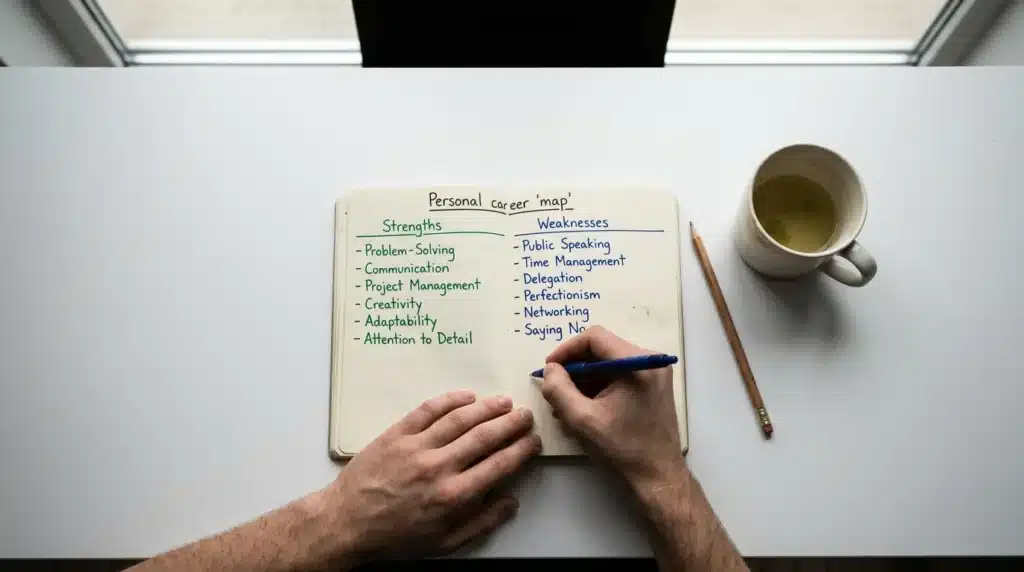
Before you can accelerate your career, you need to know where you’re headed. Think of it like planning a road trip; you wouldn’t just start driving without a destination in mind. A surprising number of people do exactly that with their professional lives. The first step is a simple, honest self-assessment to create your personal map.
Start by drawing two columns on a piece of paper: Strengths and Weaknesses. Under Strengths, list everything you excel at, from specific software skills to soft skills like communication or problem-solving. A recent LinkedIn survey found that professionals who actively use their top five strengths at work are 15% more engaged than their peers. That’s a huge advantage. Be brutally honest in the Weaknesses column — these aren’t failures, just areas for potential improvement.
Now, add a third element: what do you actually enjoy doing? Sometimes, the skills we’re best at aren’t the ones that energize us. Identifying this overlap between what you’re good at and what you love is the core of building a sustainable career path. This initial clarity is the foundation for a holistic blueprint for career advancement that aligns with your personal and financial goals.
This self-knowledge directly impacts your earning potential and ability to build long-term wealth. Understanding your value helps you negotiate better, choose the right roles, and ultimately craft your own financial security blueprint in the US. With this compass in hand, you’re no longer just drifting; you’re navigating with purpose.
Building Your Toolkit: necessary Skills for the Modern Professional
Think of your career skills like a mechanic’s toolbox. You need reliable, everyday tools that work for almost any job, but you also need specialized equipment for specific tasks. Building a full professional toolkit requires a mix of both, giving you the flexibility to tackle any challenge. This approach is a core part of creating a holistic blueprint for your career advancement.
Soft Skills That Open Doors
Soft skills are the interpersonal attributes that determine how you work with others. They include communication, teamwork, adaptability, and emotional intelligence. While a strong resume might get you an interview, these are the skills that will actually land you the job and help you succeed long-term. They are notoriously difficult to teach but are primary for navigating workplace dynamics.
It’s all about how you connect. A LinkedIn Learning report found that 91% of executives believe soft skills are more important than ever for leadership. After all, what good is a brilliant idea if you can’t convince anyone to support it? These abilities directly impact your earning potential, influencing everything from salary negotiations to securing funding for a new project, which is a key part of your overall financial security blueprint.
The underrated factor is adaptability. Your ability to pivot when a project goes sideways or a market shifts is far more valuable than rigidly sticking to an outdated plan.
Technical Proficiencies for Today’s Landscape
While soft skills shape your interactions, technical skills are the practical, hard-won abilities needed to perform specific job functions. These are the quantifiable skills listed on your resume, such as proficiency in a programming language, experience with project management software like Asana, or knowledge of data analysis tools. They are your proof of capability.
Even in roles that don’t seem tech-focused, a baseline of digital literacy is non-negotiable. This includes everything from understanding cloud storage to using collaboration platforms effectively — basically, the digital plumbing of the modern office. The data suggests that employees who voluntarily seek out training in new software are 18% more likely to be promoted within three years, according to a study by the Society for Human Resource Management.
Here’s a quick breakdown of foundational versus trending skills:
- Foundational: Clear written communication. This never goes out of style.
- Trending: AI prompt engineering. This skill is in high demand currently but may evolve or be automated.
- Foundational: Basic project management. Understanding timelines, resources, and deliverables is always necessary.
- Trending: Specific platform expertise (e.g., Salesforce, HubSpot). This is highly valuable but ties your skill to a particular technology.
Your goal isn’t to master every new tool that appears. Instead, focus on building a strong foundation and then strategically adding specialized skills that align with your career goals.
If you don’t communicate your value, you’re leaving your career progression up to chance. It is simply not enough to do good work; you have to make that work visible.
— Sarah Chen, Lead Career Strategist
| Strategy | Key Action | Why It Matters |
|---|---|---|
| Career Compass | Conduct a self-assessment of your strengths, weaknesses, and passions. | Provides clear direction and ensures your career path aligns with your core identity and goals. |
| Building Your Toolkit | Develop a mix of foundational soft skills (e.g., communication) and relevant technical skills. | Makes you adaptable and valuable across different roles and changing industry demands. |
| Strategic Networking | Build genuine relationships online and in-person by offering value and personalizing outreach. | Unlocks unlisted opportunities and creates a support system for advice and advancement. |
| Self-Promotion & Feedback | Track your accomplishments in a ‘brag file’ and proactively ask for specific, constructive feedback. | Builds a fact-based case for your value and provides a clear roadmap for improvement. |
| Overcoming Obstacles | Anticipate common pitfalls like burnout and perfectionism, and set firm boundaries. | Develops resilience and ensures your career growth is sustainable for the long term. |
Strategic Networking: Connecting for Opportunity
Many people think of networking as a transactional, slightly uncomfortable process of collecting business cards. But the underrated factor here is that genuine networking is about building relationships, not just contacts. It’s about creating a web of professional allies who can offer advice, share opportunities, and provide support throughout your career. Think of it less like collecting baseball cards and more like planting a garden; it requires patience and consistent effort to see results.
This approach transforms a chore into a core part of your professional development. It builds social capital. Ultimately, a strong network can provide a safety net and a launchpad for your ambitions, often leading to opportunities that are never even publicly posted. A study from HubSpot found that 85% of jobs are filled through networking, highlighting its incredible importance.
Crafting Your Professional Identity
Before you start connecting with others, you need a clear and consistent story about who you are, what you do, and where you want to go. Your professional identity is the narrative that you present to the world. It’s your unique value proposition, neatly packaged for others to understand. What problems do you solve? What are you passionate about in your field?
This isn’t just about your resume or job title. It’s the sum of your online presence, your communication style, and the reputation you build. A strong identity makes you memorable and referable. It helps people understand exactly how they can help you—and how you might be able to help them in return. This clarity is the foundation for every connection you make.
Effective Online Networking Strategies
Your digital footprint is often the first impression you make on a potential contact or employer. Platforms like LinkedIn are the primary arenas for professional connections, but niche industry forums and specialized Slack communities can be just as valuable. The key is to be a participant, not just a spectator. Share relevant articles, comment thoughtfully on others’ posts, and contribute to discussions.
When reaching out to someone new, personalization is everything. A generic connection request is easily ignored. A message that references a shared interest, a recent post they wrote, or a mutual connection shows you’ve done your homework. The data suggests—though not conclusively—that a personalized invitation is up to 50% more likely to be accepted than a generic one. Quality trumps quantity every time.
Optimizing Your LinkedIn Profile
Your LinkedIn profile is your digital handshake and professional storefront, all in one. It needs to be complete, professional, and aligned with your career goals. A half-finished profile can do more harm than good, suggesting a lack of attention to detail. This is a key part of the holistic blueprint for career advancement that successful professionals master early on.
Here are a few non-negotiable steps to take:
- Professional Headshot: Profiles with a professional photo get, according to LinkedIn’s own data, around 14 times more views. Avoid selfies or cropped vacation pictures.
- Compelling Headline: Go beyond just your job title. Use the headline to describe what you do and the value you bring, using keywords relevant to your industry.
- Detailed “About” Section: This is your chance to tell your story. Write in the first person and explain your passions, key skills, and career aspirations.
- Request Recommendations: Ask previous managers or colleagues to write a brief recommendation. These testimonials provide powerful social proof of your skills and work ethic.
Making the Most of In-Person Events
While online networking offers scale, in-person events provide depth. Conferences, local meetups, and industry seminars allow for face-to-face interactions that build rapport much faster than DMs and emails. The goal isn’t to meet everyone in the room. Instead, aim for two or three meaningful conversations.
What most people miss is the follow-up. A conversation at an event is just the starting point. Within 24-48 hours, send a follow-up email or LinkedIn message referencing your conversation—and yes, asking for a brief coffee chat still works wonders. These events can sometimes require an investment in tickets and travel, so integrating them into your overall financial security blueprint is a smart move.
Building these connections takes time, but each one adds another thread to your professional safety net, preparing you for the next step in your journey.

Mastering the Art of Self-Promotion and Feedback
Talking about your own accomplishments can feel awkward. For many, it feels like bragging, but what most people miss is that advocating for yourself is a core skill. If you don’t communicate your value, you’re leaving your career progression up to chance. It is simply not enough to do good work; you have to make that work visible.
Showcasing Your Successes
The best way to get comfortable with self-promotion is to treat it like data collection. Start a simple document—call it your “Accomplishment Tracker” or “Brag File”—and update it weekly. This isn’t about ego; it’s about evidence. A survey by the Society for Human Resource Management (SHRM) found that employees who regularly document their achievements are 38% more likely to feel confident during performance reviews.
Your tracker should be specific. What should you include?
- Metrics: Did you increase efficiency by 15%? Did you help grow a client account by $22,500? Use hard numbers.
- Positive Recognition: Save screenshots of complimentary emails from colleagues or clients.
- Project Outcomes: Document the role you played in successful projects, detailing your specific contributions.
This document becomes your single source of truth when preparing for a performance review. It transforms a vague conversation into a fact-based discussion about your impact, which is a core part of the holistic blueprint for career advancement.
Leveraging Feedback for Growth
The other side of the coin is actively seeking feedback. Constructive criticism isn’t a personal attack; it’s a roadmap for improvement. Think of it like tasting a soup you’re cooking. You taste it not to judge yourself, but to see if it needs more salt. That’s all feedback is—a chance to adjust the recipe.
Don’t wait for your annual review. Ask for feedback regularly from your manager and trusted peers. Avoid vague questions like “How am I doing?” Instead, be specific: “In that last presentation, what is one thing I could have done to make the data clearer?” This approach invites actionable advice rather than empty platitudes. Being coachable is a highly valued trait and a critical component for successfully navigating the new American landscape in a professional setting.
Your accomplishment tracker and the feedback you receive are the two necessary ingredients for preparing for salary discussions. When you can clearly articulate your value with specific examples and show you are actively working on your growth areas, you build the strongest possible case for a raise. You are no longer just asking; you are demonstrating your worth.
Overcoming Obstacles: Common Pitfalls and How to Avoid Them
The journey toward career growth is rarely a straight line; it’s more like a daily commute with unexpected traffic. You will encounter detours and slowdowns. A recent Gallup survey revealed that 76% of employees experience burnout on the job at least sometimes. The key is not to avoid all obstacles but to learn how to navigate them effectively.
Many early-career professionals struggle with similar challenges. What most people miss is that these hurdles are a normal part of the process, not a sign of personal failure. Recognizing them is the first step toward building resilience and a sustainable career path.
Here are a few common pitfalls and how to steer clear of them:
- Ignoring Work-Life Balance: It’s tempting to work nonstop to prove yourself, but this leads directly to exhaustion. Set firm boundaries, like logging off at a specific time, and use your paid time off. Your well-being is directly tied to your performance and even your financial health, which is a core part of your overall security blueprint.
- Fear of Making Mistakes: Perfectionism can paralyze you, preventing you from taking on new responsibilities. Reframe mistakes as data points for learning. Did a project not go as planned? Analyze what happened and apply that knowledge next time.
- Comparing Your Path to Others: Your colleague got a promotion, and you didn’t. So what? Focusing on someone else’s timeline distracts from your own unique journey. A holistic approach to career advancement focuses on your individual goals and pace.
Anticipating these challenges helps you build a strategy before you feel overwhelmed. This proactive mindset is what separates those who get stuck from those who keep moving forward.
Your Continuous Growth Blueprint: Staying Ahead in a Dynamic World
Thinking your learning ended with graduation is one of the biggest career mistakes you can make. The skills that secured your first job might not be enough to secure your next promotion, or even your next job. Technology and industries change at a blistering pace, and what was cutting-edge yesterday can become standard practice tomorrow. This isn’t about pressure; it’s about opportunity.
Your career is not a static object. It’s a living thing that needs constant nurturing.
Embracing Lifelong Learning
The commitment to lifelong learning is a mindset shift from viewing education as a finite phase to seeing it as an ongoing process. A recent report from the World Economic Forum suggested that nearly half of all employees will require significant reskilling over the next few years to keep up with technological advancements. The data suggests a clear trend: static skill sets lead to career stagnation. What’s the best way to combat this? You have to stay curious.
Fortunately, learning has never been more accessible. You don’t need to enroll in another four-year degree program. Options like online certifications from platforms like Coursera or edX, industry-specific workshops, and even free tutorials on YouTube can provide valuable, targeted knowledge. The key is to be intentional about what you learn and how it aligns with your career goals, forming a key part of your holistic blueprint for career advancement.
Adapting to Industry Shifts
Staying relevant is less about predicting the future and more about being prepared to adapt to it. Think of it like managing your personal commute; you don’t just stick to one route regardless of traffic or construction. You check the conditions and adjust your path to get to your destination efficiently. The same principle applies to your career path — you need to be aware of the “traffic” and “detours” in your industry.
This proactive stance means you are not caught off guard by major changes, such as the adoption of new software or a pivot in market demands. Instead, you position yourself as a valuable asset who can help guide the team through the transition. It builds a reputation for resilience and foresight.
Identifying Emerging Trends
So, how do you keep your finger on the pulse of your industry? The underrated factor here is active observation. Start by subscribing to leading trade publications and newsletters in your field. Follow influential thinkers and companies on professional networking sites. Many professional organizations also offer webinars and reports on emerging trends, often for free or a small fee. This consistent, low-effort engagement keeps you informed without feeling overwhelming.
Creating Your Personal Development Plan
A goal without a plan is just a wish. A personal development plan (PDP) transforms your ambitions into an actionable strategy. This document—which can be as simple as a spreadsheet or a page in a notebook—serves as your roadmap. It outlines what you want to learn, why it’s important, and how you’ll do it. Building this plan directly supports your long-term goals, much like following a budget is primary for crafting your financial security blueprint.
Your PDP isn’t set in stone. It should be a living document that you review and adjust every few months. Here is a simple checklist to get you started:
- Self-Assessment: Honestly evaluate your current skills. What are your strengths? Where are the gaps, especially when you look at job descriptions for roles you aspire to have?
- Set SMART Goals: Define what you want to achieve. Make your goals Specific, Measurable, Achievable, Relevant, and Time-bound. For example, “Complete a Python for Data Analysis certification within three months.”
- Identify Resources: List the courses, books, mentors, or projects that will help you achieve each goal. Note any associated costs and budget for them.
- Create a Timeline: Break down each goal into smaller, manageable steps and assign deadlines. This prevents procrastination.
- Track and Review: Schedule quarterly check-ins with yourself to monitor your progress. Are you on track? Do your goals still make sense? — don’t be afraid to pivot if your priorities or industry landscape changes.
This structured approach ensures your efforts are focused and your growth is measurable, preventing you from just passively consuming information without a clear purpose.
From Playbook to Practice: What’s Your Next Move?
You now have the framework—the compass, the toolkit, and the strategies to navigate the professional world. a playbook is only valuable when its plays are put into action. The greatest risk in career development isn’t making a mistake; it’s inertia. It’s the comfortable habit of waiting for the next performance review, the next job opening, or the next opportunity to fall into your lap. True growth happens in the small, consistent actions you take between those major milestones.
Instead of trying to implement every piece of advice at once, consider your career a laboratory for small experiments. This week, could you track a single metric that demonstrates your impact? Could you send one personalized connection request to someone whose work you admire? Or could you ask for specific feedback on one small task? This approach transforms career growth from a daunting mountain to climb into a series of manageable steps, each one building confidence and providing valuable data for your next move.
Ultimately, the question isn’t whether you have the potential to advance. The question is: what is the one small, deliberate action you will take this week to actively shape your own future?
Frequently Asked Questions
How often should I update my resume when I’m just starting my career?
You should update your resume every three to six months, even if you aren’t actively job hunting. Treat it as a living document where you consistently add new skills, project accomplishments, and quantifiable results. This practice ensures you’re always prepared for an unexpected opportunity and makes performance reviews much easier.
What’s the best way to ask for a mentor?
The best approach is to be specific and respectful of their time. Instead of a vague ‘Will you be my mentor?’, ask for a single, 20-minute chat about a specific challenge you’re facing. This low-commitment request often feels more manageable and can organically grow into a lasting mentorship relationship.
Is it too early to think about long-term career goals as a beginner?
No, it’s the perfect time. Having a long-term direction, even a flexible one, helps you make smarter short-term decisions about which skills to learn and what projects to take on. Think of it as a North Star that provides guidance, even if the specific path you take to get there changes over time.
How can I deal with imposter syndrome early in my career?
Acknowledge that imposter syndrome is incredibly common and not a reflection of your actual abilities. A powerful tactic is to keep an ‘accomplishment tracker’ or ‘brag file’ with your successes and positive feedback. Reviewing this evidence helps ground you in your capabilities and reminds you that you were hired for your potential, not perfection.
What are the most common mistakes new professionals make in their first job?
Some of the most common mistakes include being too afraid to ask questions, failing to network outside of their immediate team, and not tracking their own achievements. Another major pitfall is working in isolation instead of proactively seeking feedback, which is notable for growth and course-correction.