2026 US Driver’s License: Your Complete Guide for New Residents
The 2026 Guide to Obtaining a US Driver’s License: Step-by-Step for New Residents
Welcome to the United States! As a new resident, one of the most crucial steps you’ll take to establish your independence and mobility is obtaining a US Driver’s License. This document is not just a permit to drive; it often serves as a primary form of identification, essential for various aspects of daily life, from opening bank accounts to proving your age. While the process might seem daunting due to state-specific variations, this comprehensive 2026 guide is designed to simplify every step for you, ensuring a smooth and successful journey. We’ll cover everything from understanding eligibility and gathering necessary documents to passing your tests and receiving your license.
The landscape of driving regulations and identification requirements can evolve, making up-to-date information vital. This article reflects the current understanding and common practices for 2026, providing you with the most relevant advice. Whether you’re relocating for work, study, or family, securing your US Driver’s License is a significant milestone. Let’s navigate this process together, ensuring you’re well-prepared and confident on American roads.
Understanding Eligibility for a US Driver’s License
Before you even think about hitting the road, it’s essential to understand who is eligible for a US Driver’s License as a new resident. Eligibility primarily hinges on your immigration status and your intent to reside in a particular state. Generally, most states require you to be a legal resident, meaning you hold a valid visa that permits long-term stay, such as an H-1B, F-1, J-1, or green card. Tourists on B-1/B-2 visas are typically not eligible for a state driver’s license, though they might be able to drive with their foreign license and an International Driving Permit (IDP) for a limited period.
Each state’s Department of Motor Vehicles (DMV), Department of Public Safety (DPS), or equivalent agency sets its own specific criteria. This includes minimum age requirements, which are typically 16 years old for a full license, though provisional licenses may be available earlier. It’s crucial to identify the specific requirements of the state where you reside, as these can vary significantly. Some states might require you to establish residency for a certain period before applying, while others allow immediate application upon proof of residency. Always check your specific state’s DMV website for the most accurate and up-to-date eligibility information for obtaining a US Driver’s License.
Furthermore, some states have specific provisions for undocumented immigrants, allowing them to obtain a driver’s privilege card or a limited-purpose driver’s license. These licenses typically cannot be used for federal identification purposes but allow individuals to drive legally within the state. If this applies to your situation, research the laws in your specific state carefully.
Gathering Essential Documents for Your US Driver’s License Application
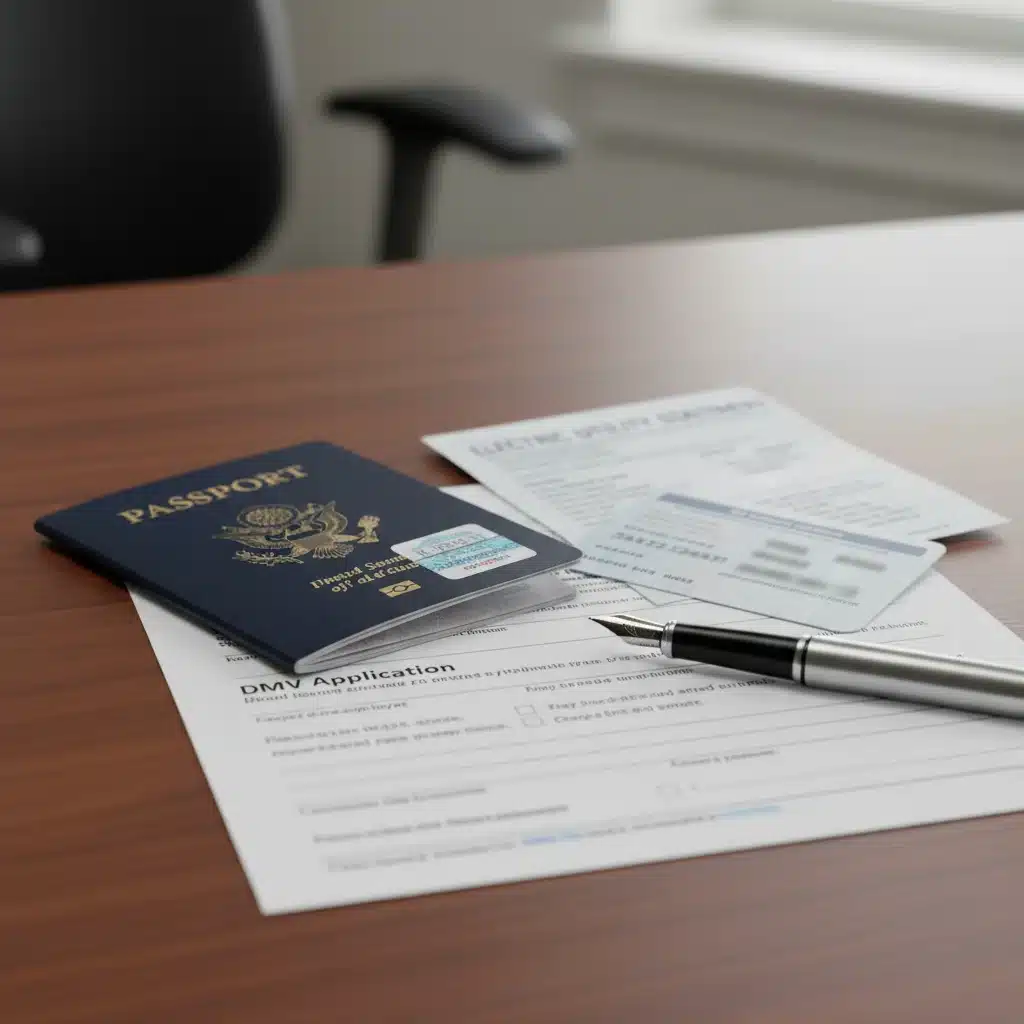
The documentation phase is arguably the most critical and often the most time-consuming part of obtaining your US Driver’s License. Being prepared with all the necessary documents will significantly streamline your visit to the DMV. While specific requirements can vary by state, there’s a common core of documents you’ll almost certainly need.
Proof of Identity and Legal Presence:
- Passport and Visa: Your valid foreign passport and the US visa stamp (e.g., H-1B, F-1, J-1, L-1) are primary proofs of identity and legal presence in the US.
- I-94 Arrival/Departure Record: This electronic record confirms your legal entry into the US and your authorized period of stay. You can usually print this from the CBP website.
- I-20 (for F-1 students), DS-2019 (for J-1 exchange visitors), I-797 Approval Notice (for H-1B, L-1, etc.): These documents validate your immigration status and purpose of stay.
- Employment Authorization Document (EAD Card) or Green Card: If applicable, these serve as robust proof of identity and legal authorization to reside and work.
- Social Security Card or Proof of SSN Ineligibility: Many states require a Social Security Number (SSN). If you don’t have one and are not eligible, you’ll need a letter from the Social Security Administration stating your ineligibility.
Proof of Residency:
You’ll need to demonstrate that you are a resident of the state where you are applying. This usually requires two different documents showing your name and current address. Examples include:
- Utility bills (electricity, water, gas)
- Bank statements
- Rental agreement or mortgage statement
- Mail from a government agency (e.g., IRS, state tax agency)
- Car registration or insurance policy
- Employer letter or pay stub
It’s advisable to bring more than the minimum requested number of documents, just in case. Ensure all documents are original and current. Photocopies are generally not accepted. Verify the exact list of acceptable documents on your state’s DMV website before your visit to secure your US Driver’s License.
The Application Process: Step-by-Step for Your US Driver’s License
Once you’ve gathered all your documents, you’re ready to tackle the application process. This typically involves several key stages:
1. Complete the Application Form:
Most DMV websites allow you to download and fill out the application form for a US Driver’s License in advance. This can save you time at the office. Fill it out accurately and completely.
2. Schedule an Appointment (Highly Recommended):
DMV offices can be notoriously busy. Scheduling an appointment online can drastically reduce your waiting time. Check your state’s DMV website for appointment booking options.
3. Visit the DMV Office:
On the day of your appointment, arrive early with all your original documents. You will typically:
- Present your documents for verification.
- Have your photo taken.
- Provide a thumbprint or fingerprint.
- Pay the application fee (fees vary by state).
4. Pass the Vision Test:
A basic vision screening is mandatory to ensure you meet the minimum visual acuity standards for driving. If you wear glasses or contact lenses, bring them with you. If you fail, you might need to get an eye exam from a licensed optometrist or ophthalmologist and submit their report.
5. Pass the Written Knowledge Test:
This test assesses your understanding of traffic laws, road signs, and safe driving practices in the US. Each state publishes a driver’s handbook (available online and sometimes in print) that contains all the information you need to study. It’s highly recommended to read this handbook thoroughly and take practice tests available online. The test format is usually multiple-choice, and you’ll need to achieve a certain passing score. Don’t underestimate this step; failing it means you’ll have to retake it, often after a waiting period.
Preparing for and Taking the Driving Skills Test (Road Test)
After successfully passing the written knowledge test, the next hurdle to obtaining your US Driver’s License is the driving skills test, commonly known as the road test. This test evaluates your ability to safely operate a vehicle and obey traffic laws in real-world conditions.
Learning to Drive in the US:
If you’re new to driving or unfamiliar with US traffic laws and driving conventions, consider enrolling in a professional driving school. Instructors are well-versed in what examiners look for during the road test and can provide valuable training. Even experienced drivers from other countries might benefit from a few lessons to adapt to US driving styles, traffic signs, and specific maneuvers like parallel parking, which is often a required component of the test.
Vehicle Requirements for the Road Test:
You must provide a vehicle for your road test. This vehicle must be:
- In good working condition (lights, brakes, turn signals, horn, tires).
- Properly registered and insured. You’ll need to show proof of current registration and insurance.
- Equipped with valid license plates.
- Accompanied by a licensed driver (someone with a valid US Driver’s License) if you only have a learner’s permit. This licensed driver must be at least 21 years old in most states.
Some states may also require the vehicle to have a working passenger-side brake pedal if you are taking the test with a driving school instructor. Always confirm these details with your state’s DMV.
What to Expect During the Road Test:
The road test is typically conducted by a DMV examiner who will ride with you and assess your driving skills. Key areas of evaluation include:
- Vehicle Control: Smooth acceleration, braking, and steering.
- Traffic Laws: Adherence to speed limits, traffic signals, stop signs, and lane markings.
- Lane Changes: Proper use of turn signals and mirror checks.
- Turns: Correct signaling, lane positioning, and execution.
- Parking: Parallel parking is a common requirement; some states may also include backing up in a straight line or parking on a hill.
- Observation: Checking mirrors, blind spots, and being aware of your surroundings.
- Following Distance: Maintaining a safe distance from other vehicles.
- Responding to Hazards: Demonstrating defensive driving skills.
Stay calm and focused. Listen carefully to the examiner’s instructions. If you make a mistake, don’t panic; sometimes minor errors are permissible as long as they don’t pose a safety risk. However, critical errors or unsafe actions will result in an immediate failure.
Receiving Your US Driver’s License and What Comes Next
Congratulations! If you pass your road test, you’re on the final stretch to getting your US Driver’s License. In many states, you’ll receive a temporary paper license immediately after passing the test. Your official, permanent plastic license will then be mailed to your address within a few weeks. It’s crucial to ensure your address on file with the DMV is correct.
Understanding Your New License:
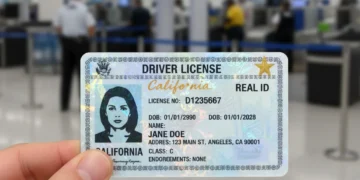
Your US Driver’s License will display important information, including your photo, name, address, date of birth, license number, and expiration date. Pay close attention to the expiration date, especially if your legal presence in the US is tied to a visa with a specific end date. Many states will issue a license that expires concurrently with your authorized stay, requiring renewal once your immigration status is extended.
What to Do with a Foreign Driver’s License:
Once you obtain your US Driver’s License, you should generally stop using your foreign driver’s license for driving purposes within the state that issued your US license. Some states may even require you to surrender your foreign license upon issuance of a new one, though this is less common. Keep your foreign license safe as it may still be useful for international travel or as a secondary form of identification.
Insurance Requirements:
Having a US Driver’s License is a prerequisite for obtaining car insurance in the United States. Auto insurance is mandatory in almost every state, and driving without it can lead to severe penalties, including fines, license suspension, and vehicle impoundment. Shop around for insurance quotes; rates can vary significantly based on your driving history, the type of car, and even your zip code. As a new driver in the US, your initial insurance premiums might be higher, but they can decrease over time with a clean driving record.
Driving Laws and Safety Tips for New US Residents
Driving in the US might present cultural and legal differences compared to your home country. Understanding these nuances is vital for your safety and to avoid legal issues.
Key US Driving Laws:
- Right-Turn-on-Red: In most states, it is permissible to turn right on a red light after coming to a complete stop and ensuring the intersection is clear, unless a sign explicitly prohibits it.
- Seat Belts: Seat belt use is mandatory for all occupants in a vehicle in all states.
- Cell Phone Use: Many states have laws restricting or prohibiting handheld cell phone use while driving. Hands-free devices are generally allowed, but it’s safest to avoid distractions altogether.
- Speed Limits: Strictly observe posted speed limits. They are enforced, and speeding tickets can be costly and negatively impact your insurance rates.
- School Buses: When a school bus stops and flashes its red lights, all traffic in both directions (unless separated by a median) must stop until the lights are off and the stop arm is retracted.
- Emergency Vehicles: Yield to emergency vehicles (police, fire, ambulance) by pulling over to the right side of the road and stopping.
- Move Over Laws: Most states have ‘move over’ laws requiring drivers to move to an adjacent lane or slow down when passing stopped emergency vehicles, tow trucks, or maintenance vehicles on the shoulder.
Defensive Driving Practices:
The US has a vast network of roads, from bustling city streets to expansive highways. Practicing defensive driving is key:
- Maintain Safe Following Distance: Use the ‘three-second rule’ – pick a fixed object ahead, and when the vehicle in front passes it, count three seconds. If you reach the object before three seconds, you’re too close.
- Be Aware of Blind Spots: Always check your mirrors and physically turn your head to check blind spots before changing lanes.
- Anticipate Hazards: Look far down the road, not just at the car in front of you, to anticipate potential problems.
- Avoid Distractions: Put away your phone, avoid eating, and minimize interactions with passengers that take your focus off the road.
- Adjust for Weather: Drive slower and increase following distance in rain, snow, or fog.
Common Challenges and How to Overcome Them
While the process of obtaining a US Driver’s License is straightforward once you know the steps, new residents often face specific challenges.
Language Barriers:
If English is not your first language, the written test can be particularly challenging. Many states offer the driver’s handbook and the written test in multiple languages. Inquire about these options at your local DMV. Utilize online resources and practice tests in your preferred language if available.
Driving Experience Differences:
Drivers from countries where driving on the left side of the road is common will need to adjust to driving on the right in the US. This requires conscious effort and practice. Familiarize yourself with left-hand turns, right-hand turns, and roundabout etiquette. Traffic laws, road signs, and even the ‘feel’ of American roads can be different. Take your time, practice in varied conditions, and consider professional driving lessons tailored to this transition.
Immigration Document Expiration:
As mentioned, your US Driver’s License might be tied to your immigration document’s expiration date. Keep track of these dates and initiate the renewal process for both your immigration status and your driver’s license well in advance to avoid any lapse in your driving privileges. Renewing your license typically requires updated proof of legal presence and residency.
Vehicle Ownership and Insurance:
Purchasing a car and getting insurance can be complex for new residents without a US credit history. You might need to pay higher insurance premiums initially. Some insurance companies specialize in insuring new immigrants or those with international driving records. Explore these options and compare quotes.
Conclusion: Your Journey to Driving Independence in the US
Obtaining a US Driver’s License as a new resident in 2026 is a significant step towards full integration and independence in the United States. While it involves several stages, from meticulous document gathering to passing both written and practical driving tests, the process is entirely manageable with proper preparation and understanding.
Remember to always consult your specific state’s Department of Motor Vehicles (DMV) website or equivalent agency for the most accurate and up-to-date information, as regulations can vary. Utilize the resources available, such as driver’s handbooks and practice tests, and don’t hesitate to seek professional driving instruction if you feel it would benefit you.
By following the steps outlined in this guide – understanding eligibility, diligently collecting documents, mastering traffic laws, and confidently demonstrating your driving skills – you’ll soon be holding your own US Driver’s License. This achievement not only grants you the freedom of the open road but also serves as a vital piece of identification, easing your transition into American life. Drive safely, and enjoy your newfound mobility!