Public Transit Innovations 2026: Enhancing Safety & Efficiency in US
Public Transportation in 2026: 5 Innovations in U.S. Essential Transit Services for Enhanced Safety and Efficiency
The landscape of urban mobility is undergoing a profound transformation, with public transportation at its heart. As we look towards 2026, the United States is poised to witness remarkable advancements in its essential transit services. These changes are not merely incremental; they represent a paradigm shift, driven by a relentless pursuit of enhanced safety, unparalleled efficiency, and a more sustainable future. The focus on public transit innovations is paramount, aiming to redefine how millions of Americans commute, connect, and interact with their cities.
The challenges facing public transportation are multifaceted, ranging from aging infrastructure and increasing congestion to the urgent need for decarbonization and equitable access. However, these challenges have spurred a wave of creativity and technological ingenuity. Federal funding, private sector investment, and groundbreaking research are converging to accelerate the adoption of cutting-edge solutions. This article delves into five pivotal innovations that are expected to shape U.S. public transit services by 2026, promising a safer, more efficient, and more inclusive transportation experience for all.
1. Autonomous and Semi-Autonomous Transit Vehicles: The Dawn of Driverless Commutes
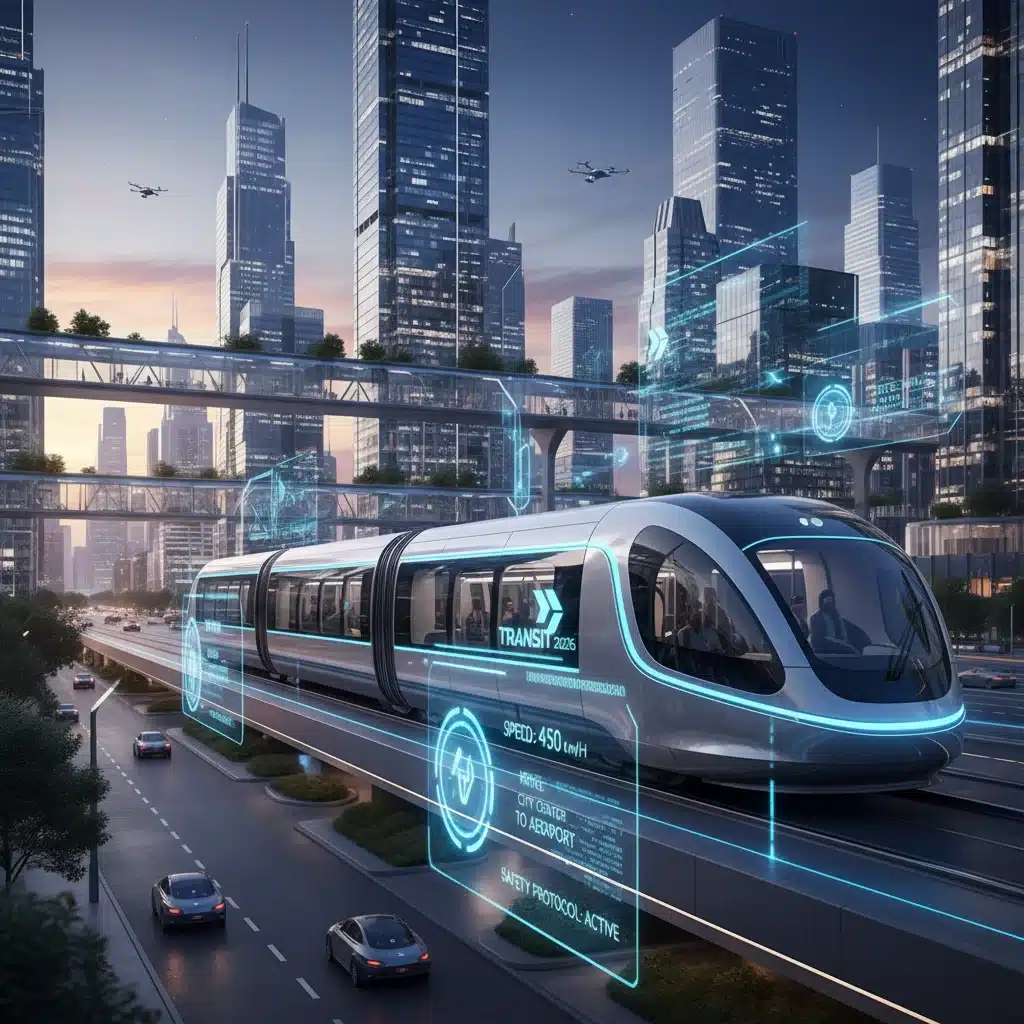
One of the most significant public transit innovations on the horizon for 2026 is the widespread integration of autonomous and semi-autonomous vehicles. While fully driverless cars are still some years away from mass adoption in complex urban environments, public transit is proving to be an ideal testbed for this technology. Shuttles, buses, and even some light rail systems are increasingly incorporating autonomous features, moving beyond fixed-route deployments to more dynamic, on-demand services.
The primary drivers behind this shift are safety and efficiency. Autonomous vehicles (AVs) are designed to eliminate human error, which is a major contributor to accidents. Advanced sensor arrays, artificial intelligence, and real-time data processing allow these vehicles to perceive their surroundings with unparalleled accuracy, detect obstacles, and react instantaneously. This translates into a significant reduction in collisions and a safer journey for passengers.
From an efficiency standpoint, AVs offer several advantages. They can operate continuously without breaks, optimize routes in real-time based on traffic conditions, and maintain consistent speeds, leading to shorter travel times and more reliable schedules. Furthermore, the potential for platooning – where multiple vehicles travel in close proximity, electronically linked – can increase road capacity and reduce energy consumption. By 2026, we can expect to see an expansion of autonomous shuttle services in designated zones, particularly in university campuses, business parks, and last-mile connections to major transit hubs. Semi-autonomous features, such as automated braking, lane-keeping assistance, and predictive maintenance diagnostics, will become standard across most new public transit fleets, enhancing operational safety and reducing maintenance costs.
The deployment of these vehicles is not without its challenges, including regulatory hurdles, public acceptance, and cybersecurity concerns. However, ongoing pilot programs across cities like Phoenix, Las Vegas, and Jacksonville are demonstrating the viability and benefits of this technology, paving the way for broader implementation. The future of public transit is undeniably autonomous, and 2026 will mark a crucial step in this evolution, making our commutes safer and remarkably more efficient.
2. AI-Powered Predictive Maintenance and Infrastructure Monitoring
The reliability of public transportation systems hinges on the health of their infrastructure and vehicle fleets. Traditionally, maintenance has been reactive or based on fixed schedules. However, a major public transit innovation emerging by 2026 is the widespread adoption of AI-powered predictive maintenance and infrastructure monitoring systems. These intelligent systems are revolutionizing how transit agencies anticipate and address potential failures, drastically improving operational efficiency and passenger safety.
Imagine a bus that can tell its maintenance team exactly when a particular engine component is likely to fail, or a rail track that alerts engineers to a nascent crack before it becomes a hazard. This is the promise of AI-driven predictive maintenance. Sensors embedded in vehicles and infrastructure collect vast amounts of data on performance, vibrations, temperature, and wear. Machine learning algorithms then analyze this data to identify patterns and predict potential malfunctions with high accuracy. This allows maintenance crews to perform targeted repairs before a breakdown occurs, minimizing service disruptions, reducing costly emergency repairs, and extending the lifespan of assets.
For infrastructure, AI-powered drones and IoT sensors are being deployed to monitor bridges, tunnels, and rail lines for structural integrity, corrosion, and other signs of degradation. These systems can process images and sensor data far more rapidly and comprehensively than human inspections alone, identifying issues that might otherwise go unnoticed until they become critical. The benefits are clear: enhanced safety through proactive problem-solving, significant cost savings by avoiding catastrophic failures and optimizing maintenance schedules, and improved service reliability for passengers who depend on consistent operations.
By 2026, these intelligent maintenance systems will be integral to the operational backbone of many U.S. transit agencies, transforming maintenance from a reactive necessity into a strategic, data-driven advantage. This innovation ensures that the wheels of public transit keep turning smoothly and safely, underpinning the entire system’s effectiveness.
3. Integrated Mobility-as-a-Service (MaaS) Platforms
The modern commuter often juggles multiple transportation options: a bus to the train station, a ride-share for the last mile, and perhaps a rented e-scooter for a quick errand. This fragmented experience can be inconvenient and inefficient. Enter Mobility-as-a-Service (MaaS), a transformative public transit innovation that integrates various transportation modes into a single, seamless digital platform. By 2026, MaaS platforms are expected to be a cornerstone of urban mobility in many U.S. cities, simplifying travel and promoting greater reliance on public and shared transport.
MaaS platforms allow users to plan, book, and pay for multimodal journeys through a single app. This means a user could, for example, plan a trip that involves a bus, a subway, and an electric scooter, all within one interface, with a single payment or subscription. The platform would optimize the route based on real-time traffic, user preferences (e.g., fastest, cheapest, most sustainable), and accessibility needs. This integration extends to public transit, ride-sharing services, bike-sharing, car-sharing, and even micro-mobility options.
The benefits of MaaS are substantial. For passengers, it offers unparalleled convenience, reduces decision fatigue, and often provides cost savings through integrated passes or subscription models. For transit agencies and cities, MaaS can significantly increase ridership by making public transportation more accessible and attractive. It also provides valuable data on travel patterns, helping agencies optimize routes, schedules, and resource allocation. Furthermore, by promoting shared and public transport, MaaS contributes to reduced traffic congestion, lower carbon emissions, and a more sustainable urban environment.
While full-scale MaaS implementation requires complex data sharing agreements and interoperability between different service providers, pilot programs in cities like Denver and Portland are demonstrating its potential. By 2026, we anticipate these platforms will offer increasingly sophisticated features, including personalized travel recommendations, dynamic pricing, and integration with urban planning initiatives, making multimodal journeys effortless and efficient.
4. Enhanced Connectivity and Real-Time Information Systems
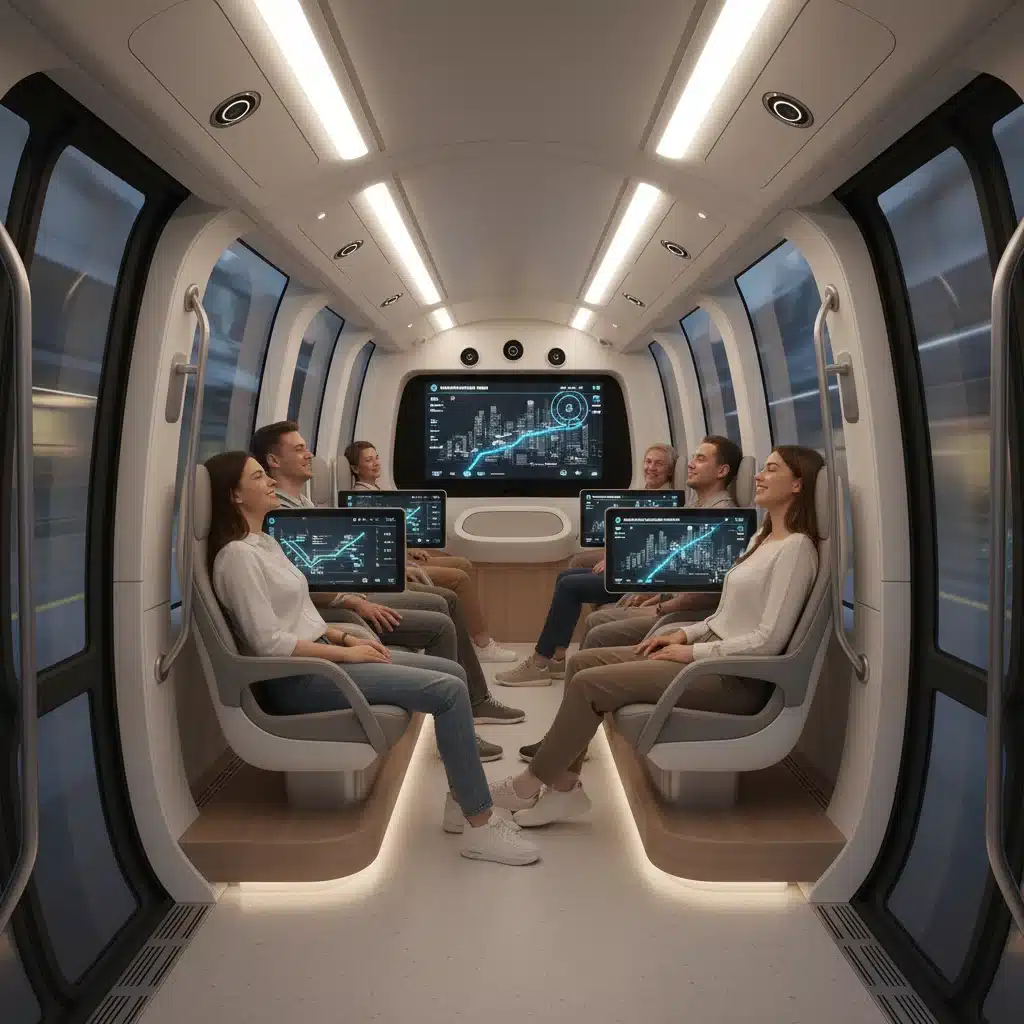
In an increasingly connected world, passengers expect real-time information and seamless connectivity while on the go. By 2026, enhanced connectivity and sophisticated real-time information systems will be a standard feature of U.S. public transit, representing a crucial public transit innovation for improving the passenger experience and operational efficiency.
This innovation encompasses several key elements. Firstly, widespread deployment of high-speed Wi-Fi and 5G connectivity on buses, trains, and within stations will become commonplace. This allows passengers to stay productive or entertained during their commute, making public transit a more appealing option. Beyond passenger convenience, robust connectivity is vital for the other innovations discussed, supporting autonomous vehicle communication, real-time data transmission for predictive maintenance, and seamless MaaS platform functionality.
Secondly, real-time information systems will become more granular, predictive, and personalized. Passengers will have access to highly accurate arrival and departure times, not just at the next stop but for their entire journey, accounting for potential delays or disruptions. Digital signage at stops and in vehicles will provide dynamic updates, while mobile apps will offer push notifications for service alerts, alternative routes, and even crowd levels on specific vehicles. Advanced analytics will allow these systems to predict delays more accurately, providing passengers with the information they need to make informed decisions.
Furthermore, these systems will integrate with smart city infrastructure, leveraging data from traffic sensors, weather forecasts, and event schedules to optimize transit operations. For example, a system might automatically increase bus frequency to a stadium before a major game or reroute buses around an unexpected road closure. This level of real-time responsiveness significantly enhances efficiency, reduces passenger stress, and builds trust in public transit services. By 2026, the era of waiting anxiously at a bus stop with no idea of when the next vehicle will arrive will largely be a thing of the past, replaced by an informed and predictable travel experience.
5. Advanced Security and Safety Protocols with AI and Biometrics
Safety has always been a paramount concern for public transportation, and 2026 will see significant advancements in security and safety protocols, driven by artificial intelligence and biometric technologies. This public transit innovation aims to create an even more secure environment for passengers and staff, deter crime, and provide rapid response capabilities in emergencies.
The integration of AI-powered surveillance systems is a game-changer. High-resolution cameras installed in stations and on vehicles will utilize AI to detect unusual behavior, unattended packages, or potential threats in real-time. These systems can alert security personnel to anomalies, allowing for swift intervention. Facial recognition technology, while raising privacy concerns that need careful navigation, could be employed in specific, regulated contexts for identifying individuals of interest or assisting in locating missing persons.
Beyond traditional security, AI is also enhancing operational safety. For instance, AI can monitor driver behavior in real-time, identifying signs of fatigue or distraction and providing alerts. In autonomous vehicles, AI systems continuously monitor the vehicle’s health and surroundings, making safety decisions far faster than a human could. Predictive analytics are also being used to identify high-risk areas or times for incidents, allowing for increased security presence or targeted interventions.
Biometric authentication, such as fingerprint or facial recognition, could also streamline access to certain transit services or provide enhanced security for personnel. While the implementation of such technologies requires careful consideration of privacy and ethical implications, their potential to bolster safety is undeniable. By 2026, public transit systems will be equipped with a more intelligent and proactive security infrastructure, leveraging AI to create a safer, more reassuring environment for everyone. This includes advanced emergency communication systems that can instantly connect passengers with authorities and provide clear instructions during critical events, further solidifying public trust in transit safety.

The Future is Now: Embracing Public Transit Innovations
The journey towards a more advanced public transportation system in the U.S. is well underway. The five innovations discussed – autonomous vehicles, AI-powered predictive maintenance, integrated MaaS platforms, enhanced connectivity, and advanced security protocols – are not isolated developments but interconnected components of a holistic vision for future urban mobility. Each innovation builds upon the others, collectively creating a transit ecosystem that is safer, more efficient, more reliable, and ultimately, more appealing to a broader segment of the population.
By 2026, these advancements will have moved beyond pilot programs and into mainstream implementation in many major metropolitan areas. They promise to reduce congestion, lower carbon emissions, and provide equitable access to transportation, fostering economic growth and improving the quality of life for urban dwellers. The strategic focus on public transit innovations is not just about adopting new technologies; it’s about fundamentally rethinking the role of public transportation in our society and building resilient, future-proof systems.
The path forward will require continued investment, collaborative efforts between government agencies, private companies, and research institutions, and a commitment to addressing the ethical and social implications of new technologies. However, the benefits of these innovations – a safer, more efficient, and more sustainable transportation network – are too significant to ignore. The future of U.S. public transit is bright, and 2026 will serve as a landmark year in its ongoing evolution, setting new standards for essential transit services and paving the way for even more transformative changes in the decades to come.