Navigating Public Utilities: Your Essential Guide to US Services

Moving to the US brings a unique set of challenges, and among the most critical is understanding and managing public utilities. These primary services—from electricity and water to internet and waste disposal—form the bedrock of daily life. Without a clear grasp of how they operate, who provides them, and how to connect them, new residents can face unnecessary stress, unexpected costs, and even service interruptions. This guide is designed to demystify the complex world of US public utilities, ensuring a smoother transition for anyone settling into a new home.
The landscape of utility provision in the United States is remarkably diverse, involving a mix of local government agencies, state-regulated entities, and private corporations. This decentralized system means that services, costs, and even regulations can vary significantly from one state or even one city to another. Understanding this intricate web is not just about convenience; it’s about financial prudence and ensuring continuous access to vital resources. For instance, the average monthly utility bill can fluctuate wildly across different regions, directly impacting a household’s budget.
This article will walk you through the entire process, from understanding the general structure of US utilities to the step-by-step procedure for setting up services in your new home. We’ll also delve into strategies for managing your utility bills effectively, exploring payment options, budgeting tips, and ways to reduce consumption. we’ll cover required services beyond the basics, such as internet, waste management, and public transit, equipping you with the knowledge to navigate common issues and emergencies. By the end, you’ll be well-prepared to handle your utility needs with confidence.
Understanding the Landscape of US Public Utilities
Navigating daily life in the US often means interacting with a complex web of public utilities. These services are the backbone of modern living, providing everything from electricity to clean water and reliable internet access. What most people miss is that these aren’t just conveniences; they are required for household functionality and personal well-being.
The structure of utility provision in the US can be quite varied, with oversight often split between local municipalities, state-level commissions, and even private corporations. For instance, while water and sanitation are typically managed by local government entities, electricity and natural gas might come from investor-owned companies regulated at the state level. This decentralized approach can initially seem confusing, but it allows for tailored services to specific regional needs.
Understanding these providers is notable for any new resident, not only for setting up basic services but also for managing household budgets effectively. The costs associated with utilities can vary significantly across states, impacting overall personal finance. According to a 2023 analysis by the Council for Community and Economic Research (C2ER), the average monthly utility bill for a household—including electricity, natural gas, water, and trash—can range from approximately $280 in states like Idaho to over $550 in Hawaii. That’s a considerable difference, isn’t it?
Familiarizing yourself with how these services operate and who governs them can also prevent unexpected charges or service interruptions. It’s like learning the rules of a new game; without understanding the basics, you might find yourself at a disadvantage. This knowledge is as basic as understanding your options for career growth when settling into a new country.
Knowing your utility providers empowers you to address issues efficiently, from reporting outages to questioning billing discrepancies. It also forms a key part of mastering your money, as these recurring expenses are a significant portion of monthly outlays. A proactive approach to managing your utilities can genuinely simplify your transition to life in the US.
Connecting Your Home: Step-by-Step Utility Setup
Moving to a new place always brings a whirlwind of activity, and setting up utilities can sometimes feel like a puzzle. But don’t worry; getting your required services like electricity, water, gas, and internet connected in the US is a straightforward process once you know the steps. What most people miss is that a little preparation can save you considerable time and stress.
For instance, did you know that failing to connect services promptly can result in unexpected fees or even delays in moving in? According to a 2023 survey by the American Moving and Storage Association, over 37% of respondents reported utility-related delays during their move. Planning ahead is key here.
Here’s a practical guide to help you get everything up and running smoothly.
Gathering Necessary Documentation
Before you even pick up the phone, gathering the right documents can significantly speed up the utility setup process. Think of it like having all your ingredients ready before you start cooking; it just makes everything easier.
You’ll typically need a few key pieces of information:
- Proof of Identity: A government-issued ID, like a driver’s license or passport, is almost always required. Some providers might also accept state IDs.
- Proof of Residency: This could be your lease agreement, mortgage documents, or a closing statement for a new home. Utility companies need to verify you have a legal right to request service at that address.
- Social Security Number (SSN): Many utility companies use your SSN to conduct a credit check. A good credit history might waive security deposits, which can be a nice bonus for your personal finance.
- Contact Information: Be ready to provide your current and new addresses, phone numbers, and email.
Having these items organized in a folder or digitally accessible will make each application much faster. It’s surprising how often people scramble for these details mid-call.
Choosing and Contacting Providers
Once your documents are in order, it’s time to identify and contact the utility companies serving your new address. This part requires a bit of research, but it’s usually quite simple.
- Identify Your Providers:
- Electricity and Gas: These are often provided by regional monopolies, meaning you usually have only one choice for your area. You can find out who serves your address by asking your landlord, previous owner, or by doing a quick online search for “electricity provider [your city, state]” or “gas company [your city, state]”.
- Water and Sewer: These services are almost always handled by municipal or county governments. A search for “[your city] water department” should quickly give you the contact information.
- Internet and Cable: This is where you might have options! Major providers like Xfinity, Spectrum, AT&T, and Verizon often compete in urban and suburban areas. Compare plans, speeds, and prices. Dr. Evelyn Reed, a consumer technology expert at Tech Insights Group, suggests, “Always check customer reviews and ask about promotional rates for new customers; they can offer significant savings.”
- Contact Each Company:
- Call their customer service line or visit their website to initiate service. Be prepared to provide your move-in date and the documentation you gathered earlier.
- Ask about any connection fees, security deposits, and estimated billing cycles. Understanding these costs upfront is part of mastering your money.
- Schedule installation appointments for services like internet and cable, as these often require a technician visit.
- Confirm Activation Dates: Always double-check the activation dates for each service. You don’t want to arrive at a new home only to find yourself in the dark (literally). Confirming these details helps avoid miscommunication.
Starting these arrangements about two weeks before your move date gives you ample buffer time. This proactive approach helps avoid last-minute rushes, freeing you up to focus on other aspects of settling into your new environment, like exploring career growth opportunities in your new city.
Always check customer reviews and ask about promotional rates for new customers; they can offer significant savings.
— Dr. Evelyn Reed, Consumer Technology Expert at Tech Insights Group
| Utility Service | Typical Provider Type | Key Setup Considerations | Management Tip |
|---|---|---|---|
| Electricity | Regional Monopolies (regulated) | Proof of ID & Residency, SSN for credit check | Monitor kWh usage, consider energy audits |
| Natural Gas | Regional Monopolies (regulated) | Proof of ID & Residency, SSN for credit check | Check for leaks, use programmable thermostat |
| Water & Sewer | Municipal/County Governments | Proof of Residency, connection fees | Fix drips promptly, conserve water |
| Internet & Cable | Private Companies (competitive) | Compare speeds/prices, schedule installation | Review plans annually, check customer reviews |
| Waste & Recycling | Municipal or Private Companies | Understand local separation rules, schedule pickup | Proper sorting avoids fines |
Managing Your Utility Bills: Payment, Budgeting, and Savings
Navigating utility bills can feel like a guessing game, but understanding the system makes all the difference. What most people miss is how much control they actually have over these recurring expenses. You don’t have to just accept the numbers; you can actively manage them.
Decoding Your Monthly Statement
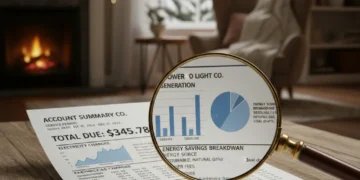
Your utility bill isn’t just a request for payment; it’s a detailed breakdown of your household’s consumption. Taking a few minutes to review it each month can reveal patterns and potential savings. Many providers, like Con Edison in New York, now offer digital statements with interactive charts, making analysis much simpler.
Understanding Usage Charges
The core of your bill is the usage charge, reflecting how much electricity, water, or gas you’ve consumed. This is usually measured in kilowatt-hours (kWh) for electricity, gallons or cubic feet for water, and therms or cubic feet for natural gas. For instance, a typical US household uses about 893 kWh of electricity per month, according to the U.S. Energy Information Administration. Keeping an eye on these units can highlight periods of higher consumption.
Recognizing Fees and Taxes
Beyond usage, bills often include a variety of fixed charges, fees, and taxes. These might cover meter reading, infrastructure maintenance, or local government levies. Some states, like California, impose specific environmental surcharges. It’s helpful to know which charges are unavoidable and which might vary based on your service plan.
Effective Strategies for Reducing Consumption
Lowering your utility bills often starts with reducing how much energy and water you use. Small changes around the house can add up to significant savings over time. Have you ever considered how much standby power your electronics consume? One impactful step is to conduct an energy audit of your home. Many utility companies, such as Pacific Gas and Electric (PG&E), offer free or low-cost home energy assessments. These assessments can identify specific areas where energy is being wasted, like drafts around windows or inefficient appliances. Replacing older appliances with Energy Star certified models can cut electricity use by 10-50%, depending on the appliance, as reported by the EPA. Simple behavioral adjustments also play a big role. Turning off lights when leaving a room, unplugging chargers, and taking shorter showers are all effective. Consider programmable thermostats; they can automatically adjust temperatures, saving around 10% on heating and cooling costs annually, according to the Department of Energy. It’s like having a silent, diligent assistant managing your climate control.
Exploring Assistance Programs and Discounts
Sometimes, despite your best efforts, utility costs can be a burden. Fortunately, various programs exist to help eligible households manage these expenses. These often include income-based assistance or special discounts for certain demographics. The Low Income Home Energy Assistance Program (LIHEAP) is a federal program that provides financial aid for heating and cooling costs. Eligibility typically depends on household income and size. Many states also run their own assistance programs; for example, Texas offers the full Energy Assistance Program (CEAP). Checking with your local utility provider directly is also a smart move, as they often have payment plans or hardship programs available. This kind of financial management is a key component of mastering your money. Beyond direct financial aid, some utilities offer incentives for energy efficiency upgrades. Rebates for installing solar panels, upgrading insulation, or purchasing energy-efficient windows can significantly reduce upfront costs. These programs not only help your wallet but also contribute to a more sustainable home environment. Understanding these options can be a notable step in your career advancement, as financial stability often underpins professional progress.

Required Services Beyond the Basics: Internet, Waste, and More
What other critical services do you need to consider for daily life? Beyond water and electricity, your home requires a reliable internet connection, effective waste disposal, and sometimes access to public transit. These elements contribute significantly to your comfort and connectivity.
Selecting the Right Internet and Communication Services
Choosing an internet provider can feel like navigating a maze, given the variety of options. Many areas offer several providers, each with different speeds and pricing structures. What most people miss is that the “best” provider often depends on your specific usage habits. Are you streaming 4K video constantly, or just checking emails? Compare the common types of internet services available:
- Cable Internet: Utilizes existing cable TV lines. It’s widely available in urban and suburban areas and generally offers good speeds, though performance can sometimes dip during peak usage hours due to shared bandwidth.
- Fiber Optic Internet: Delivers data via strands of glass or plastic. This is often the fastest and most reliable option, providing symmetrical upload and download speeds. its availability is still growing, often concentrated in newer developments or denser population centers.
- Satellite Internet: Broadcasts signals from orbiting satellites. It’s a viable option for rural areas where other services are unavailable. Speeds can be slower, and latency (the time it takes for data to travel) is higher, making it less ideal for real-time applications like online gaming.
- DSL (Digital Subscriber Line): Uses traditional telephone lines. While widely available, speeds are typically much slower than cable or fiber and decrease significantly with distance from the provider’s central office.
Consider your needs carefully; a household with multiple remote workers or online students might prioritize fiber, while a single user might find cable sufficient. According to a recent report by the Federal Communications Commission (FCC), average fixed broadband speeds increased by 30% over the last two years, yet significant disparities remain in rural versus urban access. Thinking about your long-term plans can help, especially if you’re aiming for career growth that might involve extensive online collaboration.
Navigating Waste and Recycling Protocols
Waste management might not be the most glamorous topic, but it’s required for maintaining a clean living environment. Collection services vary significantly depending on your municipality. Some cities provide direct municipal collection, where local government agencies handle trash and recycling pickup. This usually means set schedules and specific bins provided by the city. Other areas rely on private waste management companies. In these cases, residents often choose from a few approved vendors, comparing prices and service frequencies. For example, in many parts of Texas, residents contract directly with companies like Waste Management or Republic Services. Understanding local regulations for waste separation—what goes in recycling, compost, or general trash—is also critical to avoid fines and contribute to environmental efforts. Proper disposal practices are a small but important part of managing your personal finance effectively, as improper disposal can lead to unexpected costs.
Troubleshooting Common Utility Issues and Emergencies
Navigating utility disruptions requires a clear plan, especially when dealing with power outages, water leaks, or gas issues. Most people, I suspect, don’t think about these until they happen. Your first step for non-emergency problems should always be to contact your utility provider directly; their customer support lines are designed for these situations. What most people miss is that many providers now offer apps or online portals for reporting issues and checking outage maps. For instance, if your power goes out, check your circuit breaker first before calling the electric company. If that doesn’t resolve it, contacting your provider, like Con Edison in New York or Pacific Gas and Electric in California, is next. They can provide estimated restoration times. A recent survey by J.D. Power found that customer satisfaction with utility outage communications improved by 12% when companies offered real-time updates via text or app. This can certainly help when you’re managing your budget and need to know when the lights will come back on, impacting everything from food spoilage to your ability to work from home and impacting your personal finance planning. Water leaks, particularly those inside your home, often demand immediate attention to prevent significant damage. Turning off your main water supply valve is critical before calling a plumber or your water utility. For gas leaks, safety protocols are much stricter. If you smell gas, evacuate the premises immediately, move to a safe distance, and then call your gas company’s emergency line from outside the building. Never use light switches or phones inside if you suspect a gas leak, as sparks could ignite the gas. In any true emergency, such as a downed power line, a major gas leak outside, or a burst pipe causing severe flooding, dialing 911 is major. This national emergency service connects you to police, fire, and ambulance services. Remember, these services are for life-threatening situations or immediate danger. Understanding when to call 911 versus your utility company can make a significant difference in response time and safety. It’s a small but vital piece of knowledge that helps in unlocking your potential in everyday readiness.
Securing Your required Services
As you settle into life in the US, navigating the world of public utilities might initially seem daunting. by understanding the diverse landscape of providers, proactively managing your setup process, and diligently monitoring your consumption and bills, you can transform a potential headache into a streamlined aspect of your household management. The key lies in informed decision-making and leveraging available resources, from energy-saving programs to financial assistance. What steps will you take this week to optimize your utility usage and ensure peace of mind?
Frequently Asked Questions About US Utilities
Find quick answers to common questions about setting up and managing your public utility services in the United States.
How long does it typically take to connect new utilities?
Connecting new utilities usually takes a few business days, but it’s wise to initiate the process at least two weeks before your move-in date. Services like electricity and water can often be activated remotely or with minimal on-site work, while internet and cable might require a technician visit and several days to schedule.
Can I transfer my utilities when I move to a new address?
Yes, many utility providers allow you to transfer your service from one address to another within their service area. It’s best to contact your current providers a few weeks before your move to arrange for service disconnection at your old address and connection at your new one, often consolidating the process.
What should I do if I can’t afford my utility bills?
If you’re struggling to pay your utility bills, immediately contact your provider to inquire about payment plans, extensions, or hardship programs. investigate federal programs like LIHEAP (Low Income Home Energy Assistance Program) or state-specific assistance programs that offer financial aid for necessary services.
Are there different types of electricity providers in the US?
Yes, electricity providers in the US can vary. In many regions, you’ll have a single, regulated utility company that handles both generation and distribution. in some deregulated states, you might have a choice of electricity suppliers for the generation portion, while a single utility still manages the delivery.
How often are utility bills typically sent out?
Utility bills are most commonly sent out on a monthly basis. some services, particularly water or waste management, might send bills quarterly. Always confirm the billing cycle with each of your providers during the setup process to avoid missing payments.