2026 Mortgage Market: Fixed vs. Adjustable Rates for Home Financing
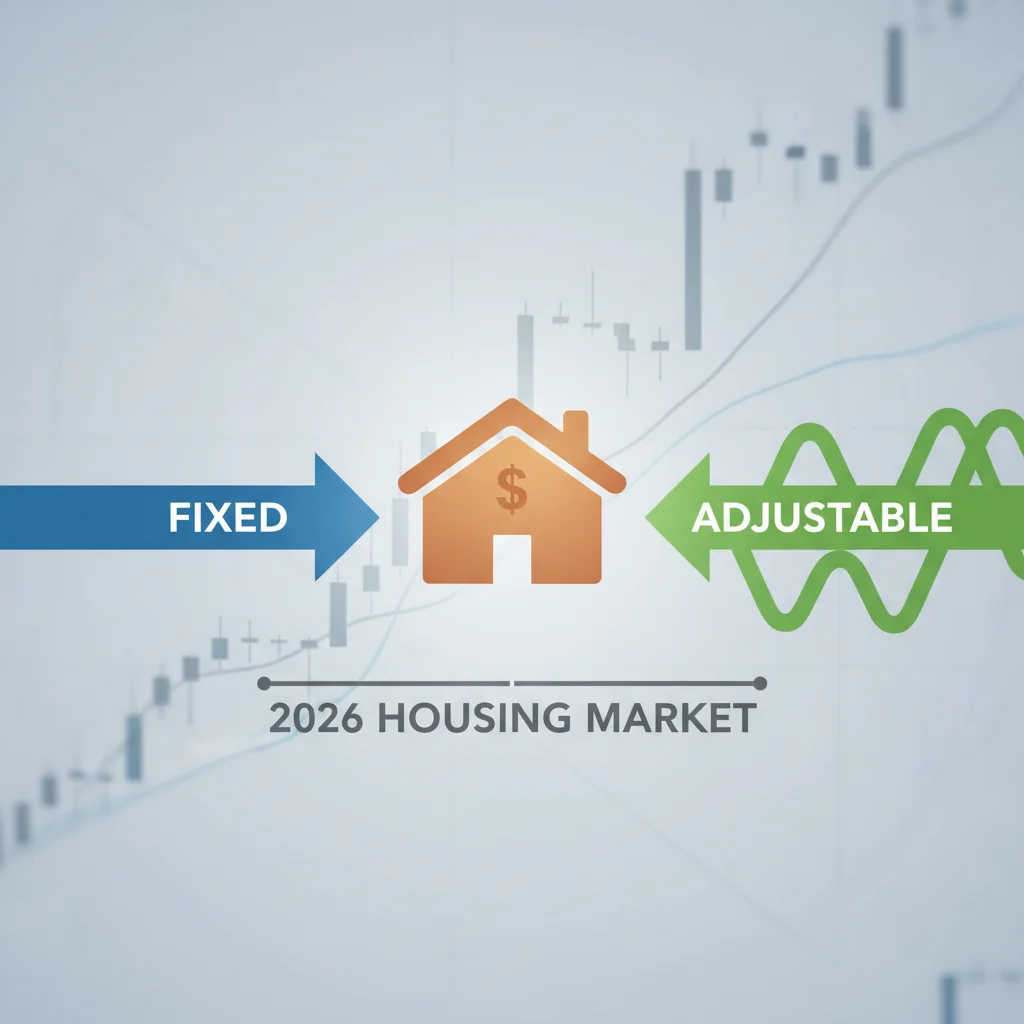
Understanding the intricacies of the 2026 mortgage market is paramount for anyone considering purchasing a home or refinancing an existing one. As we look ahead, the economic landscape continues to evolve, bringing with it shifts in interest rates, housing demand, and lending policies. Making an informed decision between a fixed-rate mortgage and an adjustable-rate mortgage (ARM) will be a critical step in securing optimal home financing. This comprehensive guide aims to dissect the projected conditions of the 2026 mortgage market, offering insights to help you navigate your options effectively.
The decision to opt for a fixed-rate or adjustable-rate mortgage is not merely a financial one; it’s a strategic choice that impacts your long-term financial stability and peace of mind. Both options come with distinct advantages and disadvantages, and their suitability largely depends on individual financial circumstances, risk tolerance, and future economic outlook. By delving into the forecasted trends for 2026, we can better prepare you for what lies ahead and empower you to make the best possible choice for your homeownership journey.
The Evolving Economic Landscape for the 2026 Mortgage Market
Forecasting the future of the 2026 mortgage market requires a keen understanding of broader economic indicators. Several key factors are expected to shape interest rates and housing affordability, including inflation, Federal Reserve policy, employment rates, and global economic stability. Each of these elements plays a pivotal role in determining the cost of borrowing and the overall health of the housing sector.
Inflation, for instance, has a direct correlation with interest rates. If inflationary pressures persist or intensify leading up to 2026, the Federal Reserve may continue or resume its hawkish stance, potentially leading to higher benchmark rates. This, in turn, translates to higher mortgage rates for consumers. Conversely, a moderation of inflation could allow the Fed to adopt a more accommodative monetary policy, which might lead to lower rates.
Employment rates also serve as a crucial barometer. A strong job market typically indicates a healthy economy, which can support higher housing demand and stable property values. However, it can also contribute to inflationary pressures. Conversely, a weakening job market could signal economic slowdown, potentially leading to lower rates to stimulate borrowing and investment, but also posing risks to borrowers’ ability to repay.
Global economic stability, while sometimes overlooked, can significantly influence domestic financial markets. Geopolitical events, international trade relations, and global supply chain dynamics can all impact investor confidence and capital flows, ultimately affecting long-term interest rates. For the 2026 mortgage market, staying abreast of these global trends will be just as important as monitoring domestic indicators.
Overall, the economic environment in 2026 is anticipated to be one of cautious optimism, with central banks balancing inflation control with economic growth. This delicate balance will likely result in a dynamic interest rate environment, making the choice between fixed and adjustable rates even more critical for prospective homeowners.
Understanding Fixed-Rate Mortgages in 2026
A fixed-rate mortgage is a cornerstone of traditional home financing, offering predictability and stability. With this type of loan, your interest rate remains constant for the entire term of the mortgage, typically 15, 20, or 30 years. This means your monthly principal and interest payments will not change, regardless of how interest rates fluctuate in the broader market. For many homeowners, this certainty is a significant advantage, especially when planning long-term budgets.
Advantages of Fixed-Rate Mortgages
- Predictable Payments: The most significant benefit is the consistency of your monthly payments. This makes budgeting straightforward and eliminates the stress of potential rate increases.
- Stability in Volatile Markets: In an environment where interest rates are expected to rise, a fixed-rate mortgage locks in a lower rate, protecting you from future increases. This is particularly appealing if the 2026 mortgage market is predicted to see upward rate movements.
- Peace of Mind: Knowing exactly what you owe each month provides a strong sense of financial security, allowing you to plan other financial goals without worrying about mortgage payment volatility.
Disadvantages of Fixed-Rate Mortgages
- Higher Initial Rates: Fixed-rate mortgages often come with slightly higher initial interest rates compared to the introductory rates of ARMs. This premium is essentially the cost of certainty.
- Missed Opportunity for Lower Rates: If interest rates fall significantly after you’ve locked into a fixed rate, you won’t benefit from those lower rates unless you refinance, which incurs additional costs.
- Less Flexibility: While providing stability, fixed rates offer less flexibility to adapt to drastically changing market conditions without refinancing.
Who Benefits Most from a Fixed-Rate Mortgage in 2026?
A fixed-rate mortgage is ideal for:
- Long-term homeowners: If you plan to stay in your home for many years, locking in a rate provides long-term stability.
- Budget-conscious individuals: Those who prioritize predictable monthly expenses and want to avoid financial surprises.
- Borrowers in a rising rate environment: If economic forecasts suggest interest rates will increase in the coming years, securing a fixed rate now can be highly advantageous.
As the 2026 mortgage market approaches, understanding your personal financial goals and risk tolerance will be key in determining if a fixed-rate mortgage aligns with your homeownership strategy.
Exploring Adjustable-Rate Mortgages (ARMs) in 2026
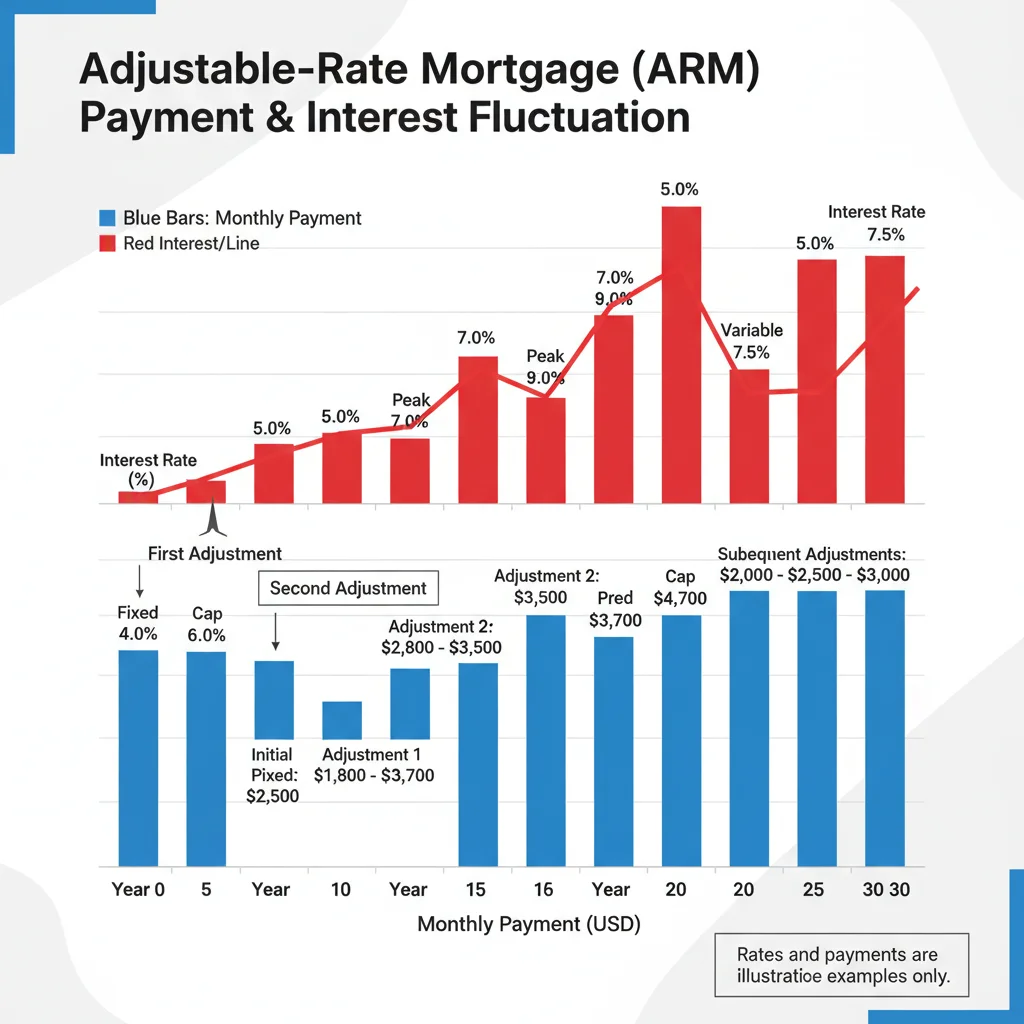
Adjustable-Rate Mortgages, or ARMs, offer a different approach to home financing. Unlike fixed-rate mortgages, the interest rate on an ARM is not constant. It typically starts with a lower, fixed interest rate for an initial period (e.g., 3, 5, 7, or 10 years), after which it adjusts periodically based on a predetermined index, such as the Secured Overnight Financing Rate (SOFR) or the Constant Maturity Treasury (CMT). This adjustment can lead to fluctuations in your monthly payments.
How ARMs Work
ARMs are structured with a fixed-rate period followed by an adjustable period. For example, a 5/1 ARM means the initial rate is fixed for five years, and then it adjusts annually thereafter. The interest rate adjustments are tied to an index plus a margin set by the lender. Most ARMs also have caps that limit how much the interest rate can change in a single adjustment period and over the life of the loan, providing some level of protection against extreme rate hikes.
Advantages of Adjustable-Rate Mortgages
- Lower Initial Interest Rates: ARMs typically offer lower initial interest rates compared to fixed-rate mortgages. This can result in lower monthly payments during the initial fixed period, freeing up cash flow for other investments or expenses.
- Potential for Lower Payments: If interest rates in the market decrease during the adjustable period, your monthly payments could also go down, saving you money.
- Ideal for Short-Term Ownership: If you plan to sell your home or refinance within the initial fixed-rate period, an ARM can be a cost-effective option, as you benefit from the lower introductory rate without facing the risks of rate adjustments.
Disadvantages of Adjustable-Rate Mortgages
- Payment Volatility: The primary drawback is the uncertainty of future payments. If interest rates rise significantly, your monthly payments could increase, potentially straining your budget.
- Complexity: ARMs can be more complex to understand due to their adjustment mechanisms, indexes, margins, and caps.
- Risk of Higher Costs: While initial rates are lower, there’s a risk that over the life of the loan, the total interest paid could be higher than with a fixed-rate mortgage, especially if rates climb steadily.
Who Benefits Most from an ARM in 2026?
An adjustable-rate mortgage might be suitable for:
- Short-term homeowners: Those who anticipate moving or refinancing before the fixed-rate period ends.
- Borrowers with increasing income potential: If you expect your income to rise significantly in the coming years, you might be more comfortable with potential payment increases.
- Those in a declining rate environment: If economic forecasts suggest interest rates are likely to fall, an ARM could allow you to benefit from those lower rates without refinancing.
For the 2026 mortgage market, ARMs could be an attractive option for those who are strategic about their homeownership timeline and comfortable with a degree of interest rate risk.
Key Factors to Consider When Choosing in the 2026 Mortgage Market
The decision between a fixed-rate and an adjustable-rate mortgage in the 2026 mortgage market is highly personal and depends on several critical factors. A thorough evaluation of your financial situation, risk tolerance, and future plans is essential.
Your Financial Stability and Income Predictability
Do you have a stable, predictable income, or is it subject to significant fluctuations? If your income is highly stable, you might be better equipped to handle potential payment increases from an ARM. Conversely, if your income is less predictable, the certainty of a fixed-rate mortgage might be more appealing.
Your Risk Tolerance
How comfortable are you with financial uncertainty? If the thought of your mortgage payment changing causes anxiety, a fixed-rate mortgage offers peace of mind. If you’re comfortable with a degree of risk and believe you can manage potential payment increases, an ARM could offer initial savings.
How Long You Plan to Stay in Your Home
This is arguably one of the most crucial factors. If you plan to live in your home for five years or less, an ARM with a long initial fixed period (e.g., a 5/1 or 7/1 ARM) could be financially advantageous due to its lower introductory rates. If you envision staying in your home for a decade or more, a fixed-rate mortgage typically provides greater long-term security against rising rates.
The Current and Projected Interest Rate Environment
What are the prevailing economic forecasts for interest rates leading up to and beyond 2026? If rates are expected to rise, a fixed-rate mortgage might be prudent. If rates are projected to remain stable or even fall, an ARM could be a smarter choice. Keep in mind that economic forecasts are not guarantees, but they can provide valuable guidance.
Refinancing Potential
Consider the ease and cost of refinancing. If you choose an ARM and rates skyrocket, would refinancing into a fixed rate be a viable option? Factor in closing costs and the potential for a higher principal balance if you roll those costs into a new loan.
Your Debt-to-Income Ratio
Lenders evaluate your debt-to-income (DTI) ratio. A higher DTI might make it harder to qualify for an ARM, as lenders consider the potential for increased payments. A lower DTI offers more flexibility.
By carefully weighing these factors, you can make a more informed decision that aligns with your financial goals and comfort level within the dynamic 2026 mortgage market.
Navigating the Application Process in 2026
Regardless of whether you choose a fixed-rate or adjustable-rate mortgage, the application process for home financing in the 2026 mortgage market will require careful preparation. Lenders will continue to scrutinize creditworthiness, income stability, and debt levels to mitigate risk.
Credit Score and History
Your credit score remains a critical component of your mortgage application. A higher credit score (generally 740+) indicates lower risk to lenders and can qualify you for the most favorable interest rates. Begin monitoring your credit report well in advance of applying, correcting any errors, and paying down outstanding debts to improve your score.
Debt-to-Income (DTI) Ratio
Lenders assess your DTI ratio to determine your ability to manage monthly mortgage payments alongside existing debts. Generally, a DTI below 36% (with no more than 28% going towards housing costs) is preferred, though some lenders may approve higher ratios depending on other factors. Reducing credit card balances, student loans, and auto loans can significantly improve your DTI.
Down Payment and Savings
A substantial down payment can reduce your loan amount, lower your monthly payments, and potentially eliminate the need for private mortgage insurance (PMI). While 20% is often recommended, many loan programs allow for much lower down payments. Lenders will also want to see that you have sufficient reserves (savings) to cover several months of mortgage payments after closing.
Documentation Required
Be prepared to provide extensive documentation, including:
- Proof of income (pay stubs, W-2 forms, tax returns for the past two years)
- Bank statements and investment account statements
- Proof of assets (savings, checking, retirement accounts)
- Identification (driver’s license, social security card)
- Rental history or previous mortgage statements
Pre-Approval is Key
Obtaining a mortgage pre-approval before you start house hunting is highly recommended. A pre-approval letter from a lender indicates how much you can borrow, strengthening your offer to sellers and providing a clear budget for your home search. It also gives you a realistic understanding of the rates and terms you qualify for in the 2026 mortgage market.
The mortgage application process can be rigorous, but being well-prepared and organized will streamline the experience and increase your chances of securing the best possible financing terms.
Refinancing Considerations in the 2026 Mortgage Market
For current homeowners, the 2026 mortgage market might present opportunities for refinancing. Refinancing involves replacing your existing mortgage with a new one, often to secure a lower interest rate, change your loan term, or convert an ARM to a fixed-rate mortgage (or vice-versa). Understanding when and why to refinance is crucial for maximizing your financial benefit.
Reasons to Refinance in 2026
- Lower Interest Rates: If current mortgage rates in 2026 are significantly lower than your existing rate, refinancing could lead to substantial savings on interest over the life of the loan and lower monthly payments.
- Switching Loan Types: You might want to switch from an ARM to a fixed-rate mortgage for payment stability, especially if rates are expected to rise. Conversely, if rates have dropped considerably, switching from a fixed rate to an ARM might offer lower initial payments.
- Shorten Loan Term: Refinancing to a shorter term (e.g., from 30 years to 15 years) can help you pay off your mortgage faster and save on total interest, though it typically results in higher monthly payments.
- Cash-Out Refinance: This allows you to tap into your home equity by taking out a new, larger mortgage and receiving the difference in cash. This cash can be used for home improvements, debt consolidation, or other financial needs.
When Refinancing Might Not Be Worth It
Refinancing isn’t always the best option. Consider the following:
- Closing Costs: Refinancing involves closing costs, similar to your original mortgage. These can range from 2% to 5% of the loan amount. You need to calculate how long it will take for your savings from the new rate to offset these costs (the "break-even point").
- How Long You’ll Stay: If you plan to sell your home before reaching the break-even point, refinancing won’t be financially beneficial.
- Interest Rate Environment: If rates are trending upwards, refinancing might not offer a lower rate than your current one unless your credit profile has significantly improved.
Tips for Refinancing in 2026
- Monitor Rates: Keep a close eye on interest rate trends in the 2026 mortgage market.
- Check Your Credit: Ensure your credit score is in excellent shape to qualify for the best rates.
- Shop Around: Obtain quotes from multiple lenders to compare rates, fees, and terms.
- Calculate the Break-Even Point: Use online calculators or consult with a financial advisor to determine if refinancing makes financial sense for your situation.
For existing homeowners, the 2026 mortgage market could be a strategic window to optimize their home financing through careful refinancing decisions.
The Role of Technology and Digital Lending in 2026
The 2026 mortgage market will undoubtedly continue to be shaped by advancements in technology and the increasing prevalence of digital lending platforms. These innovations are transforming how borrowers apply for and manage their mortgages, making the process more efficient, transparent, and accessible.
Streamlined Application Processes
Digital mortgage applications are becoming standard, allowing borrowers to complete forms, upload documents, and track their application status online. This reduces paperwork, speeds up processing times, and provides a more convenient experience. Automated data verification tools can instantly cross-reference financial information, further accelerating approvals.
Artificial Intelligence (AI) and Machine Learning (ML)
AI and ML are being integrated into various stages of the mortgage process. These technologies can help lenders:
- Assess Risk More Accurately: By analyzing vast datasets, AI can identify patterns and predict credit risk with greater precision, potentially leading to more competitive rates for qualified borrowers.
- Personalize Loan Products: AI algorithms can match borrowers with the most suitable mortgage products based on their financial profiles and preferences, whether it’s a fixed-rate or an ARM.
- Enhance Customer Service: AI-powered chatbots and virtual assistants can provide instant answers to common questions, guiding applicants through the process 24/7.
Blockchain Technology
While still in nascent stages for mainstream mortgage applications, blockchain technology holds promise for the future. It could create more secure and transparent records of property ownership and transactions, potentially reducing fraud and simplifying the closing process. By 2026, we might see pilot programs or specialized applications of blockchain in the mortgage sector.
Growth of FinTech Lenders
Financial technology (FinTech) companies are increasingly challenging traditional banks by offering fully digital mortgage solutions. These lenders often boast lower overheads, which can sometimes translate into more competitive rates or lower fees. Their focus on user experience and efficiency is appealing to a new generation of homebuyers.
Data Security and Privacy
As more personal and financial data is handled digitally, robust cybersecurity measures will be paramount. Lenders in the 2026 mortgage market will need to ensure the highest standards of data protection to maintain borrower trust and comply with evolving privacy regulations.
The integration of technology will make the 2026 mortgage market more dynamic and user-friendly, but borrowers should still exercise due diligence, comparing offers from both traditional and digital lenders to find the best fit.

Expert Predictions and Outlook for the 2026 Mortgage Market
Forecasting the 2026 mortgage market with absolute certainty is impossible, given the multitude of unpredictable global and domestic events. However, economic analysts and housing market experts offer valuable insights based on current trends and historical data. Their predictions can help prospective homebuyers and refinancers make more informed decisions.
Interest Rate Projections
Many economists anticipate that by 2026, central banks will have achieved a more stable inflation environment, potentially allowing for a moderation in interest rates from their recent peaks. However, a return to the ultra-low rates seen in the past decade is unlikely. The consensus often points towards rates settling into a "new normal" that is higher than the pre-pandemic era but potentially lower than the immediate post-inflation surge.
- Fixed-Rate Mortgages: Experts suggest that fixed-rate mortgages in 2026 might offer attractive stability if rates have indeed stabilized or begun a gradual decline. Borrowers will need to weigh the premium for this stability against potential slight fluctuations.
- Adjustable-Rate Mortgages: ARMs could become more appealing if the market predicts a downward trend in rates or if borrowers foresee selling or refinancing within the initial fixed period. However, the risk of upward adjustments remains a key consideration.
Housing Inventory and Affordability
The supply-demand imbalance in the housing market is a persistent issue. While new construction is ongoing, it’s unlikely to fully alleviate the housing shortage by 2026. This continued scarcity, combined with potentially higher borrowing costs compared to previous years, means affordability will remain a significant challenge for many buyers. Property values are expected to continue appreciating, albeit at a more sustainable pace than the rapid increases observed recently.
Regulatory Changes
Regulatory bodies continually review and update mortgage lending standards. While no major overhauls are widely predicted, there could be minor adjustments aimed at consumer protection, particularly concerning ARM disclosures or underwriting practices. Staying informed about any new regulations will be important for both lenders and borrowers.
Geopolitical and Economic Shocks
The global environment remains a wild card. Unforeseen geopolitical conflicts, energy crises, or significant economic downturns in major global economies could rapidly alter the outlook for the 2026 mortgage market. These external factors can influence investor confidence, bond yields, and ultimately, mortgage rates.
In summary, the expert consensus for the 2026 mortgage market suggests a period of relative stability compared to recent volatility, but with continued challenges in affordability. Prudent financial planning, a clear understanding of personal circumstances, and diligent market monitoring will be essential for making optimal home financing decisions.
Conclusion: Making Your Optimal Home Financing Decision in 2026
As we’ve explored, the 2026 mortgage market presents a complex yet navigable landscape for prospective homeowners and those looking to refinance. The decision between a fixed-rate and an adjustable-rate mortgage is not one-size-fits-all; it requires a deep understanding of your personal financial situation, risk tolerance, and long-term goals, coupled with an informed perspective on economic forecasts.
Fixed-rate mortgages offer unparalleled stability and predictability, making them an excellent choice for those who prioritize consistent monthly payments and plan to stay in their homes for many years. They act as a hedge against rising interest rates, providing peace of mind in a potentially volatile economic climate.
Adjustable-rate mortgages, on the other hand, can provide initial cost savings through lower introductory rates. They are particularly attractive for borrowers who anticipate selling or refinancing within the fixed-rate period or who are comfortable with the potential for payment fluctuations in exchange for early savings. However, the inherent risk of rate increases demands careful consideration and a robust financial buffer.
To make an optimal home financing decision in the 2026 mortgage market, we recommend the following steps:
- Assess Your Financial Health: Understand your income stability, credit score, debt-to-income ratio, and available down payment.
- Define Your Homeownership Horizon: How long do you realistically plan to live in the home? This is a crucial determinant for fixed vs. adjustable.
- Evaluate Your Risk Tolerance: Are you comfortable with potential payment changes, or do you prefer absolute certainty?
- Stay Informed: Keep an eye on economic indicators, interest rate forecasts, and housing market trends leading up to and during 2026.
- Shop Around: Obtain quotes from multiple lenders for both fixed-rate and adjustable-rate options. Compare not just the interest rates but also fees, points, and loan terms.
- Consult an Expert: A qualified mortgage broker or financial advisor can provide personalized guidance tailored to your unique circumstances and help you navigate the nuances of the 2026 mortgage market.
Ultimately, the best mortgage for you in 2026 will be the one that aligns most closely with your financial objectives, provides the greatest comfort, and supports your long-term wealth-building strategy. By taking a proactive and informed approach, you can secure favorable home financing and achieve your homeownership dreams.