Essential Services & Climate Resilience: 2026 Strategies for Extreme Weather

The escalating frequency and intensity of extreme weather events present an unprecedented challenge to the stability and functionality of essential services worldwide. From devastating hurricanes and prolonged droughts to severe heatwaves and relentless wildfires, the impacts of climate change are no longer distant threats but present realities demanding immediate and strategic action. As we look towards 2026, the imperative to develop robust climate resilience strategies for these critical sectors has never been more urgent. This article delves into the multifaceted approaches being adopted to safeguard our fundamental services – energy, water, communication, transportation, and healthcare – against the unpredictable wrath of a changing climate.
The year 2026 marks a pivotal point in global efforts to adapt to climate change. With scientific consensus solidifying and the tangible effects of a warming planet becoming increasingly apparent, governments, corporations, and communities are accelerating their investments in resilience. The focus is shifting from reactive disaster response to proactive, integrated planning that embeds climate considerations into every aspect of infrastructure development and service delivery. This proactive stance is not merely about minimizing damage; it’s about ensuring continuity, protecting lives, and fostering economic stability in an increasingly volatile world. Understanding the core components of effective climate resilience strategies is crucial for anyone involved in urban planning, public policy, engineering, and emergency management.
The Shifting Paradigm: From Reaction to Proactive Resilience
Historically, responses to extreme weather events have often been post-disaster, focusing on recovery and rebuilding. While essential, this approach is unsustainable in the face of accelerating climate change. The economic and social costs of repeated disruption are astronomical, leading to a paradigm shift towards proactive climate resilience strategies. This shift necessitates foresight, comprehensive risk assessment, and integrated planning that anticipates future climate scenarios rather than merely reacting to past events.
In 2026, this proactive approach is characterized by several key pillars. Firstly, there’s a greater emphasis on data-driven decision-making. Advanced climate modeling, predictive analytics, and real-time monitoring systems are providing unprecedented insights into potential vulnerabilities and impacts. This allows essential service providers to identify high-risk areas, understand the specific threats they face (e.g., sea-level rise, increased precipitation, extreme heat), and tailor their resilience efforts accordingly. Secondly, cross-sector collaboration is becoming non-negotiable. The interconnectedness of essential services means that a failure in one sector can cascade through others. Therefore, effective climate resilience strategies require seamless coordination between energy providers, water utilities, telecommunication companies, transport authorities, and healthcare systems. This often involves joint planning exercises, shared resources, and integrated emergency response protocols.
Furthermore, the concept of ‘building back better’ has evolved into ‘building forward resilient’. This means that new infrastructure is designed with future climate conditions in mind, incorporating higher standards for flood protection, wind resistance, and temperature tolerance. Existing infrastructure is being retrofitted and upgraded to meet these new standards, often leveraging innovative materials and technologies. The goal is not just to restore functionality after a disaster but to enhance it, making systems less susceptible to future shocks. This forward-thinking approach is fundamental to long-term sustainability and the safeguarding of essential services.
Key Pillars of 2026 Climate Resilience Strategies for Essential Services
The development of robust climate resilience strategies for essential services in 2026 is built upon several critical pillars, each addressing a unique facet of climate vulnerability and adaptation:
1. Infrastructure Hardening and Modernization
One of the most tangible aspects of resilience is the physical fortification of infrastructure. For energy grids, this means transitioning to decentralized systems, burying power lines, and investing in smart grid technologies that can reroute power dynamically. Water infrastructure is seeing investments in advanced treatment facilities capable of handling variable water quality, redundant pumping stations, and improved stormwater management systems to prevent urban flooding. Communication networks are deploying more resilient fiber optic cables, satellite redundancy, and hardened cell towers. Transportation infrastructure is being upgraded with elevated roads, improved drainage, and climate-resistant bridge designs. These hardening efforts are crucial for maintaining operational integrity during and after extreme weather events, forming the backbone of effective climate resilience strategies.
2. Diversification and Redundancy of Systems
Relying on a single source or pathway for essential services creates significant vulnerability. Therefore, 2026 resilience strategies emphasize diversification and redundancy. For energy, this translates to a mix of renewable sources (solar, wind, geothermal) alongside traditional ones, creating a more distributed and robust energy portfolio. Water systems are exploring alternative water sources like desalination and advanced wastewater recycling. Communication networks are building multiple pathways for data transmission and investing in mobile emergency communication units. Healthcare systems are developing mobile hospitals and ensuring multiple supply chain routes for critical medical supplies. This multi-pronged approach ensures that if one component fails, others can pick up the slack, maintaining service delivery.
3. Early Warning Systems and Predictive Analytics
Timely and accurate information is a cornerstone of effective disaster preparedness. Advanced early warning systems, powered by AI and machine learning, are becoming increasingly sophisticated. These systems can predict the trajectory and intensity of extreme weather events with greater precision, allowing essential service providers to take pre-emptive measures. This includes pre-positioning resources, activating emergency protocols, and issuing public advisories. Predictive analytics also helps identify potential strain on infrastructure before it occurs, enabling proactive maintenance and reinforcement. Integrating these technologies into climate resilience strategies allows for a more agile and informed response, minimizing damage and disruption.

4. Nature-Based Solutions
Beyond engineered solutions, nature itself offers powerful tools for climate resilience. Mangrove forests protect coastlines from storm surges, wetlands absorb excess floodwaters, and urban green spaces can mitigate heat island effects. In 2026, there’s a growing recognition of the value of integrating nature-based solutions into climate resilience strategies. This includes restoring natural habitats, creating green infrastructure (e.g., permeable pavements, rain gardens), and implementing sustainable land management practices. These solutions often provide co-benefits, such as improved biodiversity, enhanced air and water quality, and recreational opportunities, making them a highly attractive component of holistic resilience planning.
5. Community Engagement and Preparedness
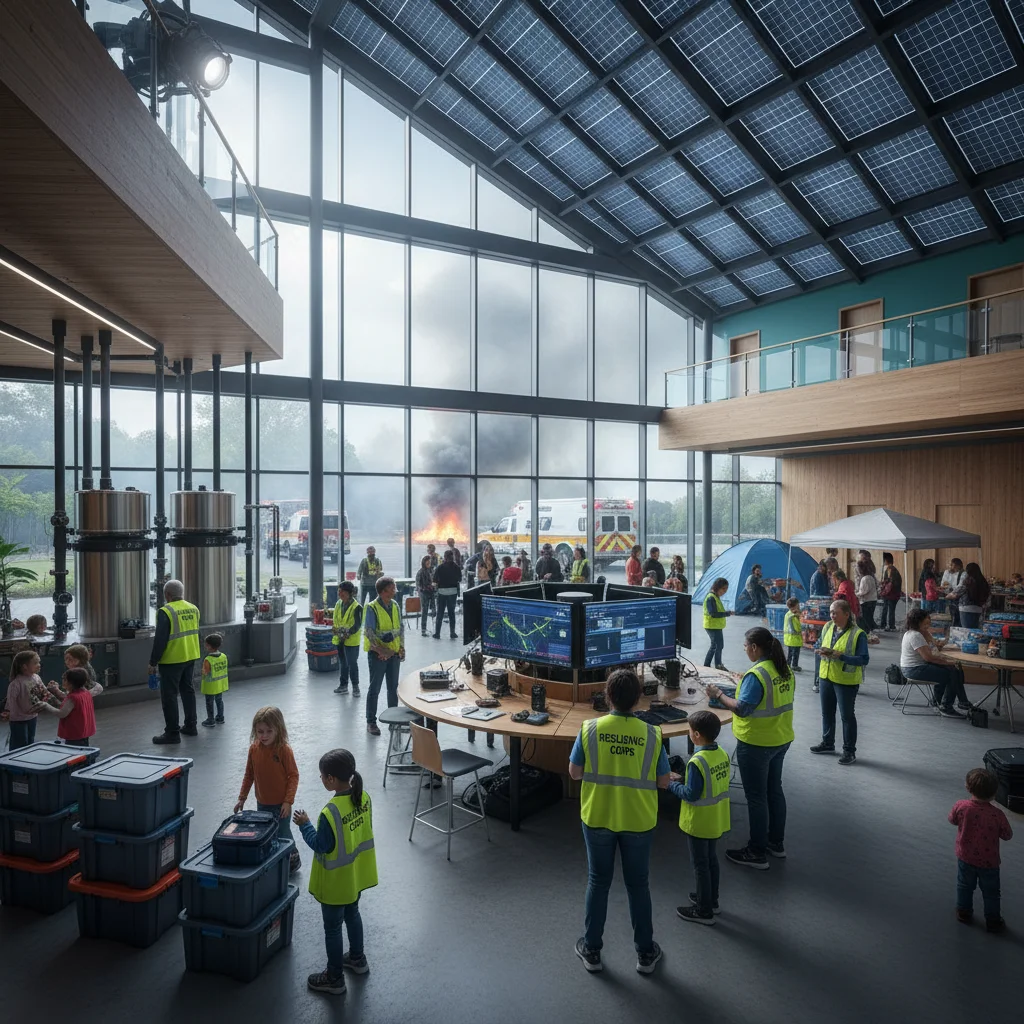
Essential services do not operate in a vacuum; they serve communities. Therefore, effective climate resilience strategies must involve robust community engagement and preparedness initiatives. This includes educating the public about climate risks, developing community-level emergency plans, and establishing communication channels for information dissemination during crises. Empowering communities to be self-sufficient for a period after a disaster, through initiatives like neighborhood resilience hubs and mutual aid networks, reduces the immediate burden on essential services and accelerates recovery. The resilience of a community is directly linked to the resilience of its essential services, and vice-versa.
Sector-Specific Resilience in 2026
While the general principles of climate resilience strategies apply across all essential services, each sector faces unique challenges and is developing tailored solutions:
Energy Sector: Powering Through the Storm
The energy sector is at the forefront of climate impacts, with extreme weather threatening power generation, transmission, and distribution. In 2026, resilience efforts focus on decentralization through microgrids and distributed energy resources (DERs) like rooftop solar and battery storage. These systems can operate independently when the main grid is down, providing critical power to hospitals, emergency shelters, and communication hubs. Additionally, investments in hardening substations, upgrading transmission lines to withstand higher winds and ice loads, and implementing advanced grid management systems are paramount. The integration of artificial intelligence for predictive maintenance and outage management is also a critical element of modern climate resilience strategies in energy.
Water Sector: Ensuring Flow in Drought and Flood
Water utilities face a dual threat: scarcity due to drought and contamination/overwhelm due to floods. 2026 strategies include diversifying water sources (e.g., desalination, wastewater reuse, rainwater harvesting), improving water conservation programs, and upgrading water treatment plants to handle varying raw water quality. For flood resilience, emphasis is placed on smart stormwater management, including green infrastructure, permeable surfaces, and upgraded pumping stations. Protecting critical infrastructure from inundation and ensuring the purity of drinking water supplies are central to the water sector’s climate resilience strategies.
Communication Sector: Staying Connected
In a crisis, communication is paramount. The communication sector’s climate resilience strategies for 2026 involve building redundancy into networks through multiple fiber optic routes, satellite uplinks, and mesh networks. Hardening physical infrastructure, such as cell towers and data centers, against wind, water, and heat is also crucial. The deployment of mobile communication units and temporary satellite links ensures connectivity in areas where fixed infrastructure is damaged. Furthermore, developing public-private partnerships to share infrastructure and resources during emergencies enhances overall network robustness.
Transportation Sector: Keeping the World Moving
Roads, bridges, railways, and airports are highly vulnerable to extreme weather. 2026 resilience strategies focus on elevating critical infrastructure, improving drainage systems to prevent flooding, and using climate-resistant materials for construction. Predictive modeling helps identify routes most susceptible to disruption, allowing for alternative planning. Investing in smart transportation systems that can reroute traffic in real-time during adverse conditions is also a key component. For coastal areas, protecting ports and coastal roads from sea-level rise and storm surges is a significant challenge requiring innovative engineering solutions.
Healthcare Sector: Prepared for Public Health Crises
Extreme weather events often lead to public health crises, from heat-related illnesses to injuries from storms and the spread of waterborne diseases. Healthcare-specific climate resilience strategies for 2026 include ensuring power redundancy for hospitals and clinics, maintaining robust supply chains for medications and equipment, and developing surge capacity for emergency rooms. Establishing mobile medical units, strengthening public health surveillance systems for climate-sensitive diseases, and training healthcare professionals in disaster medicine are also vital. Furthermore, community-level health preparedness, including vaccination campaigns and access to cooling centers, reduces the overall burden on the healthcare system.
Challenges and Opportunities in Implementing 2026 Resilience Strategies
While the need for robust climate resilience strategies is clear, their implementation is not without challenges. Funding remains a significant hurdle, as resilience investments often require substantial upfront capital. Convincing stakeholders of the long-term benefits versus immediate costs can be difficult, although the increasing frequency of costly disasters is making the case more compelling. Regulatory frameworks also need to evolve to support and incentivize resilience initiatives, often requiring updates to building codes, zoning laws, and permitting processes.
Another challenge lies in addressing equity. Climate change disproportionately affects vulnerable populations, and resilience efforts must be designed to reduce existing inequalities, not exacerbate them. Ensuring that resilience investments benefit all members of society, particularly those in marginalized communities, is a critical ethical and practical consideration. This involves participatory planning processes and targeted resource allocation to areas most in need.
Despite these challenges, the opportunities presented by investing in climate resilience strategies are immense. It drives innovation in technology and engineering, creating new industries and jobs. It fosters stronger communities by promoting collaboration and shared responsibility. It also enhances economic stability by reducing the costs associated with disaster recovery and ensuring business continuity. Furthermore, many resilience measures, such as renewable energy deployment and nature-based solutions, also contribute to climate change mitigation, offering a dual benefit.
The Future Outlook: Beyond 2026
Looking beyond 2026, the evolution of climate resilience strategies will continue to accelerate. We can anticipate even greater integration of artificial intelligence and machine learning for predictive modeling, real-time monitoring, and autonomous response systems. The development of advanced materials that are self-healing or adaptive to changing conditions will become more prevalent. The concept of ‘resilience as a service’ may emerge, where specialized firms offer comprehensive resilience solutions to municipalities and businesses.
Furthermore, international cooperation on climate resilience will deepen. Sharing best practices, technologies, and financial resources across borders will be essential, especially for developing nations that are often most exposed to climate risks. The role of international bodies in coordinating these efforts and setting global standards for resilience will become increasingly important. The ultimate goal is to create a world where essential services are not just resistant to climate shocks but are truly adaptive, capable of learning and evolving in the face of ongoing environmental change.
The journey towards full climate resilience is continuous, requiring persistent effort, innovation, and collaboration. The strategies being implemented in 2026 represent significant steps forward, laying the groundwork for a more secure and sustainable future for essential services and the communities they sustain. It is a testament to human ingenuity and collective will in confronting one of the defining challenges of our time.
Conclusion: A Resilient Future for Essential Services
The year 2026 marks a critical juncture in our global response to climate change, particularly concerning the resilience of essential services. The comprehensive climate resilience strategies being adopted are transforming how we approach infrastructure, technology, community engagement, and governance. By shifting from reactive measures to proactive, data-driven, and collaborative approaches, societies are building stronger foundations capable of withstanding the increasing pressures of extreme weather. The integration of infrastructure hardening, system diversification, early warning systems, nature-based solutions, and robust community preparedness forms a holistic framework for a resilient future.
While challenges such as funding and equitable implementation persist, the opportunities for innovation, economic growth, and enhanced societal well-being are compelling. The continuous evolution of these strategies, driven by technological advancements and deepening international cooperation, points towards a future where essential services are not merely surviving but thriving amidst environmental uncertainty. Our ability to adapt and innovate in the face of climate change will ultimately define our capacity to protect lives, maintain livelihoods, and ensure the continued progress of human civilization. The commitment to strong climate resilience strategies is not just an investment in infrastructure; it’s an investment in our collective future.