Navigating US Banking Systems in 2026: Choosing the Right Account Made Easy

The financial landscape is ever-evolving, and understanding the nuances of US Banking Systems is crucial for anyone looking to manage their money effectively in 2026. Whether you’re a long-time resident, a new immigrant, or simply looking to switch banks, the choices can seem overwhelming. From traditional brick-and-mortar institutions to cutting-edge online-only banks, each offers a unique set of products and services. This comprehensive guide will demystify the process, helping you navigate the complexities and choose the banking accounts that best suit your financial needs and lifestyle.
In today’s fast-paced world, banking is no longer just about depositing checks and withdrawing cash. It encompasses a vast array of digital tools, investment opportunities, and personalized services designed to make your financial life simpler and more efficient. As we move further into 2026, technological advancements continue to reshape how we interact with our money, making it more important than ever to stay informed and make educated decisions.
This article will delve deep into the various types of accounts available, highlight key factors to consider when making your choice, and shed light on the burgeoning trends in digital banking. By the end, you’ll be equipped with the knowledge to confidently select the right banking partner and manage your finances with ease within the intricate US Banking Systems.
Understanding the Core Components of US Banking Systems
At its heart, the US Banking Systems are built upon a foundation of different types of financial institutions, each serving distinct purposes. While commercial banks are the most common, credit unions, investment banks, and even online-only banks play significant roles. Understanding these fundamental differences is the first step in making an informed decision about where to house your funds.
Commercial Banks: The Traditional Backbone
Commercial banks are perhaps what most people envision when they think of banking. These institutions are profit-driven and offer a wide range of services to individuals and businesses alike. They provide checking accounts, savings accounts, loans (personal, auto, mortgage), credit cards, and often investment services. Their extensive branch networks and ATMs offer convenience for those who prefer in-person interactions. However, this convenience can sometimes come with higher fees compared to other options.
Credit Unions: Member-Owned Alternatives
Credit unions are non-profit financial cooperatives owned by their members. This ownership structure often translates to lower fees, better interest rates on savings, and more favorable loan terms. To join a credit union, you typically need to meet specific eligibility criteria, such as living in a certain geographic area, being employed by a particular company, or belonging to a specific organization. While their branch networks might be smaller, many credit unions participate in shared branching networks, allowing members to conduct transactions at other participating credit unions nationwide.
Online-Only Banks: The Digital Frontier
The rise of digital technology has given birth to online-only banks, which operate without physical branches. This significantly reduces their overhead costs, allowing them to pass on savings to customers in the form of higher interest rates on deposits and lower (or no) fees. Online banks offer unparalleled convenience, allowing you to manage your finances 24/7 from anywhere with an internet connection. However, the lack of physical branches can be a drawback for those who prefer face-to-face service or need to deposit cash frequently.
Investment Banks and Other Specialized Institutions
While less relevant for everyday personal banking, it’s worth noting that the US Banking Systems also include investment banks (which focus on corporate finance, mergers, and acquisitions) and other specialized institutions like trust companies. These cater to specific financial needs and are generally not where individuals open their primary checking or savings accounts.
Choosing the Right Account: The Three Easy Steps for 2026
Now that we’ve covered the different types of institutions, let’s break down the process of choosing the right accounts into three manageable steps. This streamlined approach will help you navigate the offerings within the US Banking Systems effectively.
Step 1: Assess Your Financial Needs and Habits
Before you even look at specific bank offerings, take an honest inventory of your financial life. Your ideal banking solution will depend heavily on your individual habits and requirements. Ask yourself the following questions:
- How often do you use cash? If you frequently deposit or withdraw cash, a bank with a strong ATM network or physical branches might be more suitable. Online banks often rely on third-party networks or money orders for cash deposits.
- How do you typically pay for things? Do you prefer debit cards, credit cards, or digital payment apps like Zelle or Venmo? Ensure your chosen bank integrates well with your preferred payment methods.
- Do you typically carry a high balance? Some accounts offer interest on checking balances, which can be beneficial if you maintain a significant amount of money in your checking account. Savings accounts almost always offer interest, but rates vary widely.
- How comfortable are you with digital banking? If you prefer managing everything from your smartphone or computer, an online-centric bank could be a great fit. If you value in-person assistance, a traditional bank is probably better.
- What are your savings goals? Are you saving for a down payment, retirement, or an emergency fund? Different savings accounts offer varying interest rates and accessibility, which can impact your ability to reach these goals.
- What is your monthly transaction volume? Some accounts have limits on free transactions, after which fees may apply.
- Do you require international banking services? If you travel frequently or send money abroad, look for banks with competitive foreign transaction fees and robust international transfer options.
Understanding these personal financial habits will act as your filter, narrowing down the vast options available in the US Banking Systems.
Step 2: Compare Account Types and Features
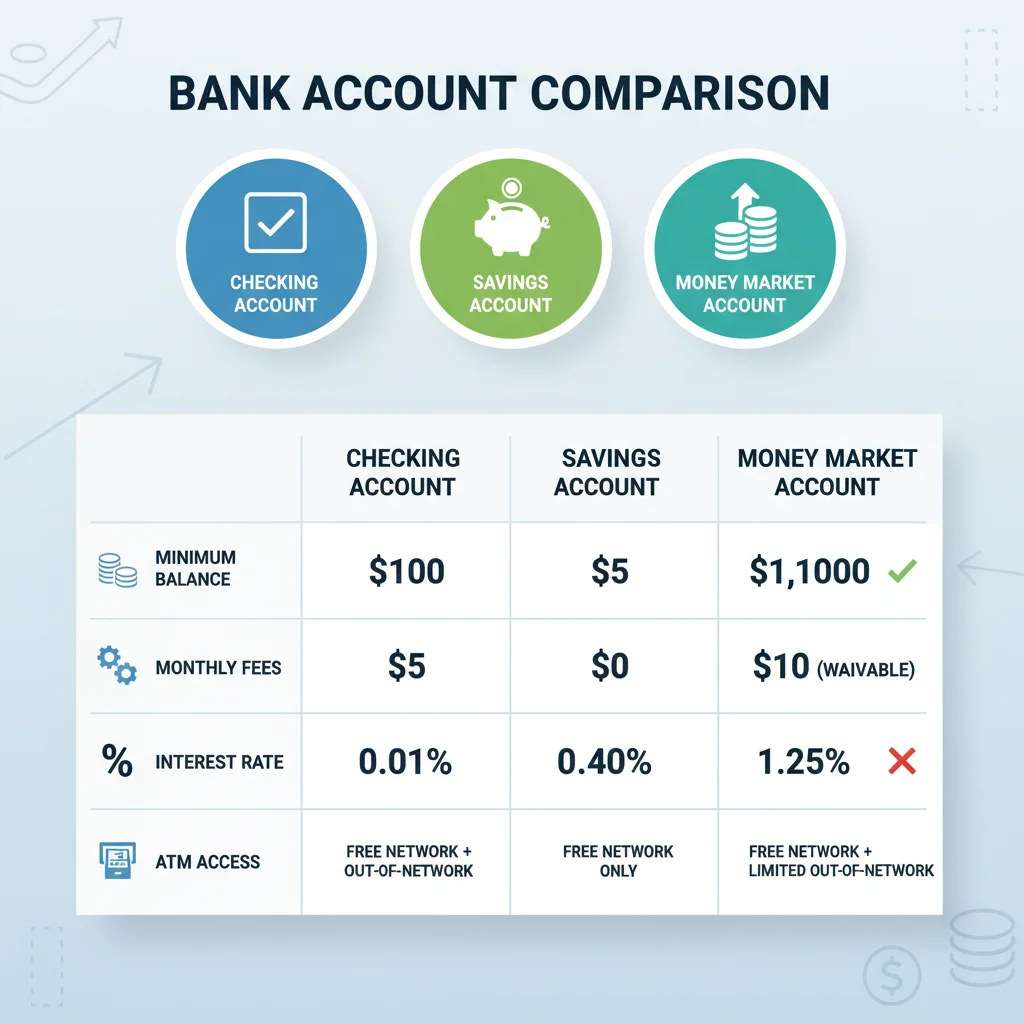
Once you have a clear picture of your needs, it’s time to compare the specific account types offered by various institutions. The primary accounts you’ll encounter are checking accounts, savings accounts, and sometimes money market accounts or certificates of deposit (CDs).
Checking Accounts: Your Everyday Financial Hub
A checking account is designed for day-to-day transactions. Key features to compare include:
- Monthly Maintenance Fees: Many banks charge a monthly fee unless certain conditions are met (e.g., direct deposit, minimum balance, a certain number of debit card transactions). Look for accounts with no monthly fees or easily waivable fees.
- Minimum Balance Requirements: Some accounts require you to maintain a minimum daily or average balance to avoid fees or earn interest.
- ATM Access and Fees: Check for in-network ATM availability and whether the bank reimburses out-of-network ATM fees.
- Overdraft Protection and Fees: Understand how the bank handles overdrafts. Some offer linked savings accounts or lines of credit to cover overdrafts, while others charge hefty fees.
- Online and Mobile Banking Features: Assess the quality of their mobile app, bill pay services, mobile check deposit capabilities, and peer-to-peer payment options (like Zelle integration).
- Interest Rates: While generally low, some checking accounts offer modest interest, especially those from online banks.
Savings Accounts: Building Your Financial Future
Savings accounts are designed for storing money you don’t need immediate access to and typically earn interest. Factors to consider include:
- Interest Rates (Annual Percentage Yield – APY): This is paramount for savings accounts. Online banks often offer significantly higher APYs than traditional banks.
- Minimum Balance Requirements: Similar to checking accounts, some savings accounts require a minimum balance to earn the advertised APY or avoid fees.
- Withdrawal Limits: Federal Reserve Regulation D historically limited certain types of withdrawals and transfers from savings accounts to six per month. While Regulation D has been suspended, many banks still impose their own limits.
- Ease of Transfer: How easy is it to transfer money between your checking and savings accounts within the same institution or to external accounts?
Money Market Accounts (MMAs) and Certificates of Deposit (CDs): Higher Yields, Less Liquidity
Money Market Accounts often bridge the gap between checking and savings, offering slightly higher interest rates than traditional savings accounts while providing some check-writing privileges. They typically require higher minimum balances. Certificates of Deposit (CDs) offer even higher fixed interest rates in exchange for locking your money away for a specific term (e.g., 6 months, 1 year, 5 years). You’ll pay a penalty if you withdraw funds before the term ends.
Step 3: Evaluate Customer Service, Security, and Digital Innovations
Beyond the raw numbers of fees and interest rates, the quality of a bank’s customer service, its security measures, and its embrace of digital innovations are critical in 2026.
Customer Service and Accessibility
Consider how you prefer to get help. Do you want to walk into a branch and speak to someone? Or are you comfortable with phone support, email, or chat functions? Research customer reviews regarding responsiveness and problem resolution for any bank you’re considering. For traditional banks, look at branch locations and hours. For online banks, assess their 24/7 support options.
Security Measures: Protecting Your Assets
All reputable banks in the US Banking Systems are insured by the Federal Deposit Insurance Corporation (FDIC) for up to $250,000 per depositor, per institution, for each account ownership category. This is non-negotiable. Beyond FDIC insurance, look for banks that offer:
- Strong Encryption: For online and mobile banking.
- Multi-Factor Authentication (MFA): An extra layer of security for logging in.
- Fraud Monitoring: Proactive systems to detect suspicious activity.
- Account Alerts: Notifications for transactions or low balances.
Digital Innovations and Future Trends in US Banking Systems (2026)
The year 2026 sees continued rapid evolution in digital banking. When evaluating banks, consider their offerings in these areas:
- Robust Mobile Apps: A well-designed, intuitive mobile app is essential for managing your finances on the go. Features like mobile check deposit, bill pay, budgeting tools, and card management (locking/unlocking cards) are standard.
- AI-Powered Financial Insights: Many banks are now using AI to provide personalized spending insights, budget recommendations, and even identify potential savings opportunities.
- Integration with Financial Aggregators: Does the bank easily integrate with popular personal finance management tools like Mint, Personal Capital, or YNAB?
- Open Banking Initiatives: While still developing in the US, open banking allows you to securely share your financial data with third-party apps for better financial planning. Banks that are forward-thinking in this area are generally more technologically advanced.
- Biometric Security: Face ID, fingerprint scanning, and other biometric authentication methods offer enhanced security and convenience.
- Virtual Assistants/Chatbots: For quick answers to common questions, a responsive virtual assistant can be a significant time-saver.
Embracing these digital tools can significantly enhance your banking experience and efficiency within the US Banking Systems.
Key Considerations for Specific Demographics
While the three steps above apply broadly, certain groups might have additional considerations when navigating US Banking Systems.
For Students
Many banks offer student-specific accounts with no monthly fees, no minimum balance requirements, and sometimes even perks like ATM fee reimbursements. Look for banks with strong mobile apps and potentially peer-to-peer payment integrations popular among younger demographics. Financial literacy resources can also be a plus.
For Small Business Owners
If you own a small business, you’ll need separate business checking and savings accounts. Look for banks that offer robust business services, including merchant services, payroll solutions, and potentially small business loans. Fees and transaction limits are crucial considerations for business accounts.
For New Immigrants or Non-Residents
Opening a bank account in the US without a Social Security Number (SSN) can be challenging but not impossible. Many banks will accept an Individual Taxpayer Identification Number (ITIN) along with other forms of identification (passport, visa, foreign driver’s license). Research banks that are known to be immigrant-friendly and have experience assisting individuals in this situation. It’s often easier to start with a larger, national bank or a community bank that specifically caters to diverse populations.
For Those Seeking High-Interest Savings
If your primary goal is to maximize returns on your savings, online-only banks or credit unions are typically your best bet. They consistently offer higher APYs on savings accounts and money market accounts compared to large traditional banks. Just be sure to check for any minimum deposit requirements or withdrawal limitations.
Common Pitfalls to Avoid When Choosing a Bank
Even with a clear strategy, it’s easy to fall into common traps. Be mindful of these pitfalls when making your decision about US Banking Systems:
- Ignoring Fees: Monthly maintenance fees, ATM fees, overdraft fees, and foreign transaction fees can quickly erode your balance. Always read the fine print.
- Not Understanding Minimum Balance Requirements: Failing to meet these can lead to unexpected fees or lower interest rates.
- Overlooking Interest Rates on Savings: Small differences in APY can add up significantly over time, especially for larger balances.
- Prioritizing Brand Name Over Features: Just because a bank is well-known doesn’t mean it’s the best fit for your specific needs.
- Not Testing Customer Service: Before committing, try calling their customer service line or using their chat feature to gauge responsiveness and helpfulness.
- Forgetting About Security: While FDIC insurance is standard, always ensure the bank employs robust digital security measures.
- Settling for Inconvenient Access: If you frequently need cash or in-person service, an online-only bank might prove frustrating.
The Future of US Banking Systems: What to Expect Beyond 2026
The trajectory of US Banking Systems points towards continued digitalization, personalization, and integration. Expect to see:
- Further AI Integration: AI will become even more sophisticated in predicting spending habits, offering proactive financial advice, and detecting fraud.
- Hyper-Personalized Products: Banks will increasingly tailor products and services to individual customer profiles, potentially offering dynamic interest rates or fee structures based on usage.
- Embedded Finance: Banking services will become seamlessly integrated into non-financial platforms, allowing you to access banking features directly within shopping apps or social media.
- Blockchain and Digital Currencies: While still in early stages for mainstream banking, blockchain technology could revolutionize payment processing and security. Central Bank Digital Currencies (CBDCs) are also a topic of ongoing discussion and development that could impact the traditional banking landscape.
- Enhanced Cybersecurity: As digital threats evolve, banks will continue to invest heavily in advanced cybersecurity measures to protect customer data.
Staying abreast of these trends will not only help you choose the right bank today but also prepare you for the financial innovations of tomorrow.
Conclusion: Your Path to Smart Banking in 2026
Navigating the intricate US Banking Systems in 2026 doesn’t have to be a daunting task. By systematically assessing your financial needs, diligently comparing account features, and evaluating crucial aspects like customer service and digital innovation, you can confidently choose the banking solutions that empower your financial journey.
Remember, your banking needs may evolve over time, so it’s a good practice to periodically review your accounts and ensure they still align with your goals. The right bank and the right accounts can provide the foundation for financial stability and growth, making your money work harder and smarter for you. Take the time to research, compare, and choose wisely – your financial well-being depends on it.
Empower yourself with knowledge, embrace the digital tools available, and make 2026 the year you master your financial relationships within the dynamic US Banking Systems.