Financial Planning 2026: Wedding vs. Home Down Payment – Your Guide

As we look ahead to 2026, many of us are contemplating significant life milestones that come with substantial financial implications. Whether it’s the joy of a wedding or the stability of owning a home, these events require careful and strategic financial planning. This comprehensive guide will walk you through the intricacies of financial planning 2026, specifically focusing on how to budget for a $30,000 wedding or a $50,000 home down payment. We’ll explore practical strategies, smart savings techniques, and crucial considerations to ensure your financial journey is as smooth and successful as possible.
The Importance of Early Financial Planning 2026
Embarking on a major life event without a solid financial plan is akin to setting sail without a compass. The sooner you begin your financial planning 2026, the more time you have to save, adjust, and prepare for unforeseen circumstances. Early planning allows you to set realistic goals, understand your current financial standing, and implement strategies that maximize your savings potential. It also reduces stress and allows you to enjoy the process of preparing for your big day or new home without constant financial worry.
Defining Your Financial Goals for 2026
Before diving into the specifics of a wedding or a home down payment, it’s crucial to define your overall financial goals for 2026. Are you looking to get married, buy a house, or perhaps both? While this guide focuses on these two specific scenarios, the principles of financial planning 2026 are universally applicable. Clarifying your primary objective will help you allocate resources effectively and stay focused on what truly matters.
Consider the timeline. If 2026 is your target year, you likely have a year to two years to save. This timeframe is critical in determining how aggressively you need to save and what budget adjustments you’ll need to make. For instance, saving $30,000 for a wedding in two years requires saving $1,250 per month. For a $50,000 home down payment, it’s approximately $2,083 per month over two years. These figures highlight the necessity of a well-structured plan.
Budgeting for a $30,000 Wedding in 2026
A wedding is a joyous occasion, but it can also be a significant financial undertaking. A $30,000 wedding budget is a common target for many couples, offering a balance between a memorable celebration and financial prudence. Here’s how to approach financial planning 2026 for your dream wedding.
Creating a Detailed Wedding Budget
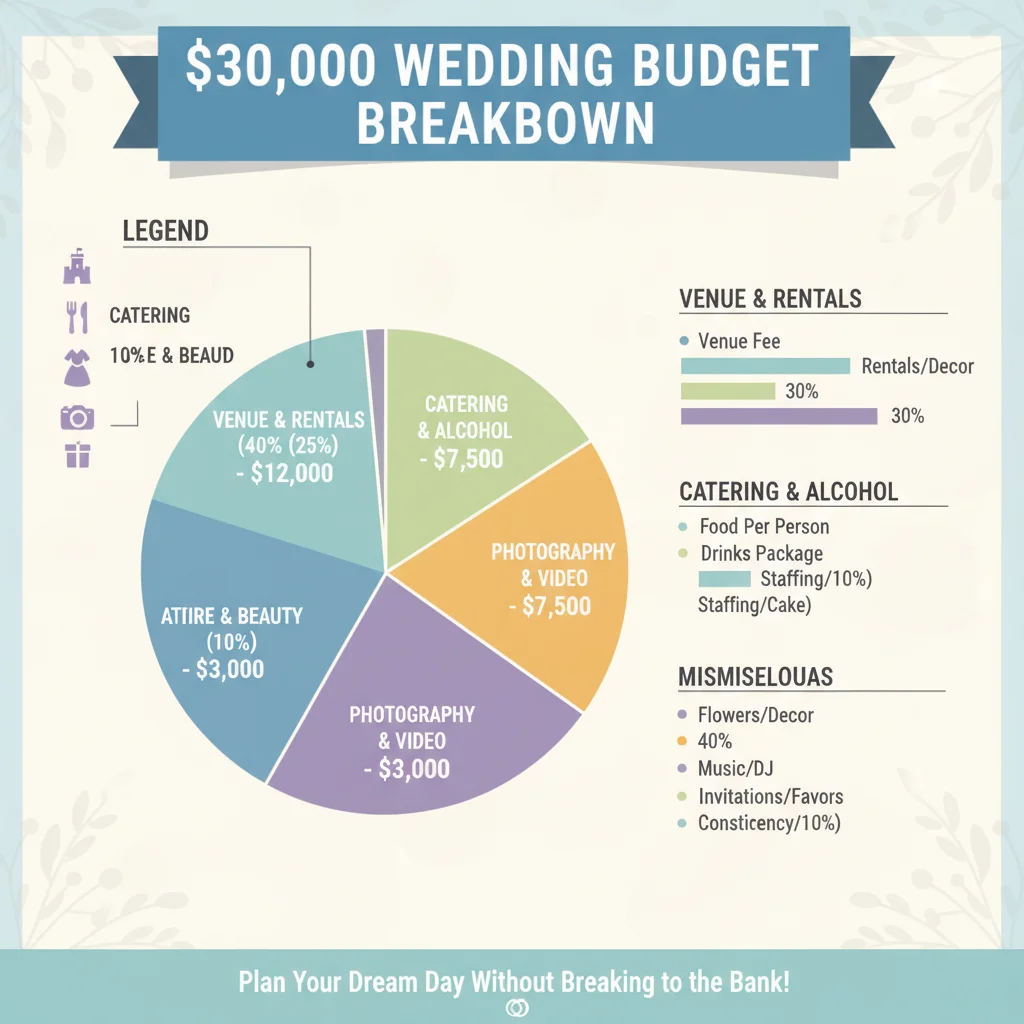
The first step is to break down the $30,000 into specific categories. This helps you understand where your money is going and allows for adjustments. Typical wedding expenses include:
- Venue & Catering: Often the largest expense, accounting for 40-50% of the budget. For a $30,000 wedding, this could be $12,000-$15,000.
- Photography & Videography: Capturing memories can cost 10-15%, or $3,000-$4,500.
- Attire (Dress, Suit, Accessories): Expect to spend 5-10%, or $1,500-$3,000.
- Decorations & Flowers: Another 5-10%, or $1,500-$3,000.
- Music/Entertainment (DJ, Band): Plan for 5-8%, or $1,500-$2,400.
- Rings: This can vary widely, but budget 3-5%, or $900-$1,500.
- Invitations & Stationery: Typically 2-3%, or $600-$900.
- Hair & Makeup: Around 1-2%, or $300-$600.
- Miscellaneous/Contingency: Always allocate 5-10% for unexpected costs, which is $1,500-$3,000. This is a critical part of robust financial planning 2026.
These percentages are a guideline. Your personal preferences will dictate where you allocate more or less of your budget. For example, if photography is a top priority, you might allocate more there and cut back on decorations.
Savings Strategies for Your Wedding Fund
Automate Your Savings
One of the most effective ways to save is to automate the process. Set up automatic transfers from your checking account to a dedicated wedding savings account every payday. This ensures you’re consistently putting money aside before you have a chance to spend it.
Cut Discretionary Spending
Review your current budget and identify areas where you can cut back. This might include eating out less, canceling unused subscriptions, reducing entertainment expenses, or finding cheaper alternatives for daily commutes. Every dollar saved contributes to your financial planning 2026 goals.
Increase Your Income
Consider ways to earn extra income. This could be a side hustle, freelancing, selling unused items, or asking for a raise at your current job. The additional income can be directly channeled into your wedding fund, significantly accelerating your savings.
Utilize High-Yield Savings Accounts
While interest rates may not make you rich, a high-yield savings account can help your money grow a little faster than a traditional savings account. Look for accounts with competitive interest rates and no monthly fees.
Smart Spending Tips for a $30,000 Wedding
To stay within your $30,000 budget, smart spending is key.
- Prioritize: Decide which aspects of the wedding are most important to you and your partner. Allocate more funds there and be willing to compromise on less crucial elements.
- DIY Where Possible: Consider DIY projects for invitations, favors, or even some decorations. This can save a significant amount of money.
- Off-Peak Dates: Choosing a wedding date during the off-season or on a weekday can dramatically reduce venue and vendor costs.
- Negotiate: Don’t be afraid to negotiate with vendors. Many are willing to work with your budget or offer package deals.
- Limit the Guest List: A smaller guest list directly translates to lower costs for catering, invitations, and favors.
Budgeting for a $50,000 Home Down Payment in 2026
Buying a home is often the largest financial investment an individual or couple will make. A $50,000 down payment is a substantial goal, and achieving it by 2026 requires meticulous financial planning 2026. This down payment can typically cover 10-20% of a home priced between $250,000 and $500,000, depending on your local market.
Understanding the Costs Beyond the Down Payment
While the down payment is a major hurdle, it’s not the only cost associated with buying a home. You’ll also need to consider:
- Closing Costs: These can range from 2-5% of the loan amount and include fees for appraisals, title insurance, legal services, and more. For a $400,000 home, this could be $8,000-$20,000.
- Moving Expenses: Don’t forget the cost of movers, packing supplies, and setting up new utilities.
- Emergency Fund: It’s wise to have an emergency fund separate from your down payment savings, typically 3-6 months of living expenses, to cover unexpected home repairs or job loss.
- Initial Home Maintenance/Improvements: You might want to paint, replace flooring, or make minor repairs before moving in.
Incorporating these additional costs into your financial planning 2026 is crucial for a smooth transition into homeownership.
Savings Strategies for Your Home Down Payment
Dedicated Savings Account
Similar to wedding savings, open a separate, dedicated high-yield savings account specifically for your down payment. Labeling it as such can provide a psychological boost and prevent you from dipping into it for other expenses.
Aggressive Budgeting and Expense Tracking
To save $50,000 in two years, you need to save approximately $2,083 per month. This requires a very strict budget. Track every dollar you spend to identify areas where you can cut back. Use budgeting apps or spreadsheets to monitor your progress.
Consider a Side Hustle or Second Job
To meet such an ambitious savings goal, a side hustle or a second job can be invaluable. Every extra dollar earned can go directly towards your down payment, significantly shortening your timeline.
Review Your Big-Ticket Expenses
Look at your largest recurring expenses. Can you find a cheaper car insurance policy? Refinance student loans to lower monthly payments? Move to a more affordable rental for a year or two? Even small changes to big expenses can free up hundreds of dollars monthly for your down payment.
Tax Refunds and Bonuses
Commit to putting any tax refunds, work bonuses, or unexpected windfalls directly into your down payment fund. These lump sums can provide a significant boost to your savings.
Exploring First-Time Homebuyer Programs
Many government and local organizations offer programs to assist first-time homebuyers. These can include:
- Down Payment Assistance (DPA) Programs: These provide grants or low-interest loans to help cover a portion of your down payment.
- FHA Loans: Backed by the Federal Housing Administration, these loans often require a lower down payment (as little as 3.5%) and have more flexible credit requirements.
- VA Loans: For eligible veterans and service members, VA loans offer 0% down payment options and competitive interest rates.
- USDA Loans: For homes in eligible rural areas, USDA loans also offer 0% down payment options.
Researching these options can significantly impact your financial planning 2026 for a home purchase, potentially reducing the amount you need to save out-of-pocket.

Debt Management and Credit Score for 2026 Goals
Regardless of whether you’re saving for a wedding or a home, your debt situation and credit score play a pivotal role in your overall financial planning 2026. A good credit score is essential for securing favorable interest rates on mortgages, and managing debt effectively frees up more money for savings.
Prioritizing Debt Repayment
If you have high-interest debt, such as credit card balances, it’s often wise to prioritize paying these off before aggressively saving. The interest you save can be redirected into your wedding or down payment fund. Consider strategies like the debt snowball or debt avalanche method to tackle your debts efficiently.
Monitoring and Improving Your Credit Score
Your credit score directly impacts your ability to get a mortgage and the interest rate you’ll pay. For a wedding, a good credit score might allow you to qualify for better rates on personal loans if you choose to finance any part of your wedding. Regularly check your credit report for errors and take steps to improve your score, such as:
- Paying bills on time.
- Keeping credit utilization low (using less than 30% of your available credit).
- Avoiding opening new credit accounts unnecessarily.
- Disputing any inaccuracies on your credit report.
Investment Strategies for 2026 Goals
With a timeframe of one to two years, aggressive long-term investments might be too risky for funds you need for a specific goal. However, there are still smart ways to make your money work harder for you as part of your financial planning 2026.
Short-Term Investment Options
- High-Yield Savings Accounts (HYSAs): As mentioned, these are excellent for short-term goals, offering better interest rates than traditional savings accounts while keeping your money liquid and safe.
- Certificates of Deposit (CDs): CDs offer fixed interest rates for a set period. If you’re confident about your timeline, a CD can offer a slightly higher return than an HYSA, but your money will be locked in. Consider a CD ladder if you need some flexibility.
- Money Market Accounts (MMAs): These offer competitive interest rates and check-writing privileges, blending features of savings and checking accounts.
For goals within a 1-2 year window, avoid volatile investments like stocks, as a market downturn could jeopardize your ability to reach your target by 2026.
Long-Term Financial Health Beyond 2026
While focusing on your immediate 2026 goals, don’t neglect your long-term financial health. Continue contributing to your retirement accounts (401k, IRA), even if it’s a smaller amount during intense saving periods. Maintaining these contributions ensures you’re not sacrificing your future for your present goals, a key tenet of holistic financial planning 2026 and beyond.
The Role of an Emergency Fund in Financial Planning 2026
An emergency fund is a non-negotiable component of sound financial planning. It acts as a buffer against unexpected expenses, preventing you from dipping into your wedding or home down payment savings. Aim for at least 3-6 months’ worth of living expenses in an easily accessible savings account.
Imagine if you lose your job, face a medical emergency, or your car breaks down. Without an emergency fund, these events could derail your carefully laid plans for 2026. By having this safety net, you protect your progress towards your major life goals.
Navigating Trade-offs and Making Informed Decisions
Sometimes, fulfilling one major financial goal means making trade-offs with another. If you’re considering both a wedding and a home purchase in quick succession, you might need to prioritize. Could you have a smaller, more intimate wedding to save more for a down payment? Or delay the home purchase by a year to fully enjoy your wedding without financial strain?
These are personal decisions that require open communication with your partner and a clear understanding of your financial capabilities. Regular discussions about your financial planning 2026 progress and potential adjustments are vital.
Creating a Realistic Timeline for 2026
A realistic timeline is fundamental to effective financial planning 2026. Work backward from your target date (e.g., a wedding in Fall 2026 or a home purchase in Spring 2026). Break down your savings goal into monthly or bi-weekly increments. This helps you visualize the path ahead and makes the large sum seem more manageable.
For a $30,000 wedding by late 2026 (say, October), you have approximately 22 months. This means saving roughly $1,364 per month. For a $50,000 down payment by mid-2026 (say, June), you have about 18 months, requiring a monthly saving of $2,778. Adjust these figures based on your actual start date and target month, and remember to factor in potential interest earnings from your savings accounts.
Leveraging Financial Tools and Resources
In today’s digital age, numerous tools and resources can aid your financial planning 2026 efforts:
- Budgeting Apps: Apps like Mint, YNAB (You Need A Budget), or Personal Capital can help you track expenses, categorize spending, and set savings goals.
- Financial Calculators: Online calculators can help you determine how much you need to save per month, the impact of interest, and mortgage affordability.
- Financial Advisors: For complex situations or if you feel overwhelmed, consider consulting a financial advisor. They can provide personalized advice and help you create a tailored plan.
- Educational Resources: Blogs, podcasts, and books on personal finance can offer valuable insights and motivation.
Staying Motivated Throughout Your Financial Journey
Saving a significant amount of money for a major life event can be a long and challenging process. It’s crucial to stay motivated. Here are some tips:
- Visualize Your Goal: Keep pictures of your dream wedding or ideal home as a constant reminder of what you’re working towards.
- Celebrate Milestones: Reward yourself (modestly) when you hit savings milestones. This reinforces positive behavior and keeps you engaged.
- Track Your Progress: Seeing your savings grow can be incredibly motivating. Use a visual tracker or a spreadsheet to watch your numbers climb.
- Involve Your Partner: If you’re planning with a partner, make it a team effort. Support each other and hold each other accountable.
- Stay Flexible: Life happens. Be prepared to adjust your plan if unexpected events occur. Flexibility is a strength, not a weakness, in financial planning 2026.
Conclusion: Your Path to Financial Success in 2026
Whether you’re walking down the aisle or unlocking the door to your new home, achieving a major financial goal by 2026 is entirely possible with diligent planning and execution. By setting clear objectives, creating a detailed budget, implementing smart savings strategies, managing debt, and leveraging available resources, you can turn your dreams into reality.
Financial planning 2026 isn’t just about numbers; it’s about building a secure foundation for your future and enjoying the journey along the way. Start today, stay disciplined, and look forward to celebrating your success in 2026!
