Reskilling for the Future: US Workers Adapting to New Industry Demands by 2026

Reskilling for the Future: How 20% of US Workers are Adapting to New Industry Demands in 2026
The landscape of work is undergoing an unprecedented transformation. Driven by rapid technological advancements, evolving consumer behaviors, and global economic shifts, industries are constantly redefining the skills and competencies required for success. This dynamic environment has placed a significant imperative on the workforce to adapt, learn, and evolve. By 2026, it’s projected that a substantial 20% of the US workforce will have embraced reskilling initiatives, fundamentally altering their career trajectories and contributing to a more agile and future-proof economy. This comprehensive article delves into the critical factors driving this phenomenon, the challenges and opportunities it presents, and the strategies individuals and organizations are employing to navigate this exciting new era of work.
The Imperative of Reskilling: Why 20% is Just the Beginning
The notion of a ‘job for life’ has largely faded into history. Today’s workers, irrespective of their current industry or role, are increasingly recognizing the necessity of continuous learning. The US Worker Reskilling 2026 trend is not merely a prediction; it’s a reflection of a fundamental shift in how we approach career development. Several key forces are propelling this movement:
Technological Disruption: The AI and Automation Revolution
Artificial intelligence (AI), machine learning (ML), and automation are perhaps the most significant drivers of workforce change. While these technologies promise increased efficiency and innovation, they also threaten to displace jobs that involve routine, repetitive tasks. From manufacturing floors to administrative offices, algorithms and robots are taking over functions previously performed by humans. This doesn’t necessarily mean job losses across the board, but rather a reallocation of human effort towards tasks requiring creativity, critical thinking, emotional intelligence, and complex problem-solving – areas where machines still lag behind. Consequently, workers in affected sectors must reskill to take on new roles that leverage these emerging technologies, or pivot to entirely new fields.
Global Economic Shifts and Supply Chain Reconfiguration
Geopolitical events, trade policies, and global supply chain vulnerabilities have a direct impact on domestic industries. As companies seek to diversify their manufacturing bases, localize production, or adopt more resilient supply chains, the types of jobs available and the skills required to perform them undergo significant changes. For instance, a shift towards more localized production might increase demand for skilled technicians in advanced manufacturing, while a move away from certain overseas markets could necessitate reskilling workers for different export-oriented roles or domestic service industries.
Changing Consumer Demands and Market Dynamics
Consumer preferences are notoriously fickle and can shift rapidly, often influenced by social trends, environmental concerns, and technological innovations. This directly impacts product development, marketing strategies, and ultimately, the skills needed within companies. For example, the growing demand for sustainable products requires expertise in green technologies, circular economy principles, and ethical supply chain management. Similarly, the explosion of e-commerce has created a massive demand for skills in digital marketing, data analytics, user experience (UX) design, and logistics optimization.
Demographic Shifts and the Aging Workforce
Many developed nations, including the US, are grappling with an aging workforce. As experienced workers retire, there’s a need to transfer institutional knowledge and fill critical skill gaps. Simultaneously, older workers who wish to remain in the workforce often find themselves needing to update their skills to stay competitive, especially in technology-driven fields. This demographic reality adds another layer of complexity and urgency to the reskilling agenda, fostering intergenerational learning and mentorship programs.
Key Skills in Demand for a Reskilled Workforce
As 20% of US workers embark on their reskilling journeys, certain skill sets are emerging as particularly crucial. These can be broadly categorized into technical (hard) skills and human-centric (soft) skills.
Technical Skills: The New Foundation
- Data Literacy and Analytics: The ability to collect, interpret, and leverage data for informed decision-making is paramount across almost all industries. This includes skills in data visualization, statistical analysis, and understanding data ethics.
- AI and Machine Learning Fundamentals: While not everyone needs to be an AI engineer, a basic understanding of how AI works, its applications, and its limitations is becoming increasingly valuable for many roles.
- Cloud Computing: With more businesses moving to cloud-based infrastructures, proficiency in platforms like AWS, Azure, or Google Cloud is highly sought after.
- Cybersecurity: As digital threats proliferate, the demand for cybersecurity professionals and for general cyber-awareness among all employees is soaring.
- Digital Marketing and E-commerce: Skills in SEO, SEM, social media marketing, content creation, and e-commerce platform management are essential for businesses operating in the digital sphere.
- Advanced Manufacturing and Robotics: As industries adopt Industry 4.0 principles, skills in operating and maintaining advanced machinery, robotics, and automation systems are critical.
Human-Centric Skills: The Enduring Edge
- Critical Thinking and Problem-Solving: The ability to analyze complex situations, identify root causes, and devise innovative solutions remains indispensable.
- Creativity and Innovation: As routine tasks are automated, human creativity in developing new ideas, products, and services becomes even more valuable.
- Adaptability and Resilience: The pace of change demands individuals who can quickly adjust to new technologies, processes, and work environments, and bounce back from setbacks.
- Emotional Intelligence and Collaboration: Working effectively in diverse teams, understanding others’ perspectives, and fostering a positive work environment are crucial for success.
- Communication: Clear, concise, and persuasive communication, both written and verbal, is essential for conveying ideas, collaborating, and leading.
- Digital Fluency: Beyond specific technical tools, this refers to a general comfort and proficiency in navigating digital environments, learning new software, and utilizing online resources effectively.
Strategies for Successful Reskilling: Individual and Organizational Approaches
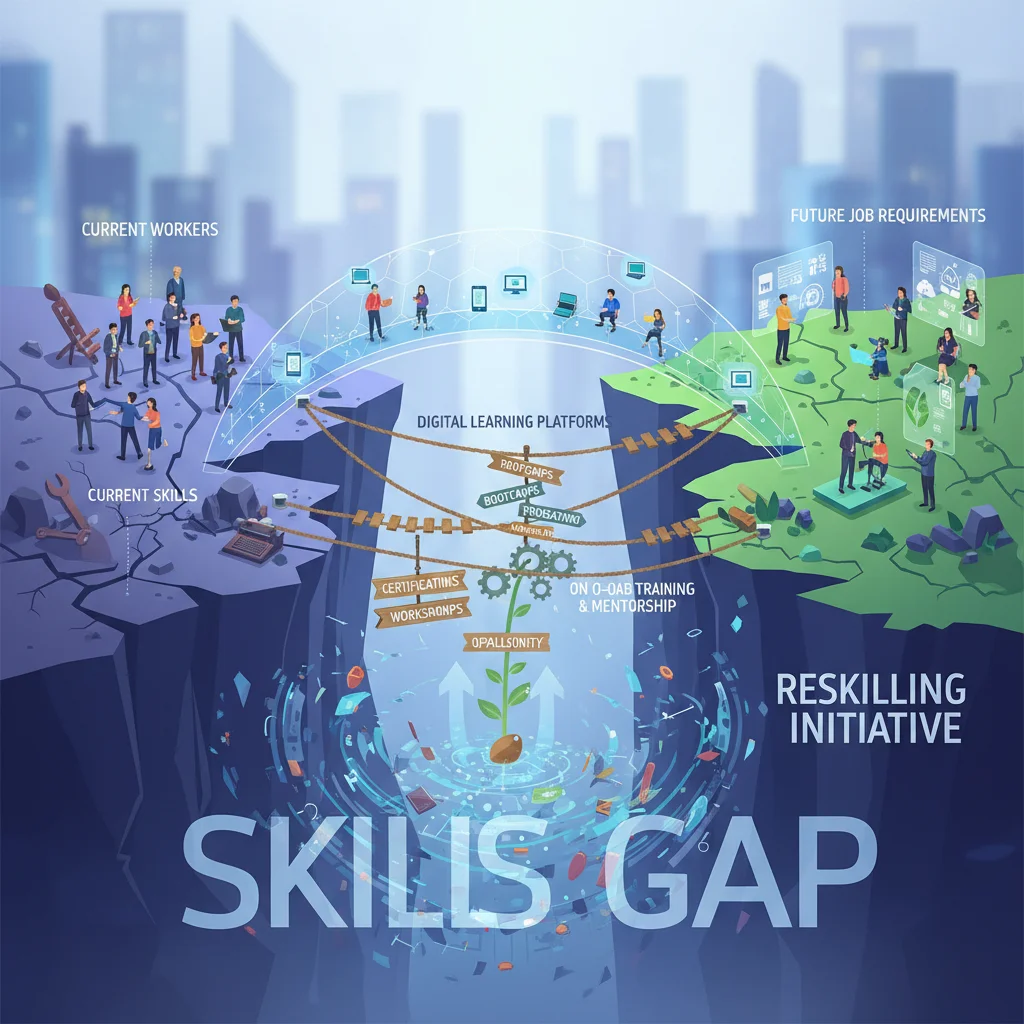
Achieving the goal of 20% of US workers reskilling by 2026 requires concerted effort from both individuals and organizations.
Individual Strategies: Taking Ownership of Your Career
For individuals, reskilling is no longer an option but a necessity for long-term career viability. Proactive steps include:
- Self-Assessment and Goal Setting: Identifying current skills, recognizing gaps, and setting clear learning objectives aligned with future career aspirations.
- Leveraging Online Learning Platforms: Platforms like Coursera, edX, Udemy, and LinkedIn Learning offer a vast array of courses, certifications, and specializations in high-demand areas.
- Vocational Training and Community Colleges: These institutions provide practical, hands-on training for specific trades and technical skills, often with direct pathways to employment.
- Mentorship and Networking: Connecting with professionals in desired fields can provide invaluable insights, guidance, and opportunities.
- Embracing Micro-credentials and Bootcamps: Short, intensive programs focused on specific skills can provide rapid upskilling and a competitive edge.
- Internal Mobility and Cross-Training: Exploring opportunities within current organizations to learn new roles or departments.
Organizational Strategies: Investing in the Workforce
Forward-thinking companies understand that investing in their employees’ development is not just a cost, but a strategic imperative. Key organizational strategies include:
- Developing Robust Reskilling Programs: Creating structured training programs, often in partnership with educational institutions or specialized vendors, to address identified skill gaps.
- Internal Talent Marketplaces: Implementing platforms that allow employees to discover new roles, projects, and learning opportunities within the company, fostering internal mobility.
- Tuition Reimbursement and Subsidies: Providing financial support for employees pursuing external education or certifications.
- Creating a Culture of Continuous Learning: Encouraging experimentation, providing time for learning, and celebrating skill acquisition.
- Data-Driven Workforce Planning: Utilizing analytics to forecast future skill needs and proactively design reskilling initiatives.
- Partnerships with Educational Institutions: Collaborating with universities and vocational schools to develop curricula that meet industry demands.
- Implementing AI-Powered Learning Tools: Using adaptive learning platforms and AI tutors to personalize learning paths and make reskilling more efficient.
Challenges on the Path to Reskilling
While the benefits of widespread US Worker Reskilling 2026 are clear, the path is not without its obstacles. Addressing these challenges is crucial for successful implementation.
Time and Financial Constraints
For individuals, finding the time and resources to pursue significant reskilling can be daunting, especially for those balancing work and family responsibilities. For organizations, the investment in large-scale training programs can be substantial.
Motivation and Engagement
Not all workers are equally motivated to reskill, particularly if they are comfortable in their current roles or fear the unknown. Fostering engagement requires clear communication about the benefits of reskilling and creating supportive learning environments.
Lack of Clear Pathways and Information
Many individuals struggle to identify which skills are most relevant for their future careers or where to find credible training. A lack of standardized certifications or clear career pathways can exacerbate this confusion.
Bridging the Digital Divide
Access to reliable internet, digital devices, and basic digital literacy remains a barrier for some segments of the population, limiting their ability to participate in online reskilling programs.
Measuring ROI for Organizations
Companies often face challenges in accurately measuring the return on investment (ROI) of their reskilling initiatives, making it difficult to justify continued funding without clear metrics of success.

The Role of Government and Policy in Fostering Reskilling
Governments play a pivotal role in creating an ecosystem that supports widespread reskilling. Policy interventions can significantly accelerate the US Worker Reskilling 2026 agenda:
Funding and Incentives
Government grants, tax incentives for companies investing in training, and individual learning accounts can reduce the financial burden of reskilling for both employers and employees.
Curriculum Development and Standards
Collaborating with industry leaders and educational institutions to develop relevant curricula and establish recognized standards for new skills can provide clarity and credibility to reskilling efforts.
Public-Private Partnerships
Fostering partnerships between government agencies, private companies, and educational providers can create innovative solutions for workforce development, such as apprenticeships and sector-specific training hubs.
Data Collection and Labor Market Intelligence
Investing in robust labor market data collection and analysis can provide invaluable insights into emerging skill demands, helping to guide reskilling investments and policy decisions.
Support for Displaced Workers
Implementing comprehensive support programs, including career counseling, job placement services, and financial aid, for workers displaced by automation or economic shifts is crucial for a just transition.
Success Stories and Future Outlook
Anecdotal evidence and early data already point to the success of reskilling initiatives. For example, individuals transitioning from traditional manufacturing roles to advanced robotics technicians, or customer service representatives learning data analytics to become business intelligence analysts. Companies that have proactively invested in reskilling their workforce report higher employee retention, increased productivity, and enhanced innovation capabilities.
Looking ahead to 2026 and beyond, the trend of continuous learning is set to intensify. The 20% figure for US Worker Reskilling 2026 is a significant milestone, but it represents just one phase in an ongoing evolution. The future workforce will be characterized by adaptability, a growth mindset, and a commitment to lifelong learning. The distinctions between ‘learning’ and ‘working’ will blur, as skills development becomes an integrated part of daily job functions.
The Rise of the ‘Skills Economy’
We are moving towards a ‘skills economy’ where credentials and demonstrated competencies matter more than traditional degrees alone. This shift will open up new pathways for individuals to enter high-demand fields, regardless of their educational background, provided they can acquire and apply the necessary skills. Micro-credentials, digital badges, and competency-based assessments will gain prominence as verifiable indicators of expertise.
Personalized Learning Journeys
Advancements in AI and learning technologies will enable increasingly personalized reskilling journeys. Adaptive learning platforms will tailor content and pace to individual needs, making the learning process more efficient and engaging. Virtual reality (VR) and augmented reality (AR) will also play a greater role in immersive training simulations, particularly for complex technical skills.
The Human-Machine Collaboration Paradigm
The future of work is not about humans versus machines, but humans working alongside machines. Reskilling efforts will increasingly focus on developing the skills needed for effective human-AI collaboration, enabling workers to leverage AI tools to augment their capabilities rather than being replaced by them. This includes understanding AI ethics, managing AI systems, and using AI for creative problem-solving.
Conclusion: Embracing the Future of Work with Confidence
The projection that 20% of US workers will have undergone significant reskilling by 2026 underscores a profound and positive shift in the American workforce. It signifies a collective recognition that adaptability and continuous learning are not just buzzwords, but essential components of career longevity and economic prosperity. While challenges persist, the proactive efforts of individuals, the strategic investments of organizations, and supportive government policies are paving the way for a more resilient, skilled, and dynamic workforce.
For those contemplating their next career move or feeling the pressures of technological change, the message is clear: embrace reskilling. It is an investment in yourself, your future, and the collective strength of the nation’s economy. The journey of US Worker Reskilling 2026 is well underway, and those who join it will be best positioned to thrive in the exciting, ever-evolving world of work.