911 Service Enhancements 2026: U.S. Updates for Emergency Communication

Understanding 911 Service Enhancements: 2026 U.S. Updates and 3 Ways to Ensure Effective Emergency Communication
The landscape of emergency services in the United States is on the cusp of a revolutionary transformation. With the year 2026 rapidly approaching, significant 911 service enhancements are set to redefine how Americans access and receive emergency assistance. These updates are not merely technological upgrades; they represent a fundamental shift towards a more resilient, efficient, and inclusive emergency response system. For every citizen, understanding these forthcoming changes and actively preparing for them is paramount. The goal is to move beyond the traditional voice call to a comprehensive, data-rich communication ecosystem that leverages modern technology to save lives.
For decades, the 911 system has been the lifeline connecting individuals in crisis to help. However, its foundational infrastructure, largely designed in the analog era, has struggled to keep pace with the digital revolution. The rise of smartphones, text messaging, and various other communication platforms has highlighted critical gaps. What if you can’t speak? What if your location is unknown? What if you need to share a video of an unfolding event? These are the challenges that the 2026 911 service enhancements aim to address, ushering in an era of Next Generation 911 (NG911).
This article will delve deep into the specifics of these crucial 911 service enhancements, exploring what they entail for the average American and, more importantly, outlining three practical ways you can ensure effective emergency communication in this evolving environment. From understanding new communication channels to proactively managing your personal information, preparedness is key to maximizing the benefits of these advancements. Let’s embark on this journey to decode the future of emergency response and empower ourselves with the knowledge to stay safe.
The Dawn of Next Generation 911 (NG911): What to Expect by 2026
The term ‘911 service enhancements’ primarily refers to the nationwide transition to Next Generation 911 (NG911). This ambitious initiative aims to upgrade the entire 911 infrastructure from an analog, voice-centric system to an Internet Protocol (IP)-based system. This shift will unlock a plethora of capabilities that were previously unimaginable, fundamentally altering how emergency calls are handled and how emergency responders receive critical information.
IP-Based Network for Enhanced Data Flow
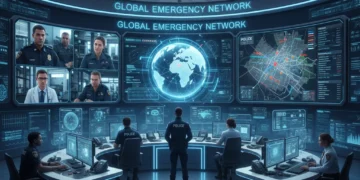
At the core of NG911 is the shift to an IP-based network, often referred to as an Emergency Services IP Network (ESInet). This digital backbone replaces the aging circuit-switched technology that has long been a bottleneck for data transmission. With an ESInet, Public Safety Answering Points (PSAPs) – the call centers where 911 calls are answered – will be able to receive much more than just voice calls. This includes:
- Text-to-911: While already available in many areas, NG911 will standardize and enhance text-to-911 capabilities, making it a reliable option nationwide. This is crucial for individuals who are deaf, hard of hearing, have speech impediments, or are in situations where speaking aloud would be dangerous or impossible (e.g., during a home invasion or an active shooter event).
- Photos and Videos: Imagine being able to send a photo of a dangerous road condition, a video of a suspicious individual, or a picture of a medical emergency to a 911 dispatcher. NG911 will enable the transmission of multimedia content, providing dispatchers with invaluable visual context that can significantly improve situational awareness and response planning.
- Real-time Text (RTT): RTT allows for character-by-character transmission of text, similar to a chat conversation, rather than sending messages in blocks. This provides a more fluid and immediate communication experience, particularly beneficial for individuals with disabilities.
- Enhanced Location Data: One of the most critical 911 service enhancements is the improvement of location accuracy. NG911 will leverage a wider array of data sources, including Wi-Fi access points, Bluetooth beacons, and even building floor plans, to pinpoint a caller’s location with greater precision, especially indoors where GPS signals can be weak. This is a game-changer for reducing response times and saving lives.
Interoperability and Resiliency
Beyond new communication methods, NG911 also focuses on creating a more robust and interconnected system. The IP-based nature allows for seamless interoperability between different PSAPs, even across state lines. In the event of a natural disaster or a large-scale emergency, calls can be rerouted efficiently to available PSAPs, ensuring that no call goes unanswered. This increased resiliency is a vital component of the 2026 911 service enhancements, promising a more reliable safety net for all Americans.
Impact on Public Safety Answering Points (PSAPs)
For the dedicated professionals working in PSAPs, NG911 represents both an opportunity and a challenge. Dispatchers will need to be trained on new technologies and protocols to effectively manage the influx of multimedia data. However, the benefits are clear: more information means better decision-making, and ultimately, more effective emergency responses. These 911 service enhancements empower dispatchers with tools to provide more targeted and informed assistance.
The Driving Forces Behind the 2026 911 Service Enhancements
Several factors have converged to necessitate these comprehensive 911 service enhancements. The Federal Communications Commission (FCC) has been a primary driver, issuing regulations and guidelines to push for the nationwide adoption of NG911. The urgency is fueled by:
- Technological Evolution: The rapid pace of technological innovation in personal communication devices has far outstripped the capabilities of the legacy 911 system. People expect to communicate with emergency services in the same ways they communicate with friends and family.
- Public Expectations: As digital natives become a larger segment of the population, the expectation for advanced, data-rich communication with emergency services grows. The public demands a 911 system that reflects modern capabilities.
- Safety and Equity: The current system presents barriers for certain populations, including those with disabilities, those in dangerous situations where speaking is not possible, and those who speak languages other than English. NG911 aims to create a more equitable and accessible emergency response system for everyone.
- Lessons from Disasters: Past natural disasters and large-scale emergencies have highlighted the vulnerabilities of the traditional 911 system, particularly its limitations in handling high call volumes and providing precise location data in rapidly changing environments. The 911 service enhancements are designed to build a more resilient infrastructure.
The 2026 deadline is not arbitrary; it represents a concerted effort to modernize a critical public safety infrastructure that impacts every single person in the United States. These 911 service enhancements are a proactive step to ensure that emergency services remain effective and relevant in the 21st century.
3 Ways to Ensure Effective Emergency Communication with 911 Service Enhancements
While the responsibility for implementing NG911 largely rests with government agencies and telecommunication providers, individuals also have a crucial role to play in ensuring effective emergency communication. By taking proactive steps, you can maximize your safety and the efficiency of the emergency response when these 911 service enhancements roll out.
1. Understand and Utilize New Communication Methods (Text-to-911, RTT)
One of the most significant 911 service enhancements is the broader availability and reliability of non-voice communication options. It’s no longer just about calling. Here’s how to prepare:
- Know When to Text: While calling 911 remains the preferred method for emergencies, text-to-911 is a vital alternative in specific scenarios. Remember the phrase: “Call if you can, text if you can’t.” Situations where texting is appropriate include:
- You are deaf, hard of hearing, or have a speech disability.
- You are in a situation where speaking would put you in danger (e.g., active shooter, domestic violence incident, home invasion).
- You are experiencing a medical emergency that prevents you from speaking.
- You are in an area with poor cell service where a text might go through when a call won’t (though this is less common with voice over LTE).
- How to Text 911: To text 911, simply open your phone’s messaging app, enter ‘911’ in the recipient field, and send a concise message stating your emergency and location. Avoid sending photos or videos unless specifically instructed by the dispatcher, as not all PSAPs are fully equipped to receive them yet, even with the impending 911 service enhancements. However, as 2026 approaches, this capability will become more widespread.
- Familiarize Yourself with Real-time Text (RTT): If your phone supports RTT, learn how to activate and use it. RTT allows for a continuous flow of text, which can be more efficient than traditional text messaging in an emergency. It’s built into many modern smartphones and is a powerful tool for those who rely on text-based communication.
- Practice (Without Calling 911): While you should never make a test 911 call, you can familiarize yourself with your phone’s texting interface and RTT settings. Knowing how to quickly access these features under pressure is crucial.
The ability to communicate silently or with text is a monumental stride in 911 service enhancements, making emergency help more accessible and safer for diverse situations.

2. Ensure Your Location Information is Accurate and Accessible
Location accuracy is a cornerstone of the 911 service enhancements. Better location data means faster response times. While NG911 will improve the system’s ability to locate you, there are steps you can take to help:
- Keep Your Mobile Device Location Services On: Ensure that location services are enabled on your smartphone, especially for emergency calls. Your phone uses various technologies (GPS, Wi-Fi, cell towers) to determine your location, and having location services active allows 911 systems to access the most precise data available.
- Understand Wireless vs. Landline Location: Remember that landline phones automatically provide a fixed address. Wireless calls, however, rely on network triangulation and GPS. While the 911 service enhancements will significantly improve wireless location accuracy, it’s still best practice to state your exact address and cross streets if you know them, especially if you are indoors or in a multi-story building.
- Register Your VoIP or Wi-Fi Calling Address: If you use Voice over Internet Protocol (VoIP) for your home phone or frequently use Wi-Fi calling on your mobile device, ensure that the registered address for these services is up-to-date. Unlike traditional landlines, these services don’t inherently transmit your physical location. Incorrect information can delay emergency response. Regularly verify this information with your service provider.
- Use Smart Home Devices Wisely: Many smart home devices now have emergency call features. Understand how these work and ensure they are configured correctly with your accurate address. For example, some security systems can automatically alert 911. Knowing these functionalities and keeping addresses current is part of leveraging the full potential of 911 service enhancements.
- Be Aware of Your Surroundings: In an emergency, you might be disoriented. Make a habit of noting street names, landmarks, and building numbers when you are in an unfamiliar area. This information can be vital if your phone’s location data is not immediately precise.
Proactive management of your location information is a direct way to contribute to the effectiveness of the 911 service enhancements, ensuring help finds you quickly when every second counts.
3. Prepare a Personal Emergency Plan and Educate Your Household
Technology is only as effective as the people using it. Even with the most advanced 911 service enhancements, a well-prepared individual and household are crucial for optimal outcomes during an emergency. This goes beyond just knowing how to use your phone; it involves a holistic approach to preparedness.
- Create a Household Emergency Plan: Develop a clear plan for various emergencies (fire, medical, natural disaster). This should include:
- Designated meeting points (inside and outside the home).
- Escape routes.
- Contact information for family members and out-of-state contacts.
- A list of critical medical information for each family member (allergies, medications, conditions).
Knowing who does what and where to go can significantly reduce panic and improve response.
- Educate All Family Members: Ensure everyone in your household, especially children, knows how and when to call 911. Teach them:
- Their full name, address, and phone number.
- What an emergency is and is not.
- To stay on the line and answer all dispatcher questions.
- How to text 911 if they cannot speak.
Regular drills and discussions can reinforce this knowledge.
- Maintain an Emergency Contact List: Beyond 911, have a readily accessible list of emergency contacts, including doctors, pharmacies, and trusted neighbors. Consider using your phone’s ‘Medical ID’ or ‘Emergency SOS’ features to store critical health information and emergency contacts that can be accessed even if your phone is locked. These features are often designed to integrate with emergency services.
- Learn Basic First Aid and CPR: While 911 service enhancements will get help to you faster, knowing basic first aid and CPR can be life-saving in the critical moments before professional help arrives. Many community centers and organizations offer affordable courses.
- Stay Informed About Local Updates: While 2026 is the target for nationwide 911 service enhancements, implementation may vary by region. Stay informed about how NG911 is being rolled out in your specific area by checking local government websites or public safety announcements.
Personal preparedness acts as a force multiplier for the 911 service enhancements, ensuring that when you connect with emergency services, you can provide the clearest, most concise information possible, leading to the best possible outcome.

The Future is Now: Embracing the 911 Service Enhancements
The upcoming 2026 911 service enhancements represent a monumental leap forward in public safety. The transition to NG911 is not just about adopting new technology; it’s about building a more responsive, resilient, and inclusive emergency communication system that meets the demands of the 21st century. From allowing text and multimedia messages to pinpointing locations with unprecedented accuracy, these changes will undoubtedly save countless lives and improve emergency response outcomes across the nation.
As citizens, our role in this evolution is crucial. By understanding the new capabilities, actively preparing our communication devices, and educating ourselves and our households, we can ensure that these 911 service enhancements fulfill their promise. The ability to text 911, the improved location accuracy, and the overall robustness of the new system will only be as effective as our readiness to utilize them properly.
The journey to a fully integrated and modernized emergency response system is ongoing, but the 2026 deadline marks a critical milestone. Let us embrace these advancements, stay informed, and commit to personal preparedness. In doing so, we contribute to a safer future for ourselves, our loved ones, and our communities. The time to prepare for the future of emergency communication is now.
Frequently Asked Questions About 911 Service Enhancements
Q1: What is Next Generation 911 (NG911) and how is it different from the current system?
A1: Next Generation 911 (NG911) is an upgrade to the existing 911 infrastructure, transitioning it from an analog, voice-centric system to an Internet Protocol (IP)-based system. The current system primarily relies on voice calls over circuit-switched networks. NG911, by contrast, will enable Public Safety Answering Points (PSAPs) to receive not only voice calls but also text messages, photos, videos, and more accurate location data through an Emergency Services IP Network (ESInet. This allows for a richer, more diverse, and resilient communication with emergency services, which are the core 911 service enhancements.
Q2: Will I still be able to call 911 with my voice after the 2026 enhancements?
A2: Yes, absolutely. Voice calls will remain the primary and often preferred method for contacting 911. The 911 service enhancements are designed to augment, not replace, traditional voice communication. The goal is to provide additional communication options for situations where a voice call is not feasible or safe, such as for individuals who are deaf, hard of hearing, have speech impediments, or are in dangerous situations where speaking would compromise their safety.
Q3: How will NG911 improve location accuracy, especially for mobile phones?
A3: NG911 will significantly improve location accuracy by leveraging a wider array of data sources. While the current system relies heavily on GPS and cell tower triangulation, NG911 will integrate data from Wi-Fi access points, Bluetooth beacons, and potentially even building floor plans. This is particularly crucial for indoor locations where GPS signals can be weak. These 911 service enhancements mean dispatchers will have more precise information about a caller’s whereabouts, leading to faster response times.
Q4: What should I do if I can’t speak during an emergency?
A4: If you cannot speak during an emergency, the 911 service enhancements make text-to-911 a crucial alternative. If text-to-911 is available in your area (and it will be standardized nationwide with NG911), you can send a text message to 911 stating your emergency and location. Remember the phrase, “Call if you can, text if you can’t.” Additionally, some modern smartphones offer Real-time Text (RTT) capabilities, which allow for a continuous, chat-like text conversation with dispatchers.
Q5: Do I need to buy new equipment to benefit from the 2026 911 service enhancements?
A5: For most individuals, you will not need to purchase new equipment. The 911 service enhancements are primarily infrastructure upgrades on the side of the emergency services and telecommunication providers. Your existing smartphone or communication device should be able to utilize the new features like text-to-911 and enhanced location services, provided your device and service provider support these modern capabilities. However, ensuring your phone’s software is updated and location services are enabled is always good practice.
Q6: How can I find out if my local 911 center is ready for NG911?
A6: While the 2026 deadline is for nationwide implementation, the rollout of NG911 is a complex process and may vary by jurisdiction. You can typically find information about your local 911 center’s readiness by visiting your city or county government’s website, searching for your local Public Safety Answering Point (PSAP), or checking for announcements from your state’s emergency services board. The FCC also provides general updates on the nationwide transition to NG911 and the 911 service enhancements.
Q7: Will sending photos and videos to 911 be possible with NG911?
A7: Yes, one of the significant 911 service enhancements with NG911 is the capability for PSAPs to receive photos and videos. This feature will provide dispatchers with invaluable visual context for emergencies, which can improve situational awareness and response planning. However, it’s important to note that while the infrastructure will support it, the full implementation and protocols for sending multimedia may vary initially. Always follow the dispatcher’s instructions regarding sending multimedia content.