As the calendar pages turn towards 2026, a significant shift in the U.S. tax landscape looms large. The expiration of key provisions enacted under the Tax Cuts and Jobs Act (TCJA) of 2017 is set to bring about substantial changes that will impact virtually every American household. Understanding and preparing for these 2026 tax changes is not merely a recommendation; it’s a financial imperative. This comprehensive guide will delve into five critical personal finance adjustments U.S. households should consider to navigate the impending tax shifts effectively, ensuring you are well-positioned for financial stability and growth.
The TCJA, which became law in late 2017, represented the most sweeping tax reform in decades. It introduced lower individual income tax rates, significantly increased the standard deduction, modified itemized deductions, enhanced the child tax credit, and made substantial changes to the estate tax, among other provisions. However, many of these changes were temporary, designed to sunset at the end of 2025. This means that as of January 1, 2026, without new legislation, the tax code will revert, in many aspects, to its pre-TCJA state. This reversion will affect everything from your annual tax bill to your long-term financial planning and estate strategies. The proactive steps you take now can make a profound difference in your financial well-being.
Our discussion will cover the critical areas most affected by these 2026 tax changes: individual income tax rates, the standard deduction versus itemized deductions, the child tax credit, estate and gift taxes, and the implications for business owners and investors. By breaking down these complex topics, we aim to provide actionable insights and empower you to make informed decisions. Whether you are a young professional, a growing family, nearing retirement, or managing a business, these changes will touch your financial life. Let’s embark on this journey to demystify the upcoming tax landscape and equip you with the knowledge to thrive.
Understanding the Core of the 2026 Tax Changes
Before diving into specific adjustments, it’s crucial to grasp the fundamental nature of the 2026 tax changes. The primary driver is the expiration of numerous individual tax provisions from the TCJA. This means that, barring any new legislative action by Congress, the tax rates, deduction limits, and credit amounts will revert to what they were before the TCJA was enacted, with adjustments for inflation. This isn’t merely a minor tweak; it’s a significant recalibration that will affect the tax liability of millions of Americans.
Individual Income Tax Rates: A Return to Higher Brackets?
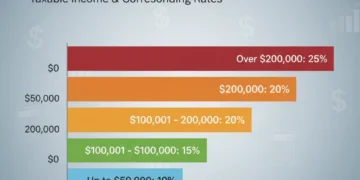
One of the most widely felt impacts of the TCJA was the reduction in individual income tax rates across most brackets. For example, the top individual income tax rate was lowered from 39.6% to 37%. The 2026 changes are expected to see these rates increase. The seven individual income tax brackets (10%, 12%, 22%, 24%, 32%, 35%, and 37%) are scheduled to revert to the pre-TCJA rates of 10%, 15%, 25%, 28%, 33%, 35%, and 39.6%. This shift means that many taxpayers could find themselves in a higher tax bracket, leading to a larger portion of their income being subject to taxation. For higher earners, the jump back to 39.6% could be substantial. This change necessitates a careful review of your income streams and potential strategies for tax deferral or income smoothing.
Standard Deduction vs. Itemized Deductions: A Shifting Balance
The TCJA significantly increased the standard deduction, making it more advantageous for many taxpayers to claim the standard deduction rather than itemizing. For 2023, the standard deduction for married couples filing jointly was $27,700, and for single filers, it was $13,850. In 2026, these amounts are projected to revert to closer to their pre-TCJA levels, adjusted for inflation. This means that fewer taxpayers might find the standard deduction beneficial, potentially pushing more households to itemize their deductions. Understanding this shift is critical because it directly impacts your tax savings. If you previously stopped itemizing due to the higher standard deduction, it might be time to revisit your itemizable expenses, such as state and local taxes (SALT), mortgage interest, and charitable contributions.
Child Tax Credit: A Potential Reduction
The TCJA also expanded the Child Tax Credit, increasing it from $1,000 per qualifying child to $2,000, with up to $1,400 being refundable. The income thresholds for phasing out this credit were also significantly raised, allowing more families to benefit. In 2026, the Child Tax Credit is slated to revert to $1,000 per qualifying child, with stricter income phase-out rules. This reduction could have a notable impact on families with children, particularly those who have come to rely on the enhanced credit to offset their tax liability. Families should factor this potential reduction into their budgeting and financial planning for 2026 and beyond.
1. Re-evaluate Your Income Tax Planning Strategies
Given the anticipated increase in individual income tax rates, a proactive re-evaluation of your income tax planning strategies is paramount. This adjustment is not a one-size-fits-all solution; it requires a personalized approach based on your income level, filing status, and financial goals. The goal is to minimize your taxable income and maximize your after-tax savings.
Maximizing Retirement Contributions
One of the most effective ways to reduce your taxable income is to maximize contributions to tax-advantaged retirement accounts. Contributions to traditional 401(k)s and IRAs are typically tax-deductible, reducing your current year’s taxable income. As tax rates are expected to rise in 2026, accelerating these contributions in the years leading up to the change could be highly beneficial. If your income places you in a higher tax bracket in 2026, the tax deduction will be worth more. Conversely, if you anticipate your income to be lower in retirement, deferring taxes now makes strategic sense.
Consider front-loading your contributions or increasing your regular contributions to hit the annual maximums. For example, if you’re not already contributing the maximum to your 401(k), now is an excellent time to adjust your deferral percentage. Also, explore employer-sponsored plans like 403(b)s or 457(b)s if available, as they offer similar tax benefits. For self-employed individuals, SEP IRAs and Solo 401(k)s provide even higher contribution limits.
Tax-Loss Harvesting and Capital Gains Planning
Another crucial strategy involves tax-loss harvesting. This involves selling investments at a loss to offset capital gains and, if applicable, a limited amount of ordinary income ($3,000 per year). With potential changes in capital gains tax rates, strategically harvesting losses before or during 2026 could be more impactful. Analyze your investment portfolio for unrealized losses and consider realizing them to offset any capital gains you might have, or to carry forward for future years.
Furthermore, consider the timing of realizing capital gains. If you anticipate lower tax rates in the future (though unlikely in 2026), or if you can realize gains in a year where your overall income is lower, it could result in a reduced tax burden. Conversely, if you expect higher rates in 2026, realizing gains in 2024 or 2025 might be more advantageous, assuming current rates are lower. Consult with a financial advisor to determine the optimal timing for your specific investment portfolio.
Health Savings Accounts (HSAs)
HSAs offer a triple tax advantage: tax-deductible contributions, tax-free growth, and tax-free withdrawals for qualified medical expenses. If you are eligible for an HSA (i.e., enrolled in a high-deductible health plan), maximizing your contributions is a smart move, especially with rising tax rates. HSAs can also serve as an additional retirement savings vehicle, as after age 65, withdrawals for non-medical expenses are taxed as ordinary income, similar to a traditional IRA, but qualified medical expenses remain tax-free.

2. Reassess Your Deduction Strategy: Standard vs. Itemized
The significant increase in the standard deduction under the TCJA led many taxpayers to stop itemizing. With the expected reversion to lower standard deduction amounts in 2026, it is imperative to re-evaluate whether itemizing will once again be more beneficial for your household. This requires a thorough understanding of your potential itemizable deductions.
Reviewing Itemized Deductions
Start by reviewing common itemized deductions:
- State and Local Taxes (SALT): The TCJA capped the SALT deduction at $10,000 per household. There’s a possibility this cap could be eliminated or modified in 2026, making itemizing more appealing for those in high-tax states. Keep an eye on legislative developments regarding the SALT cap.
- Mortgage Interest: Interest paid on home mortgage debt is generally deductible. If you have a substantial mortgage, this deduction can be significant.
- Charitable Contributions: Donations to qualified charities are deductible. Consider ‘bunching’ your charitable contributions – making multiple years’ worth of donations in a single year to exceed the standard deduction threshold in that year, then taking the standard deduction in subsequent years. Donor-advised funds (DAFs) can be excellent tools for this strategy, allowing you to get a tax deduction now while distributing funds to charities over time.
- Medical Expenses: Medical expenses exceeding a certain percentage of your Adjusted Gross Income (AGI) can be deducted. This threshold has varied over the years, so monitor the applicable percentage for 2026.
By carefully tracking and projecting these expenses, you can determine if itemizing will provide a greater tax benefit than the potentially reduced standard deduction in 2026. It’s a calculation that should be done well in advance to allow for strategic adjustments.
Strategic Use of Bunching Deductions
As mentioned, ‘bunching’ deductions is a powerful strategy. For instance, if your itemized deductions typically hover just below the standard deduction, you might consider accelerating certain deductible expenses into one year (e.g., making a larger charitable donation or scheduling elective medical procedures) to push your itemized deductions above the standard deduction for that year. In the alternate year, you would then claim the standard deduction. This cyclical approach can effectively increase your total deductions over a two-year period compared to taking the standard deduction every year or itemizing annually without exceeding the threshold by much.
3. Adapt to Potential Child Tax Credit Revisions
Families with children will be particularly affected by the potential reduction in the Child Tax Credit (CTC) to its pre-TCJA level. This shift necessitates a review of family budgeting and financial planning.
Adjusting Family Budgets
If your household has been relying on the enhanced Child Tax Credit to reduce your tax liability or provide a refundable benefit, you must factor in a potential reduction of $1,000 per child (or more, depending on your income level) into your budget for 2026. This could mean finding ways to save more, reduce expenses, or increase income to offset the difference. Start reviewing your household budget now to identify areas where adjustments can be made without significantly impacting your quality of life.
Exploring Other Family-Related Tax Credits and Benefits
While the CTC may be reduced, it’s important to remember that other family-related tax credits and benefits may still be available. These include the Child and Dependent Care Credit, Earned Income Tax Credit (EITC), and education credits. Eligibility for these credits often depends on income levels and specific circumstances. Regularly review IRS publications and consult with a tax professional to ensure you are claiming all eligible credits. Some states also offer their own child tax credits or similar family benefits, which could help mitigate the federal changes.
4. Review Estate and Gift Tax Planning
The TCJA dramatically increased the estate and gift tax exemption to historically high levels. For 2023, the exemption was $12.92 million per individual, meaning a married couple could shield nearly $25.84 million from federal estate and gift taxes. In 2026, this exemption is scheduled to revert to approximately $5 million per individual, adjusted for inflation. This substantial reduction has significant implications for high-net-worth individuals and families.
Utilizing Current High Exemption Amounts
If your estate is likely to exceed the projected 2026 exemption amount, now is the time to consider utilizing the current higher exemption. This can be done through strategic gifting. You can make substantial gifts (e.g., to children or grandchildren) up to the current exemption amount without incurring gift tax. The IRS has confirmed that there will be no ‘clawback’ for gifts made under the higher exemption if the exemption later decreases. This means that if you make a gift of $12 million in 2024, and the exemption drops to $7 million in 2026, that $12 million gift will not be subject to additional estate tax in the future. This is a crucial window of opportunity for estate planning.
Consider strategies like establishing irrevocable trusts, making direct gifts, or funding generation-skipping trusts. These strategies require careful planning with an experienced estate attorney and financial advisor to ensure they align with your overall estate plan and financial goals.
Revisiting Your Estate Plan
Even if your estate doesn’t currently exceed the higher exemption, it’s prudent to revisit your entire estate plan. Changes in tax laws can affect the effectiveness of wills, trusts, and other estate planning documents. Ensure that your beneficiaries are clearly designated, your power of attorney documents are up-to-date, and your healthcare directives reflect your current wishes. The reduction in the exemption could also mean that more estates become subject to federal estate tax, requiring more complex planning to minimize tax liabilities and ensure your assets are distributed according to your wishes.

5. Assess Business and Investment Implications
While many of the TCJA’s corporate tax cuts were permanent, the individual tax changes will inevitably impact small business owners and investors, particularly those structured as pass-through entities (S corporations, partnerships, and sole proprietorships).
Qualified Business Income (QBI) Deduction
The TCJA introduced the Section 199A Qualified Business Income (QBI) deduction, allowing eligible pass-through business owners to deduct up to 20% of their qualified business income. This deduction is also set to expire at the end of 2025. The expiration of the QBI deduction, combined with potentially higher individual income tax rates, could significantly increase the tax burden for many small business owners. Business owners should:
- Project Future Tax Liability: Work with an accountant to project your business’s tax liability under the post-2025 rules.
- Consider Business Structure: Review your business structure. While the corporate tax rate remains lower, converting from a pass-through entity to a C-corporation has its own complexities and considerations, including double taxation.
- Optimize Deductions and Expenses: Ensure you are maximizing all available business deductions and expenses in the years leading up to 2026.
Investment Strategies for Changing Tax Landscape
Changes in individual tax rates can also influence investment strategies. For example, if ordinary income tax rates increase, the appeal of tax-advantaged investments might grow. Consider:
- Municipal Bonds: Interest from municipal bonds is generally exempt from federal income tax and often from state and local taxes as well, making them more attractive in higher tax environments.
- Tax-Efficient Funds: Invest in exchange-traded funds (ETFs) or mutual funds that are managed for tax efficiency, minimizing capital gains distributions.
- Roth Conversions: If you anticipate being in a higher tax bracket in retirement or if current tax rates are relatively low for you, a Roth conversion might be advantageous. You pay taxes on the converted amount now, and future qualified withdrawals are tax-free. However, if rates are set to increase, a Roth conversion in 2024 or 2025 might be more favorable than doing so in 2026 or later.
The interplay between business income, personal income, and investment returns under the new tax regime will be complex, requiring careful analysis and professional guidance.
The Importance of Professional Guidance
Navigating the impending 2026 tax changes is not something to undertake lightly or in isolation. The complexity of the tax code, coupled with the significant nature of these upcoming revisions, underscores the critical importance of seeking professional guidance. A qualified tax advisor, financial planner, or estate attorney can provide personalized advice tailored to your unique financial situation and goals.
Why Consult a Professional?
- Personalized Analysis: Professionals can analyze your specific income, assets, liabilities, and family structure to provide precise recommendations. General advice, while helpful, may not fully apply to your circumstances.
- Up-to-Date Knowledge: Tax laws are constantly evolving, and professionals stay abreast of the latest legislative developments, interpretations, and strategies. They can help you understand the nuances of the 2026 changes as they become clearer.
- Strategic Planning: Beyond mere compliance, a good advisor can help you develop a comprehensive financial plan that integrates tax efficiency with your investment, retirement, and estate planning goals.
- Mitigating Risks: Incorrect tax planning can lead to penalties or missed opportunities. Professionals help minimize these risks.
- Time Savings: Understanding and implementing complex tax strategies is time-consuming. Outsourcing this to an expert frees up your valuable time.
Don’t wait until late 2025 to start thinking about these adjustments. Begin the conversation with your financial team now. Proactive planning allows for more strategic moves and can prevent hasty, potentially less effective, decisions made under pressure.
Looking Ahead: Potential for Further Legislative Action
It’s important to acknowledge that the tax landscape is not static. While the current law dictates the expiration of the TCJA provisions in 2026, there is always the possibility of new legislative action. Congress could choose to extend some or all of the expiring provisions, modify them, or introduce entirely new tax legislation. The political climate, presidential elections, and congressional control will all play a role in shaping the future of tax policy.
Therefore, staying informed about legislative developments is crucial. While you should plan based on current law, remain flexible in your financial strategies. A robust financial plan is one that can adapt to unforeseen changes. Your financial advisor can help you monitor these developments and adjust your strategies as needed.
Conclusion: Empowering Your Financial Future Amidst 2026 Tax Changes
The 2026 tax changes represent a significant juncture for personal finance in the U.S. While the prospect of higher taxes and reduced credits might seem daunting, it also presents an opportunity for strategic financial planning. By proactively addressing your income tax strategies, reassessing your deduction approach, adapting to potential child tax credit revisions, reviewing your estate and gift tax planning, and understanding the implications for your business and investments, you can transform potential challenges into opportunities.
The five key adjustments outlined in this article – re-evaluating income tax planning, reassessing deduction strategies, adapting to child tax credit revisions, reviewing estate and gift tax planning, and assessing business and investment implications – are interconnected and require a holistic approach. Remember, the goal is not just to comply with tax laws but to optimize your financial position within their framework.
Start your planning today. Engage with financial professionals who can guide you through the complexities and help you build a resilient financial future. The decisions you make in the coming months and years will profoundly impact your financial well-being for a decade or more. Embrace these 2026 tax changes as a catalyst for comprehensive financial review and empowerment.